Budget Self-Cleaning Litter Boxes: A Data Shortlist
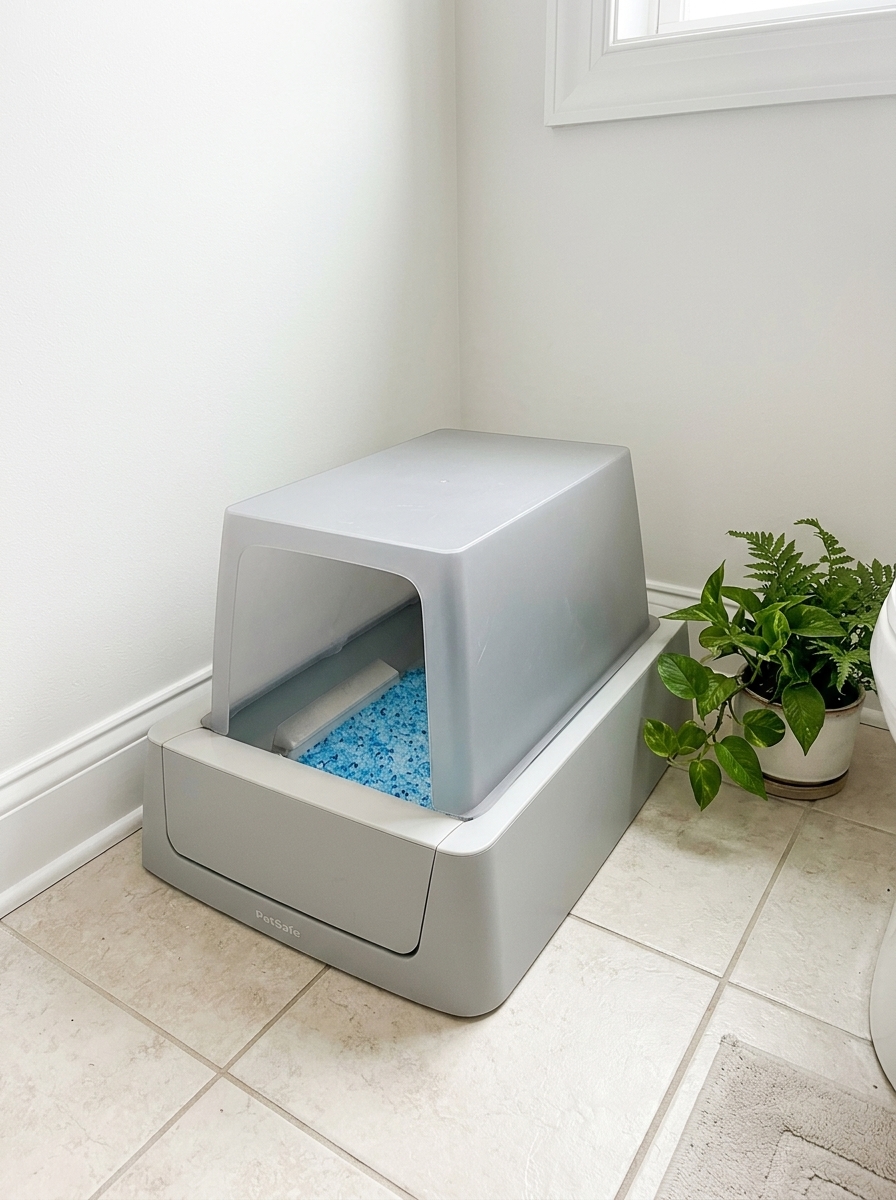
The six lowest tracked purchase prices in the category, $219.99–$359.99. Best score under $300: PetSafe ScoopFree Crystal Smart at 8.4/10.
Lab 01: Pet Tech · Automatic Litter Boxes
Email me when CATLINK Scooper Luxury Pro-X drops to my target price. The confirmation includes a manage link — use it any time to list or remove your alerts at Your price alerts. Lowest price tracked so far: USD 439.00 — a target below that is below the historical low and less likely to be reached.
Affiliate disclosure: This article contains affiliate links. If you buy through a link on this page, AIBuyLab may earn a commission at no extra cost to you. Scores and specifications below come from our catalog data; this is a desk-research comparison, not a hands-on test.
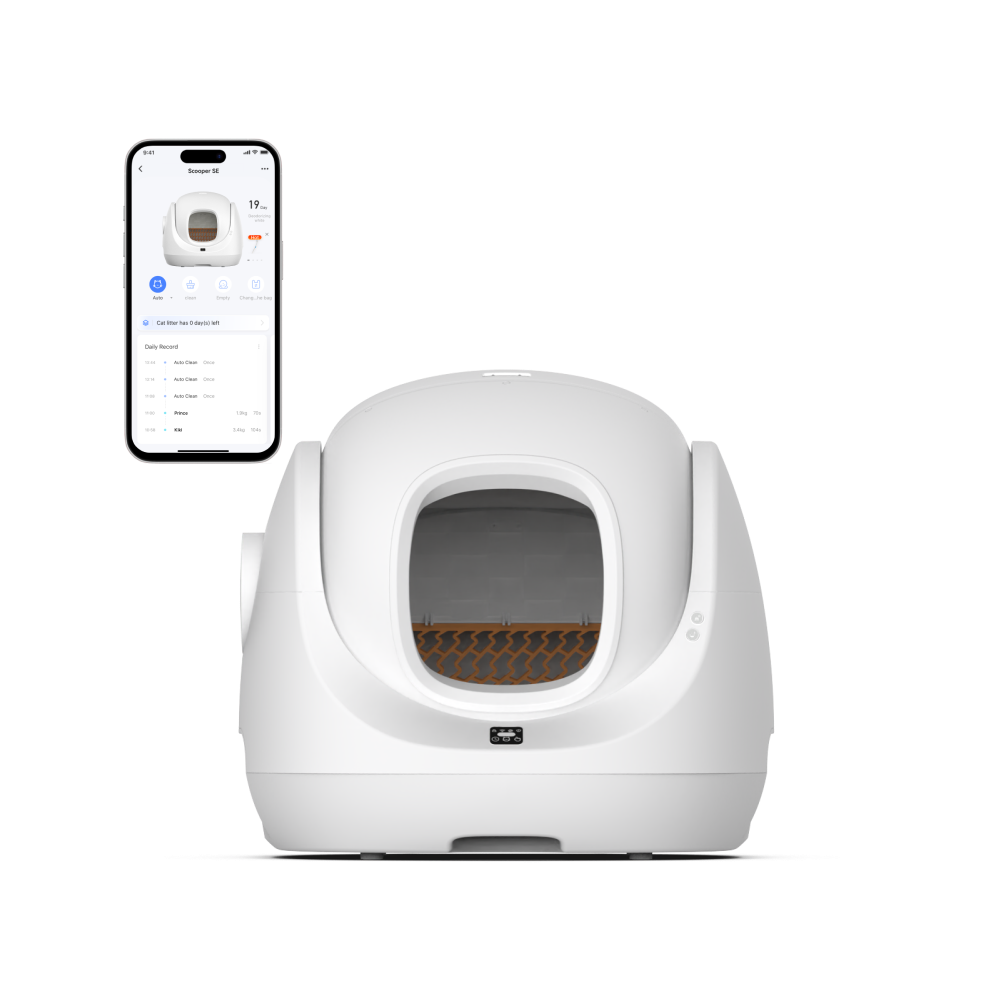
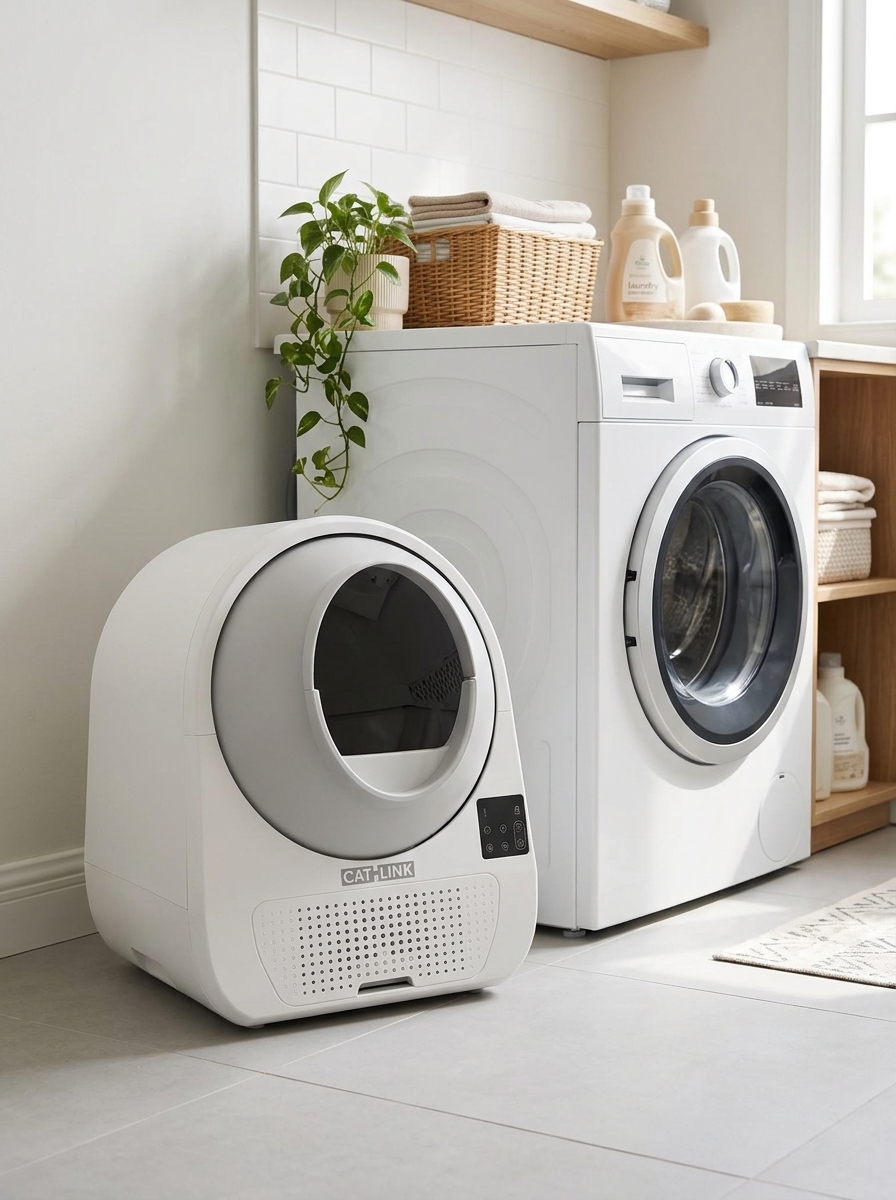
Our pick: CATLINK Scooper Luxury Pro-X vs CATLINK Scooper SE — check current prices at the retailers.
An automatic (self-cleaning) litter box is a litter box that separates waste from clean litter on its own after each use, storing clumps in a sealed drawer you empty periodically. Both CATLINK models here use a rotating-globe mechanism: the drum rotates, clean litter sifts through a grate, and clumps drop into the waste drawer below.
When two products from the same brand land on the identical Score v1.0 number, it usually means the scoring model sees offsetting strengths — one machine wins some inputs, loses others, and the totals converge. That is exactly the situation here. The Pro-X and the SE share a platform (same mechanism, same 10 kg cat limit, same 11 kg unit weight, same app control, no subscription on either), but CATLINK aimed them at different households. The score tie is your signal to stop asking "which is better?" and start asking "which trade-off matches my cat?"
Specification | CATLINK Scooper Luxury Pro-X | CATLINK Scooper SE |
|---|---|---|
AIBuyLab Score v1.0 | 7.8 | 7.8 |
Waste capacity | 13 L | 7 L |
Entry height | 35.5 cm | 24.0 cm |
Entry width | 33 cm | 21.29 cm |
Max cat weight | 10 kg | 10 kg |
Mechanism | Rotating-globe | Rotating-globe |
Litter types | Clumping only | Clumping only |
Camera | No | — (not tracked in our catalog) |
App control | Yes | Yes |
Subscription required | No | No |
Unit weight | 11 kg | 11 kg |
Warranty | 1 year | — |
Every figure above is from our product catalog. For current pricing and availability, check the Pro-X product page and the SE product page — prices move, and we don't quote unverified numbers in comparisons.
The single biggest hardware difference between these two boxes is the waste drawer. At 13 L, the Pro-X holds roughly 86% more waste than the SE's 7 L drawer. Both machines use the same rotating-globe cleaning cycle and both are limited to clumping litter, so for a given cat producing waste at a given rate, drawer volume is the main variable that decides how often you make the trip to empty it.
Some simple arithmetic, clearly labeled as an estimate: if your household fills the SE's 7 L drawer in about a week, the same cats filling the Pro-X's 13 L drawer at the same rate would take roughly 1.8–1.9 weeks to fill it — nearly double the interval. Scale that to a multi-cat home, where drawers fill proportionally faster, and the gap compounds: the SE might need attention every three or four days while the Pro-X stretches closer to a week. These are capacity-ratio estimates, not measured results — your litter, your cats' output, and how tightly waste packs down will shift the real numbers — but the direction is not in doubt. Volume is volume.
This is also where the Pro-X's larger globe shows up in the entry dimensions. Its opening is 33 cm wide, noticeably more generous than the SE's 21.29 cm, which suits bigger cats that turn around inside the drum. Both models top out at a 10 kg maximum cat weight, so the difference is about interior room and comfort, not rated capacity.
Who this favors: multi-cat households, anyone who travels for a week at a time, and owners who simply hate drawer duty. If emptying frequency is your top complaint about your current setup, the Pro-X is the one built to answer it.
Now flip the comparison. The Pro-X's entry height is 35.5 cm — your cat has to climb up and into the globe. The SE's entry sits at 24.0 cm, which is 11.5 cm lower, about a third less height to clear.
For a healthy adult cat, neither number matters much; cats jump onto kitchen counters for fun. But three groups of cats are not healthy adult cats:
There is a second ergonomic wrinkle: entry width. The SE's 21.29 cm opening is snug. A large-framed cat near the 10 kg limit may fit through it, but "fits" and "willingly uses twice a day" are different things. So the ergonomics verdict splits by cat: small, old, or stiff cats point to the SE's low entry; big, confident cats point to the Pro-X's wide one. A big and arthritic cat is the genuinely hard case — that cat needs low height and generous width, and neither of these boxes is ideal, which is worth knowing before you spend anything.
Who this favors: kitten and senior-cat households, and anyone whose cat already hesitates at the current box's entrance.
Step back from the two headline differences and the rest of the spec sheet is remarkably even. Same rotating-globe mechanism. Same clumping-litter-only restriction — budget for clumping litter either way, and don't plan on crystal or pellet litter in either machine. Same 10 kg maximum cat weight. Same 11 kg unit weight, so neither is meaningfully easier to move for deep cleaning. Both offer app control, and neither requires a subscription, so there are no ongoing fees separating them either.
One asymmetry to note honestly: our catalog records a 1-year warranty for the Pro-X, and records the Pro-X as having no camera. We don't track a camera field or warranty term for the SE in our catalog data, so we won't claim one either way — if either matters to you, confirm it on the SE product page before buying.
Pay for the Pro-X if you have two or more cats, you travel, or drawer-emptying frequency is the thing you most want to reduce. The 13 L drawer is a real, structural advantage that shows up every single week you own the machine, and the wider 33 cm entry suits large cats. You are paying for volume and space, and you'll get both.
Don't pay for the Pro-X if your cat is a kitten, a senior, arthritic, or simply entry-shy. The 35.5 cm climb is the one spec on either sheet that can make a cat reject the box outright, and no amount of waste capacity compensates for a box your cat won't enter. In that household the SE isn't the "cheaper compromise" — it's the correct machine, and its 24.0 cm entry is the reason.
Buy the SE if you have one cat (or two small ones), your cat values easy access over everything, and you're comfortable emptying a 7 L drawer more often. The identical 7.8 score means you're not giving up measured quality to get the friendlier entry — you're trading drawer volume, full stop.
Skip both if your cat exceeds 10 kg, or you want to use non-clumping litter. Both machines share those limits, and no verdict between them changes that.
Where to buy: CATLINK Scooper Luxury Pro-X · CATLINK Scooper SE — retailer links run through our /go/ tracker; the product pages track prices daily.
Do the Pro-X and SE really perform identically since they score the same? No. The identical 7.8 is a Score v1.0 total, and the inputs offset: the Pro-X's capacity advantage and the SE's accessibility advantage balance out in the model. The spec differences — 13 L vs 7 L, 35.5 cm vs 24.0 cm entry — are real and will matter differently to different households.
How much longer does the Pro-X go between emptying, realistically? As an estimate based purely on drawer volume, roughly 1.8–1.9× the SE's interval for the same cats, since 13 L is about 86% more capacity than 7 L. Your actual interval depends on cat count, diet, and litter, so treat that ratio as a planning guide, not a promise.
Which one is better for a senior or arthritic cat? The SE, on the strength of its 24.0 cm entry height versus the Pro-X's 35.5 cm. A lower step-in reduces the chance of litter-box avoidance, which is the most common way an automatic box fails with an older cat. Watch the SE's narrower 21.29 cm entry if your senior is also large-framed.
Can I use crystal, pellet, or tofu litter in either box? No. Both models are rated for clumping litter only in our catalog data. The rotating-globe sifting mechanism depends on litter that clumps and sifts predictably.
Do either of them need a subscription for the app? No. Our catalog lists both as app-controlled with no subscription required, so the app features aren't behind a paywall on either model.
Where can I check current prices? On the product pages: the CATLINK Scooper Luxury Pro-X and the CATLINK Scooper SE. We point you there rather than printing prices here, because prices change and an outdated number in a comparison helps nobody.
Last updated: November 27, 2026
November 27, 2026 — Added retailer buying links (Our pick and Where to buy) for the products covered in this article.
The six lowest tracked purchase prices in the category, $219.99–$359.99. Best score under $300: PetSafe ScoopFree Crystal Smart at 8.4/10.
The six lightest tracked boxes by published unit weight (5–10.35 kg) — a stated proxy, because makers do not publish footprints consistently. Lightest: ChillX AutoEgg.
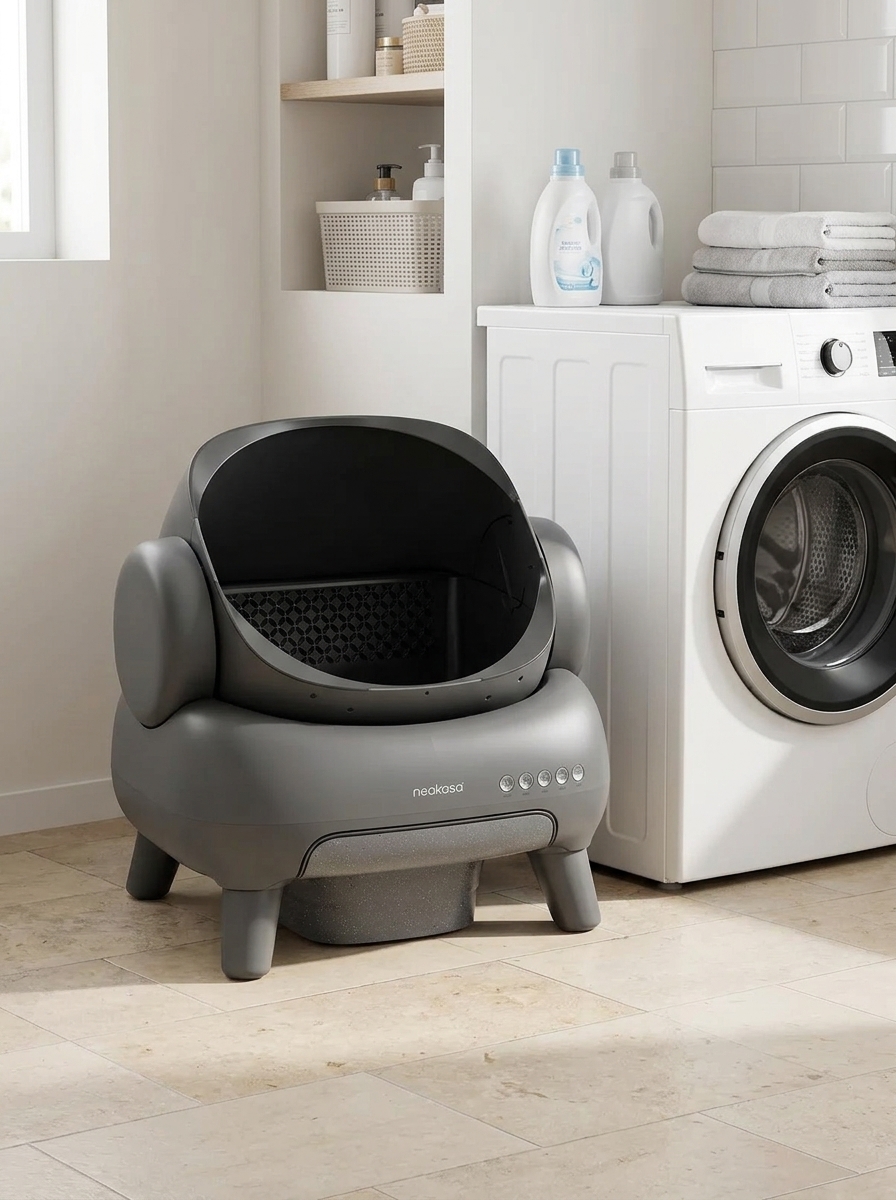
8 boxes meet the multi-cat rule (maker-rated for 2+ cats, or a waste drawer of 10 L+ where no rating is published), ranked by Score v1.0. Top: Neakasa M1 at 8.5/10.
PETKIT PuraMax 2 by the numbers: Score v1.0 6.7/10 (#9 of 16 in its category), owner rating 4.20/5 from 2,729 reviews, tracked from $380.99.
Discussion
No comments yet