

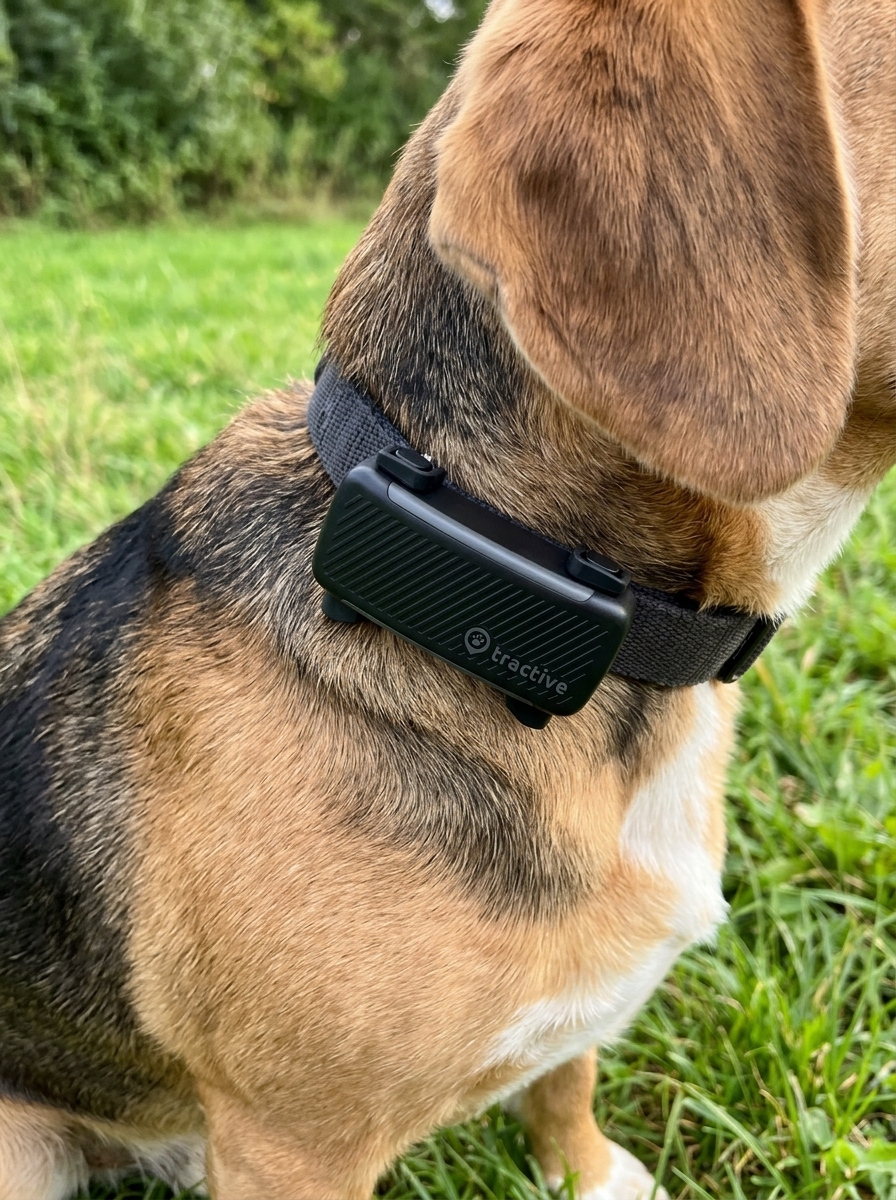
Tractive GPS Tracker for Dogs (DOG 6) by the Numbers: A Data Profile
Tractive GPS Tracker for Dogs (DOG 6) by the numbers: Score v1.0 7.3/10 (#3 of 15 in its category), owner rating 4.10/5 from 116 reviews, tracked from $48.30.
Lab 01: Pet Tech · GPS Trackers for Dogs
Email me when Fi Mini drops to my target price. The confirmation includes a manage link — use it any time to list or remove your alerts at Your price alerts. Lowest price tracked so far: USD 99.00 — a target below that is below the historical low and less likely to be reached.
Disclosure: This comparison is desk research based on the specifications and pricing data tracked in our catalog. We did not hands-on test either device. AIBuyLab may earn a commission from qualifying purchases made through links on this page, at no additional cost to you.
Our pick: Fi Mini vs Halo Collar 5 — check current prices at the retailers.
Both products sit in the GPS pet tracker category: a collar-mounted device that uses GPS positioning with a cellular connection to report a dog's location to an app, with activity tracking and a subscription required to keep the cellular service active. Both also list virtual-fence features in our catalog.
That shared category label hides a real split. A tracker answers one question — "where is my dog right now?" — and optimizes for battery life and low weight so the dog can wear it continuously. A GPS fence collar answers a different question — "how do I keep my dog inside this boundary without building a fence?" — and it must stay alert at the boundary at all times, ready to deliver feedback the moment the dog crosses it. That always-on duty cycle is why fence collars burn through batteries in days while trackers sip power for weeks. Comparing these two purely as trackers misses the point of the Halo entirely.
Spec | Fi Mini | Halo Collar 5 |
|---|---|---|
Score v1.0 | 4.6 | 1.7 |
Primary job | Location tracking | GPS containment fence + tracking |
Battery life | 60 days | 2 days |
Device weight | 16 g | 130 g |
Water resistance | IP68 | Not listed here |
Positioning | GPS-cellular | GPS-cellular |
Activity tracking | Yes | Yes |
App control | Yes | Yes |
Virtual fence | Yes | Yes (core function) |
Subscription required | Yes | Yes |
Subscription (per our catalog) | $14.13/month | $9.99/month |
Subscription, 3-year total | $508.68 | $359.64 |
The subscription totals above are simple arithmetic on the monthly figures tracked in our catalog ($14.13 × 36 and $9.99 × 36). Neither device works as a connected product without its subscription, so treat those totals as part of the real cost of ownership.
The Fi Mini's spec sheet reads like a tracker designed to be forgotten. At 16 g it is light enough for small dogs that would be burdened by a full-size collar unit, and a 60-day battery means charging is a roughly bimonthly chore rather than a routine. The IP68 rating means the device is built to survive full submersion — rain, mud, and a dog that swims are non-events.
Its virtual fence is the alerting kind: you draw a boundary, and if the dog leaves it, you get notified and can track the escape in the app. That is genuinely useful — most lost-dog recoveries start with knowing which direction the dog went. But notification is all it does. The Fi Mini cannot correct the dog at the boundary, cannot train the dog to respect the boundary, and will not slow an escape down by one second. If your dog is already gone, the Fi Mini helps you find it. If your dog must never leave in the first place, the Fi Mini is the wrong tool.
The Halo Collar 5 inverts every one of those priorities. Its virtual fence is not an alerting feature bolted onto a tracker — containment training is the reason the product exists. The collar monitors the boundary continuously and delivers feedback at the moment of crossing, which is how GPS fences train dogs to turn back on their own. For a household with acreage, an unfenceable property line, or a landlord or HOA that forbids physical fencing, that capability has no substitute in the tracker category.
Now the honest cost. A 2-day battery is the direct price of always-on fence duty: the collar cannot sleep for weeks the way a tracker can, because a sleeping fence is not a fence. In practice that means charging roughly every other day, forever — and a fence collar that is on the charger is containing nothing. The 130 g weight, eight times the Fi Mini's, rules it out for small dogs. And in our Score v1.0, the Halo Collar 5 rates 1.7, the lowest tracker Score we track. We will say that plainly rather than soften it. But context matters: our Score weighs battery life and wearability heavily because most buyers want a tracker. Judged purely as a tracker, the Halo is a poor one. Judged as a fence, it is doing a job the 4.6-rated Fi Mini cannot do at all.
A 4.6 against a 1.7 looks like a rout, and if you are shopping for a tracker, it is one: the Fi Mini lasts 30 times longer per charge and weighs almost nothing. But the Halo's low Score is mostly a category mismatch. Score v1.0 punishes the 2-day battery and the 130 g build because those are serious flaws in a device meant to be worn and forgotten. In a fence collar, they are trade-offs accepted in exchange for boundary correction. Neither score is wrong; they just answer the tracker question. This comparison exists because the fence question is a different one, and for some households it is the only one that matters.
Both devices require a subscription, so the monthly figure deserves as much attention as the hardware. Per our catalog, the Fi Mini runs $14.13/month — $508.68 over a 3-year span. The Halo Collar 5 is cheaper to run at $9.99/month, or $359.64 over 3 years. That is a $149.04 difference over three years in the Halo's favor, which slightly offsets its hardware compromises if you genuinely need the fence. For tracker buyers, note the inversion: the better tracker carries the pricier plan. Neither total includes the device purchase price, which we do not compare here — check the product pages for current pricing.
Buy the Fi Mini if your dog is contained by a physical fence, a leash, or reliable recall, and your real fear is the day something goes wrong — a slipped gate, a startled bolt at the park. You get a 16 g locator with a 60-day battery and IP68 sealing, and escape alerts if it ever leaves your virtual boundary. This is most households, and it is the better tracker by a wide margin.
Buy the Halo Collar 5 if you have no physical fence and cannot install one, and you need the collar itself to enforce a boundary. Accept the deal with open eyes: charging every two days, a 130 g collar suited to larger dogs, and a device that scores poorly as a tracker because it is not really one.
Buy neither if you want both jobs done well. A tracker cannot train, and this fence collar is a chore to live with as a pure tracker. Decide which failure you are actually protecting against — losing the dog, or the dog leaving — and buy for that one.
Where to buy: Fi Mini · Halo Collar 5 — retailer links run through our /go/ tracker; the product pages track prices daily.
Can the Fi Mini stop my dog from leaving the yard? No. Its virtual fence sends you an alert and lets you track the dog's location, but the device delivers no correction at the boundary. Containment is the Halo's job, not the Fi Mini's.
Why does the Halo Collar 5 have only a 2-day battery? Because a fence collar must monitor the boundary continuously and be ready to respond the instant the dog crosses it. That always-on duty is the direct trade-off for containment; trackers like the Fi Mini last 60 days because they are not standing guard.
Which is better for a small dog? The Fi Mini, and it is not close: 16 g versus the Halo's 130 g. The Halo's weight effectively limits it to medium and large dogs.
Why is the Halo's Score so low if it does something the Fi Mini can't? Our Score v1.0 evaluates these devices as trackers, weighting battery life and wearability. On those terms the Halo's 2-day battery and heavy build score badly — 1.7, the lowest we track. The Score does not credit boundary correction, which is the Halo's entire purpose.
Which subscription costs more over 3 years? The Fi Mini's. At the rates tracked in our catalog, $14.13/month totals $508.68 over 3 years, versus $9.99/month and $359.64 for the Halo — a difference of $149.04.
Does either device work without a subscription? No. Both require an active subscription for their GPS-cellular connection, per our catalog. Budget for the plan as a permanent part of ownership.
---
Last updated: November 27, 2026
November 27, 2026 — Added retailer buying links (Our pick and Where to buy) for the products covered in this article.
Tractive GPS Tracker for Dogs (DOG 6) by the numbers: Score v1.0 7.3/10 (#3 of 15 in its category), owner rating 4.10/5 from 116 reviews, tracked from $48.30.
Of 15 tracked GPS trackers, 10 require a subscription ($5.00–$16.50/mo). Cheapest first year for true cellular GPS: Tractive GPS Tracker for Dogs (DOG 6) at $108.30. 3 models skip the subscription at a higher upfront price; 2 are Bluetooth tags, not GPS.
As of 2026-11-27, this ranking covers pet-worn GPS trackers only: 12 models from 9 brands, scored with Score v1.0 from owner ratings, spec strength and three-year ownership cost. Bluetooth item finders (Tile Mate, Apple AirTag) and the Cube GPS tracker are not pet trackers — they live in their own Item Trackers category and never rank here.
Both trackers score an identical 6.3 in our catalog (Score v1.0), and that tie is almost meaningless — they are built for different animals, different terrain, and different owners. - The [Tractiv
Discussion
No comments yet