
Budget Self-Cleaning Litter Boxes: A Data Shortlist
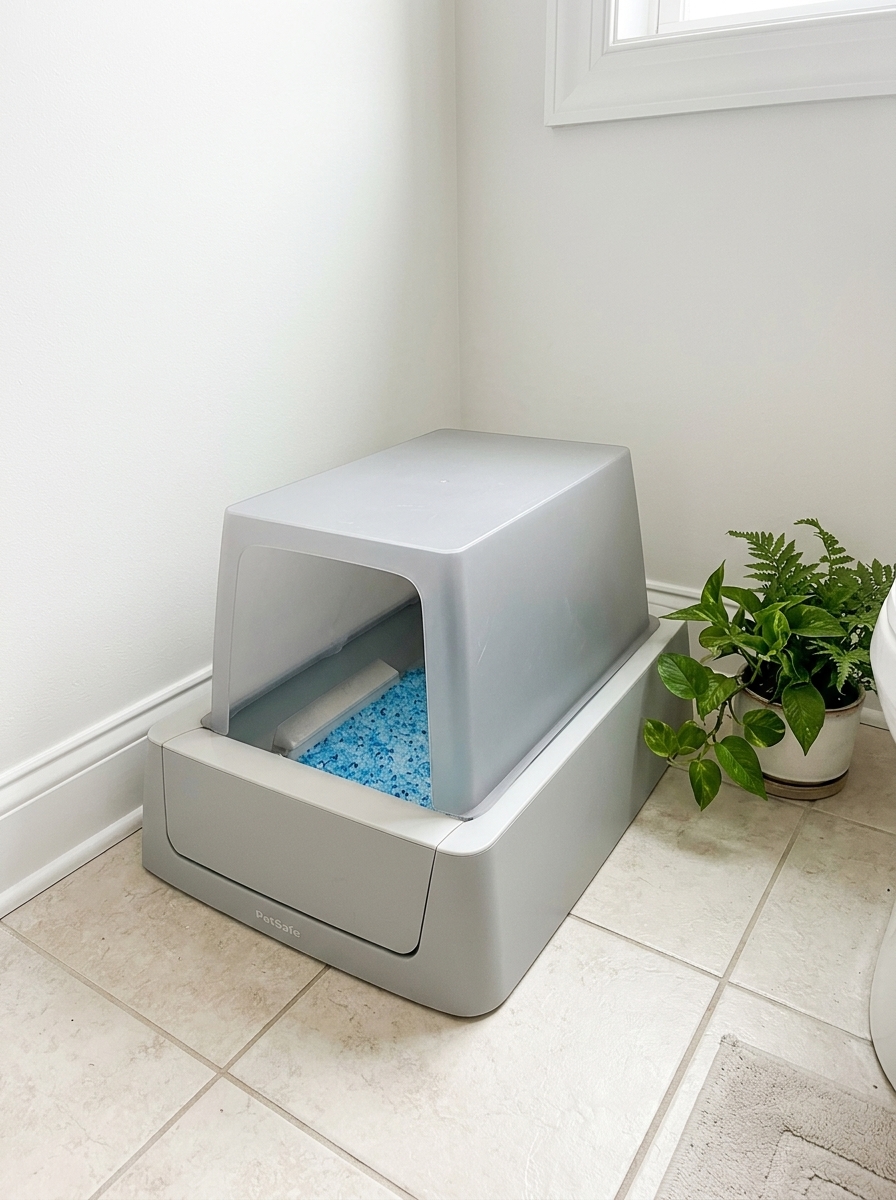
The six lowest tracked purchase prices in the category, $219.99–$359.99. Best score under $300: PetSafe ScoopFree Crystal Smart at 8.4/10.
Lab 01: Pet Tech · Automatic Litter Boxes
Email me when MeoWant MW-SC02 drops to my target price. The confirmation includes a manage link — use it any time to list or remove your alerts at Your price alerts. Lowest price tracked so far: USD 219.99 — a target below that is below the historical low and less likely to be reached.
Affiliate disclosure: AIBuyLab may earn a commission if you buy through links on this page, at no extra cost to you. This guide is desk research built from the manufacturer's published specifications and our product catalog — we did not hands-on test this unit. Every maintenance interval below is AIBuyLab guidance derived from the MW-SC02's capacity and design, not a manufacturer instruction.
Our pick: MeoWant MW-SC02 — check the current price at the retailer.
The MeoWant MW-SC02 is a self-cleaning automatic litter box with a rotating globe (drum) mechanism: after your cat leaves, the drum rotates, clean clumping litter sifts through a screen, and clumps drop into a sealed waste drawer below. It is rated for cats up to 10 kg, stands out for a very low 15.49 cm entry height — the lowest class in our catalog, and a genuine advantage for kittens, seniors, and short-legged cats — and runs at a quiet 38 dB. It connects to an app for cycle alerts and reminders, requires no subscription, uses clumping litter only, weighs 7.48 kg, and carries a 1-year warranty.
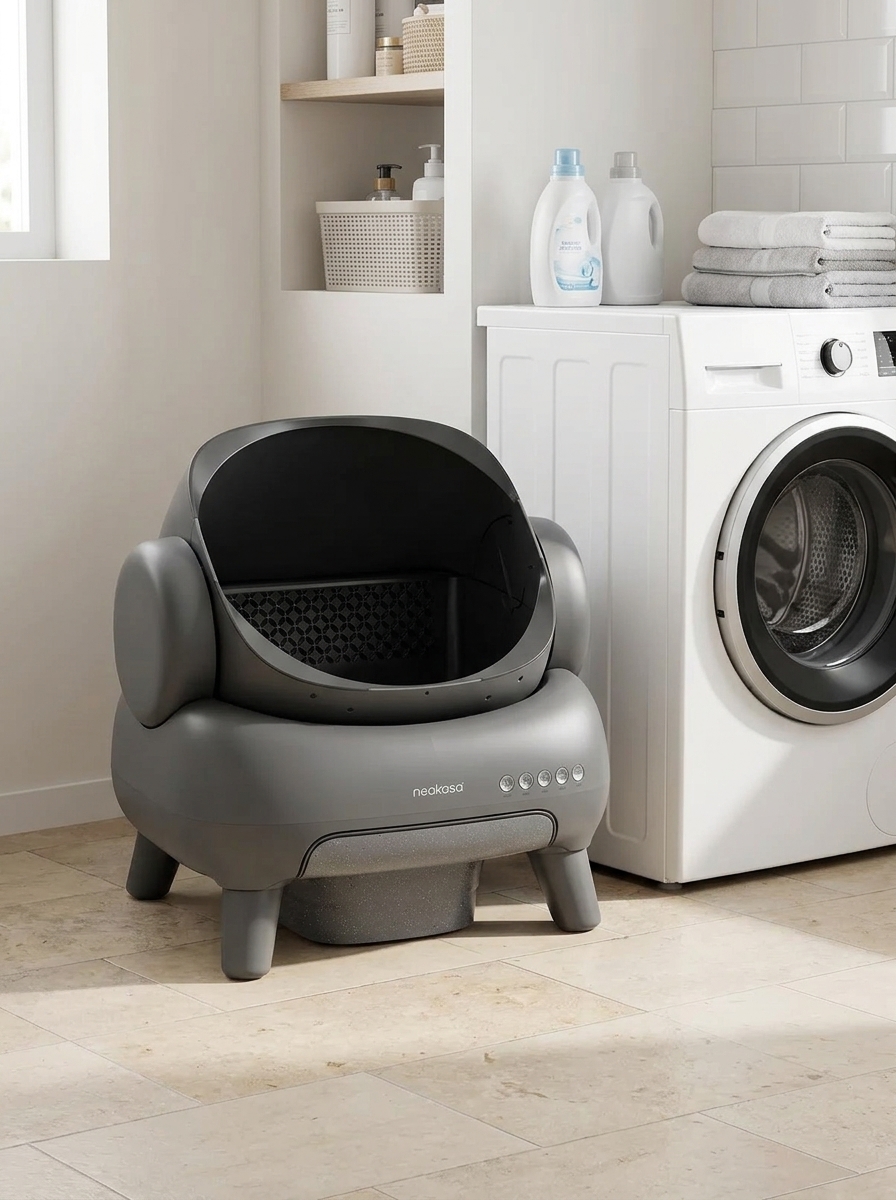
One specification matters more than the rest for ownership: the waste drawer holds just 3.6 L, versus 11.23 L — about 3.1 times as much — in the Neakasa M1. A small drawer is the price of the compact footprint and low entry, and it means this box rewards a short, regular routine and punishes owners who prefer to forget the litter box for a week.
Maintenance cadence on any globe-style litter box is mostly a capacity problem: drawer size converts directly into an emptying interval. Using a working estimate of roughly 0.3–0.45 L of clumped waste per cat per day (it varies with cat size, diet, and how much litter each clump carries), the 3.6 L drawer fills on approximately this rhythm:
Cats in the home | Estimated days between emptying | Practical rhythm |
|---|---|---|
1 cat | Every 3–4 days | Twice a week, fixed days |
2 cats | Every 2 days | Every other day |
3 cats | Every 1–1.5 days | Daily, or twice daily at peak |
Treat these as capacity estimates, not promises: start with the rhythm for your cat count, then adjust by a day either way based on how full the drawer actually looks. Don't stretch the interval because the box "still seems fine" — an overfilled drawer doesn't just smell; clumps bridge at the drop chute and the drum smears waste across its interior wall, making every later clean-out worse. The good news: at 7.48 kg, the MW-SC02 is easy to pull out and wipe down. The routine below takes minutes, not a Saturday afternoon.
These tasks assume the emptying rhythm from the table above; the other items ride along on whichever emptying day is closest.
Task | When | Why it matters |
|---|---|---|
Empty the waste drawer, tie off and replace the liner bag | Per the cat-count table (every 1–4 days) | The 3.6 L drawer is the schedule driver; a fresh liner also keeps odor from soaking into the drawer plastic |
Wipe the drum opening and entry rim with a damp cloth | Weekly | The 15.49 cm low entry means cats track litter and dust right at the rim; buildup here is what paws drag into the room |
Top up litter to the fill line | Weekly (check at every emptying) | Globe boxes need a consistent litter bed depth for the sifting screen to separate clumps cleanly |
Glance at the sensor windows for dust film | Weekly | Dust film builds gradually; catching it early prevents the monthly clean becoming a rescue job |
Confirm the app shows normal cycle counts | Weekly | A sudden drop is your earliest warning that a sensor is blind or a cat has stopped using the box |
A note on top-ups: the MW-SC02 is clumping-only, so avoid crystal, pellet, or tofu litters that won't sift through the screen. Add a little at a time — an overfilled drum drags clean litter into the waste drawer on every cycle, filling the small drawer even faster.
Task | Why it matters |
|---|---|
Full drum interior wipe-down: rotate the globe to its cleaning position, wipe the entire inner wall and the sifting screen with a damp cloth and mild, unscented cleaner, then dry | Residue film builds on the drum wall over weeks; once it sets, clumps stick instead of sliding, and odor persists no matter how often you empty the drawer |
Clean the sensor windows thoroughly with a dry or barely damp microfibre cloth | The MW-SC02's app alerts — cycle notifications, full-drawer and error reminders — depend on the sensors registering your cat's entry and exit. A dust-filmed sensor means missed cycles and silent failures |
Wash the waste drawer itself with warm water and mild soap, dry completely before re-lining | Liner bags slow odor absorption into the plastic; they don't stop it. A monthly wash keeps the drawer from becoming a permanent odor source |
Inspect the drum seal and the drop chute for stuck clumps or litter packing | Packed litter at the chute is the most common cause of incomplete cycles on small-drawer globe boxes |
Check the power cable and the area under the box for tracked litter and moisture | The box is light (7.48 kg) and cats exit at floor level; litter migrates underneath and traps moisture against the floor |
The drum (globe). The weekly rim wipe handles the visible edge; the monthly full wipe-down handles the interior wall and screen. Never use bleach-heavy or strongly scented cleaners inside the drum — residue and scent are common reasons cats reject a box they previously used happily. Rinse-wipe after any cleaner and let the drum dry before running a cycle.
The sensors. The sensor windows sit where they can watch the entry — exactly where litter dust settles. App control is a real advantage here: on app-free boxes a blind sensor fails silently until you notice a smell, while the MW-SC02 at least reports its state. But the app can only report what the sensors see, so if an error won't clear or cycle counts look wrong, clean the windows before assuming anything is broken.
The waste drawer. Treat liner bags as consumables on the emptying rhythm, not optional extras. With a 3.6 L drawer you'll go through liners faster than owners of large-bin boxes — the honest trade-off of the compact design. Between monthly washes, a quick wipe of the drawer rim keeps the seal sitting properly.
The entry and base. Most litter tracking lands immediately outside the low opening, so a mat at the entry, shaken out weekly, does more for room cleanliness than any cleaning of the box itself. Wipe the base exterior monthly.
The MW-SC02's schedule is frequent but light: small tasks, often. If you have three or more cats, or travel for stretches, a large-bin box changes the maths entirely. The Neakasa M1 (Score: 8.6/10) holds 11.23 L — roughly three MW-SC02 drawers — stretching the same estimates to about a week and a half for one cat. The trade-off: the M1 is a bigger, heavier presence, while the MW-SC02's 15.49 cm entry stays friendlier for kittens and arthritic seniors.
Where to buy: MeoWant MW-SC02 · Neakasa M1 — retailer links run through our /go/ tracker; the product pages track prices daily.
How often do I really need to empty the MW-SC02? By capacity estimate: every 3–4 days for one cat, every 2 days for two cats, and roughly daily for three. The 3.6 L drawer is small, so these intervals are shorter than large-bin boxes. Start with the estimate for your household and adjust by how full the drawer looks at each check.
Are these intervals from the manufacturer? No. They are AIBuyLab guidance, derived from the MW-SC02's published 3.6 L waste capacity and typical per-cat waste volumes. Your cat's actual fill rate is the final authority — the first two weeks of ownership will calibrate the schedule better than any guide.
What litter should I use, and how much? Clumping litter only — the rotating globe and sifting screen are designed for it, and crystal or pellet litters won't separate correctly. Keep the bed at the fill line: too little and clumps stick to the drum floor; too much and clean litter gets sifted into the waste drawer on every cycle.
The app stopped reporting cycles correctly. What do I check first? The sensor windows. Litter dust films over them gradually, and every app feature — cycle counts, reminders, error alerts — depends on the sensors seeing your cat enter and leave. Wipe the windows with a dry microfibre cloth and run a test cycle before assuming a fault. This is the most common fix for "the app is acting up" on app-connected boxes.
Can I wash the whole drum with water? Wipe the drum interior rather than flooding it — a damp cloth with mild unscented cleaner, a clean-water wipe, and full drying is the right level for a powered appliance. Wash only the removable waste drawer with soap and water, and dry it completely before re-lining.
Is the MW-SC02 a good choice for a multi-cat home? It is rated for cats up to 10 kg and handles multi-cat use, but the 3.6 L drawer is the honest constraint: three cats means near-daily emptying. If that rhythm fits your routine, the low 15.49 cm entry and quiet 38 dB operation are real strengths. If it doesn't, a large-drawer model like the Neakasa M1 (11.23 L) suits you better.
Last updated: November 27, 2026
November 27, 2026 — Added retailer buying links (Our pick and Where to buy) for the products covered in this article.
The six lowest tracked purchase prices in the category, $219.99–$359.99. Best score under $300: PetSafe ScoopFree Crystal Smart at 8.4/10.
The six lightest tracked boxes by published unit weight (5–10.35 kg) — a stated proxy, because makers do not publish footprints consistently. Lightest: ChillX AutoEgg.
8 boxes meet the multi-cat rule (maker-rated for 2+ cats, or a waste drawer of 10 L+ where no rating is published), ranked by Score v1.0. Top: Neakasa M1 at 8.5/10.
PETKIT PuraMax 2 by the numbers: Score v1.0 6.7/10 (#9 of 16 in its category), owner rating 4.20/5 from 2,729 reviews, tracked from $380.99.
Discussion
No comments yet