
Furbo 360° Dog Camera by the Numbers: A Data Profile
Furbo 360° Dog Camera by the numbers: Score v1.0 6.6/10 (#5 of 6 in its category), owner rating 4.61/5 from 734 reviews, tracked from $30.00.
Lab 01: Pet Tech · Pet Cameras
Email me when Google Nest Cam (indoor, wired) drops to my target price. The confirmation includes a manage link — use it any time to list or remove your alerts at Your price alerts. Lowest price tracked so far: USD 99.99 — a target below that is below the historical low and less likely to be reached.
Affiliate disclosure: AIBuyLab may earn a commission when you buy through links on this page, at no extra cost to you. This comparison is desk research based on the manufacturers' published specifications and our catalog data — we did not hands-on test either camera.
Our pick: Google Nest Cam (indoor, wired) vs Arlo Essential Indoor Camera (2nd Generation, 2K) — check current prices at the retailers.
An indoor pet camera is a fixed home camera used to check on animals while you are away: live viewing through an app, two-way audio so you can talk to the pet, and motion alerts when something moves. Both cameras in this comparison fit that definition exactly. Each offers app control and two-way audio, and each is a stationary, plug-in unit rather than a roaming or treat-dispensing device. The differences that matter are how much of the room each one sees, how much detail it captures inside that view, and what it costs you in subscriptions to review footage later.
Spec | Google Nest Cam (indoor, wired) | Arlo Essential Indoor Camera (2nd Gen) |
|---|---|---|
AIBuyLab Score | 7.2 | 6.7 |
Resolution | 1080p | 2K |
Field of view | 135° | 130° |
App control | Yes | Yes |
Two-way audio | Yes | Yes |
Pan / tilt | No | No |
Local storage | No | No |
Treat tossing | No | No |
Bark alerts | Not free | Not free |
Subscription required for basic use | No | No |
Weight | — | 0.113 kg |
This comparison comes down to one honest trade. The Arlo's 2K sensor packs more pixels into its frame, which means more detail per area of the image. In practice, that detail shows up when you pinch-zoom into a recorded clip: reading whether the dog is chewing a shoe or a toy, checking if the cat actually ate, or identifying which pet knocked something over. A 1080p frame stretched across a wide room gets soft quickly when you crop in; a 2K frame holds up better.
The Nest answers with width. Its 135° field of view is 5° wider than the Arlo's 130°, and in a fixed camera that small margin translates into real coverage at the edges of the room — the corner by the door, the end of the sofa, the hallway entrance. Because neither camera can pan or tilt, whatever falls outside the frame simply does not exist for that camera. A wider frame means fewer blind spots from a single placement.
Neither approach is universally better. Detail matters when the camera watches one specific spot from across the room. Coverage matters when one camera has to watch everything.
Both cameras lack local storage — there is no memory card slot doing quiet work in the background. For pet-checking, the consequence is straightforward: live viewing works fine, but reviewing what happened earlier depends on the maker's cloud service. If you want to scroll back to the moment the vase fell, that history lives in the cloud, and extended video history is typically where the paid plans come in.
Neither camera requires a subscription for basic use, so both work out of the box for live check-ins and alerts. But bark alerts are not free on either model — if hearing-triggered notifications for a barking dog are the feature you are buying for, budget for the plan that unlocks them on whichever camera you choose. Buyers who strongly prefer keeping footage at home, off the cloud, should note that neither of these two models offers that path.
Fixed cameras reward good placement and punish lazy placement. With no pan or tilt on either model, the mounting spot decides everything: height, angle, and distance to the pet's main areas. A few placement principles apply equally to both:
The Arlo's 0.113 kg weight also makes it trivially easy to perch on a shelf or bookcase, though both are wired indoor units that need to live within reach of an outlet.
Choose the Google Nest Cam (indoor, wired) if one camera has to cover a whole living room or open-plan space, your pet roams freely, and your main use is quick live check-ins. The wider 135° view and higher catalog score (7.2) make it the safer single-camera default.
Choose the Arlo Essential Indoor Camera (2nd Gen) if the camera watches a defined spot — a crate, a door, a feeding station — and you expect to zoom into recordings to see exactly what happened. The 2K sensor is the detail winner, and its score of 6.7 reflects the narrower view, not a weaker camera.
Skip both if you need local recording without cloud dependence, pan-and-tilt following, or treat tossing — neither model offers any of those, and no placement trick changes that.
Where to buy: Google Nest Cam (indoor, wired) · Arlo Essential Indoor Camera (2nd Generation, 2K) — retailer links run through our /go/ tracker; the product pages track prices daily.
Which camera is better for a large room? The Nest Cam, generally. Its 135° field of view covers more of a big space from one fixed position, and neither camera can pan to compensate for a narrow frame.
Does the Arlo's 2K resolution really matter for pet monitoring? Yes, when you zoom. For a plain live glance at the room, 1080p is fine. For cropping into a clip to identify what the pet was doing, the 2K frame keeps noticeably more usable detail.
Can either camera record without a subscription? Basic use requires no subscription on either model, but neither has local storage, so reviewing older footage depends on each maker's cloud offering. Bark alerts are not free on either camera.
Can these cameras follow my pet around the room? No. Neither model has pan or tilt. Coverage is fixed at installation, which is why placement matters so much with both.
Which is better for watching a crate or door? The Arlo. Aimed at a single defined area, its 2K resolution gives you more detail exactly where you need it, and the slightly narrower field of view is not a drawback in that setup.
Do either of these cameras dispense treats? No — neither model has treat tossing. They are watch-and-listen cameras with two-way audio, nothing more.
Last updated: November 27, 2026
November 27, 2026 — Added retailer buying links (Our pick and Where to buy) for the products covered in this article.
Furbo 360° Dog Camera by the numbers: Score v1.0 6.6/10 (#5 of 6 in its category), owner rating 4.61/5 from 734 reviews, tracked from $30.00.
As of 2026-11-21, we track 16 pet cameras from 11 brands, scored with Score v1.0 from owner ratings, spec strength and ownership cost. Petcube Cam leads the list at 8.3/10. Tracked prices run from $24 to $200; the full table below is sortable by score and price.
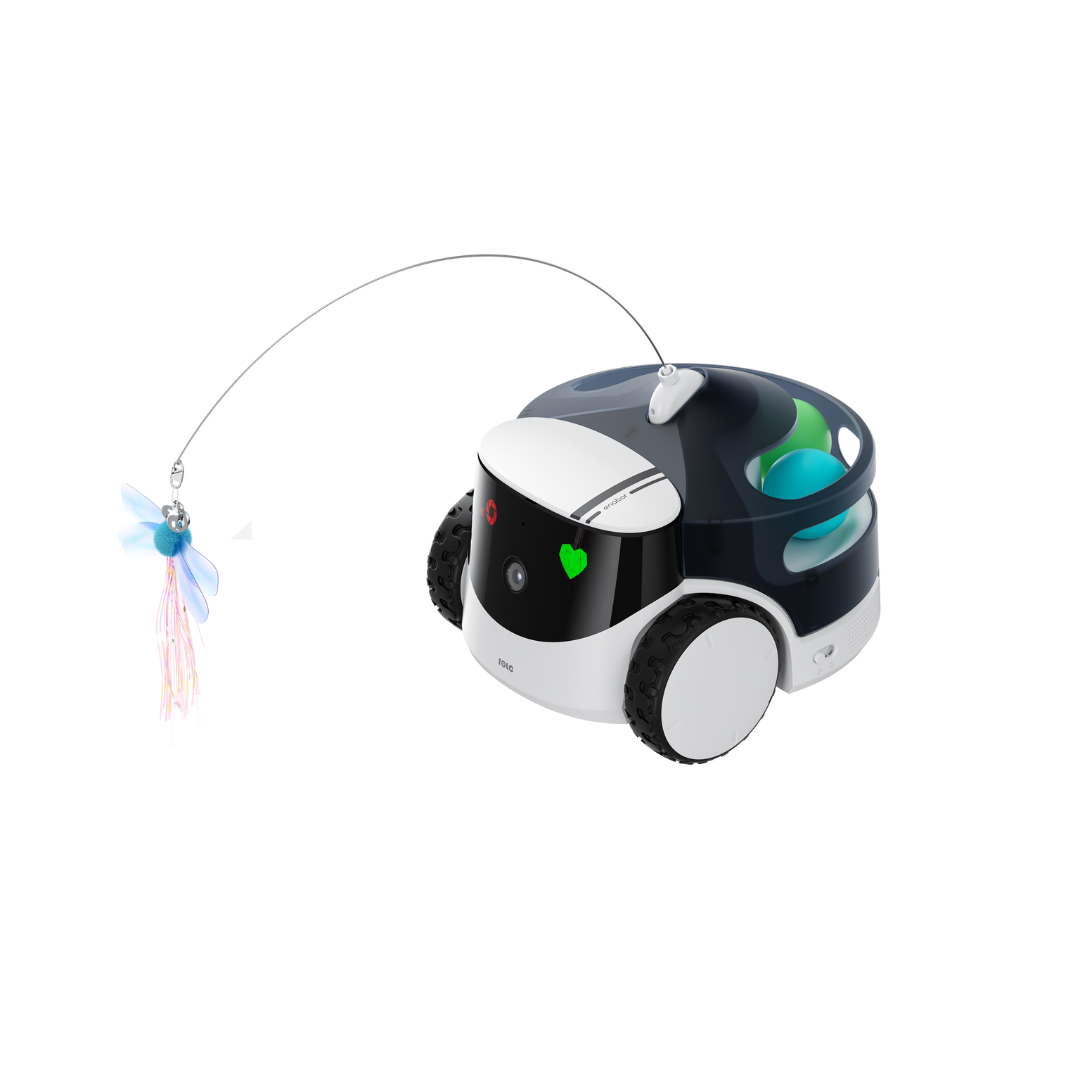
The SKYMEE Owl Robot scores 6.0 in our catalog; the Enabot ROLA PetPal scores 1.0 — the lo
On paper, these two indoor cameras are nearly twins: both shoot 1080p video, both see a 143° field of view, both offer two-way audio and app control, and neither pans, tilts, or tosses treats. - The o
Discussion
No comments yet