Budget Self-Cleaning Litter Boxes: A Data Shortlist
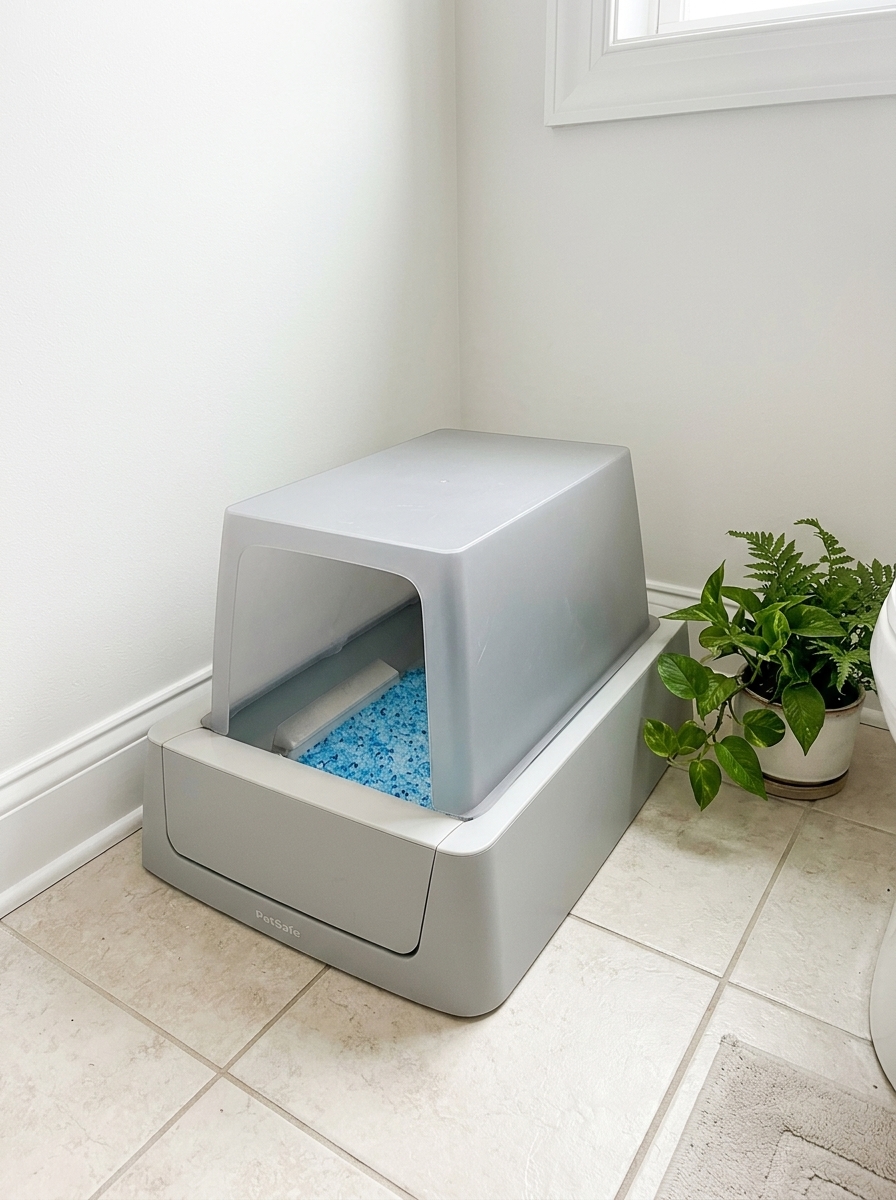
The six lowest tracked purchase prices in the category, $219.99–$359.99. Best score under $300: PetSafe ScoopFree Crystal Smart at 8.4/10.
Lab 01: Pet Tech · Automatic Litter Boxes
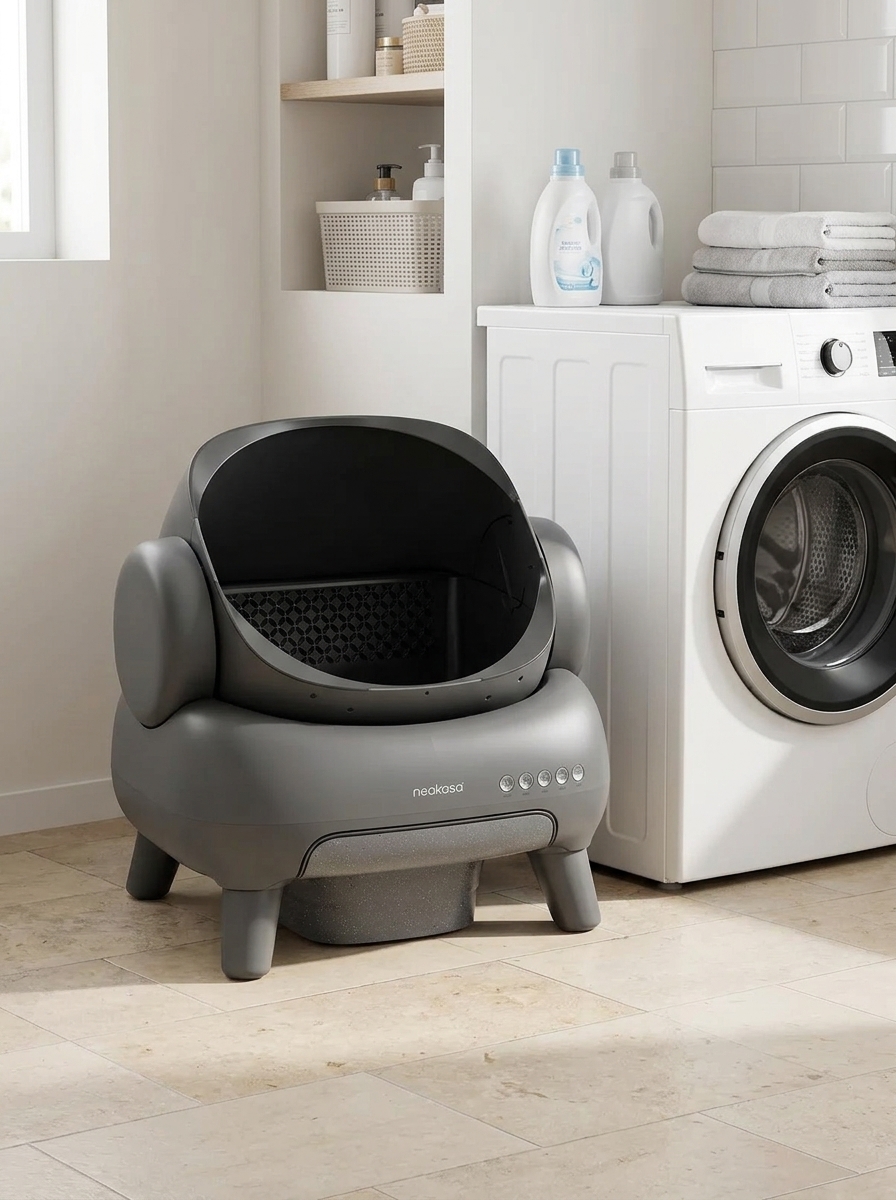
Email me when Neakasa M1 drops to my target price. The confirmation includes a manage link — use it any time to list or remove your alerts at Your price alerts. Lowest price tracked so far: USD 359.99 — a target below that is below the historical low and less likely to be reached.
Affiliate disclosure: AIBuyLab may earn a commission if you buy through links on this page, at no extra cost to you. This is a desk-research cost model built from the manufacturer's published specifications tracked on our product pages — we did not hands-on test this litter box, and no prices are quoted because the point of this article is the structure of the costs, which you can price with current figures from the product page.
Our pick: Neakasa M1 — check the current price at the retailer.
The ChillX AutoEgg is a self-cleaning litter box that uses a raking mechanism: after a cat leaves, a rake passes through the litter bed and pushes clumps into a sealed waste compartment. That distinguishes it from rotating-globe designs such as the Neakasa M1, which tumble the entire drum to sift waste. Raking boxes tend to be simpler and lighter — the AutoEgg weighs just 5 kg, the lightest class in our catalog — but the waste has to go somewhere, and on the AutoEgg that somewhere is a compartment of only 2 L.
The rest of the tracked spec sheet is a study in limits. It takes clumping litter only. It is rated for cats up to 7 kg and for no more than 2 cats. It has no app control — there is nothing to pair, nothing to notify you, and no usage log. It carries a 1-year warranty and requires no subscription. On our product page for the ChillX AutoEgg, those figures combine into an AIBuyLab Score v1.0 of 5.5/10, well below the Neakasa M1's 8.5/10 — and most of that gap is capacity and headroom, not cleaning quality.
A cost model for this box therefore has to start from structure, not sticker price: how often the bin fills, what consumables it consumes, and how likely the box is to stop fitting your household before the three years are up.
Because we do not quote prices in this model, every figure below is a count — bags per year, litres of litter per year — that you can multiply by whatever you actually pay locally. The arithmetic is derived from the 2 L waste capacity and standard assumptions about clumped waste volume, and it is labeled as an estimate throughout: your cat's output, diet, and litter choice will move the real numbers.
A single cat produces roughly 0.3–0.5 L of clumped waste per day once urine clumps and soiled litter are counted. Against a 2 L compartment, that gives an estimated fill time of about 4–6 days for one cat and about 2–3 days for two cats — and most owners change a liner before it is literally full, which shortens the interval further.
Run that cadence across three years:
Household | Estimated changes per year | Estimated changes over 3 years |
|---|---|---|
1 cat | ~60–90 | ~180–270 |
2 cats | ~120–180 | ~360–540 |
Compare the shape of that with a large-globe box. The Neakasa M1's waste drawer holds 11.23 L — more than five times the AutoEgg's capacity — so its liner changes land roughly five times less often for the same household. Neither box's bags are exotic, but a consumable you buy 400 times costs real money even when each unit is cheap, and it costs something else the spreadsheet misses: your attention, roughly twice a week, for three years.
Here the AutoEgg earns its one clear economic point. It runs on standard clumping litter, the same commodity sold under dozens of brands, in bulk bags, on rotating promotions. There is no proprietary tray to reorder, no cartridge format that one company controls, and no subscription of any kind — the spec sheet is explicit on that point.
Over three years, a raking box consumes litter in two ways: the clumps the rake removes (which leave with the waste) and periodic full-bed refreshes. The total volume is comparable to what any clumping-litter box uses for the same cats; the difference is that with the AutoEgg you can always buy the cheapest acceptable bag on the shelf that week. Owners of tray-system boxes cannot do that arithmetic at all. If you are disciplined about buying litter on sale, this is where the AutoEgg claws back some of its bag costs.
A raking mechanism that runs for a minute or two per cycle draws negligible power; electricity will not appear in any honest 3-year total. There are no filters or proprietary parts in the tracked spec. The caveat is the 1-year warranty on a 3-year horizon: years two and three are uninsured. If the rake motor or sensor fails in that window, the replacement decision is the whole box — and a box bought twice is not a cheap box. We are not predicting failure; we are noting that the warranty covers one third of the period this model covers, and the purchase only "wins" if the unit survives all three years.
Add it up structurally and the AutoEgg's 3-year cost looks like this: a modest one-time hardware outlay, a high-frequency, low-unit-cost bag stream, a commodity litter stream you control, near-zero energy cost, and an unquantified but real replacement risk after month twelve. The dollars are small. The touches are not. Whether that trade is good depends entirely on the limits in the next section.
Running costs assume the box keeps fitting your life. The AutoEgg has three hard edges where it simply stops working as a product, and each one converts the entire purchase into a loss if you hit it.
The 7 kg cat cap. The AutoEgg is rated for cats up to 7 kg. That covers most domestic cats — but not all. Large breeds and big males can exceed it, and a kitten bought alongside this box may not stay under it. A cat over the limit is not a degraded experience; it is a box you cannot use, and its remaining "cheap years" vanish.
The 2-cat ceiling. The rating is a maximum of 2 cats, and the 2 L bin makes that ceiling practical as well as nominal: at two cats you are already changing liners every 2–3 days on our estimates. A third cat — a common three-year event in real households — ends the arrangement outright.
No app, no warnings. With no app control, nothing tells you the bin is full or a cycle failed. On a 2 L compartment that fills in days, a missed long weekend can mean a full bin and a cat improvising elsewhere. The cost here is not money; it is that the box demands a manual checking habit that larger, connected boxes automate away.
Set against the contrast case: the Neakasa M1 pairs its 11.23 L drawer with a 15 kg cat rating — more than double the AutoEgg's weight ceiling — which is precisely why it scores 8.5 to the AutoEgg's 5.5 in our model. You are not paying the difference for luxury; you are paying it for headroom.
One small-to-average cat, stable household, tight budget: it works. If your cat is comfortably under 7 kg, no second or third cat is plausible, and you will genuinely change a liner twice a week without resentment, the AutoEgg's 3-year structure is honestly cheap — commodity litter, no subscription, no lock-in. Check current pricing on the ChillX AutoEgg product page and do the bag multiplication with your local liner prices before deciding.
Two cats: marginal. The box is within its rating, but the 2–3 day liner cadence is the worst version of this product's ownership experience, and you have zero headroom. Price a larger-bin alternative before committing.
Big cats, growing kittens, or any chance of a third cat: skip it. The 7 kg and 2-cat limits are not soft guidelines. Buying against them does not save money; it schedules a second purchase.
Anyone who travels or forgets: skip it. A 2 L bin with no app and no alerts is the wrong tool for an unattended household.
Where to buy: Neakasa M1 · ChillX AutoEgg — retailer links run through our /go/ tracker; the product pages track prices daily.
How often will I actually change the AutoEgg's liner? On capacity-based estimates from its 2 L waste compartment, roughly every 4–6 days for one cat and every 2–3 days for two cats. Treat these as planning estimates, not measurements — litter type and your cat's output shift them.
Does the ChillX AutoEgg need special litter or bags? It uses standard clumping litter — a commodity with no proprietary lock-in, which is its main economic advantage. It requires no subscription of any kind.
What happens if my cat weighs more than 7 kg? The AutoEgg is rated to a maximum cat weight of 7 kg. Above that, the box is outside its design limits; a larger-rated model such as the Neakasa M1 (15 kg) is the appropriate comparison.
Is the AutoEgg a good choice for two cats? It is rated for a maximum of 2 cats, so it is within spec — but the 2 L bin means liner changes every 2–3 days on our estimates, and there is no headroom if your household grows.
Why does the AutoEgg score 5.5 while the Neakasa M1 scores 8.5? AIBuyLab Score v1.0 blends spec strength, owner-rating data, and ownership cost. The gap is driven mainly by capacity (2 L vs 11.23 L of waste storage) and headroom (7 kg vs 15 kg maximum cat weight), not by subscription or app features — neither box requires a subscription.
What is the biggest hidden cost over three years? Frequency, not price: an estimated 180–540 liner changes over three years depending on cat count, plus replacement risk after the 1-year warranty expires. The litter itself is the cost you control best, because any clumping brand works.
Last updated: November 27, 2026
November 27, 2026 — Added retailer buying links (Our pick and Where to buy) for the products covered in this article.
The six lowest tracked purchase prices in the category, $219.99–$359.99. Best score under $300: PetSafe ScoopFree Crystal Smart at 8.4/10.
The six lightest tracked boxes by published unit weight (5–10.35 kg) — a stated proxy, because makers do not publish footprints consistently. Lightest: ChillX AutoEgg.
8 boxes meet the multi-cat rule (maker-rated for 2+ cats, or a waste drawer of 10 L+ where no rating is published), ranked by Score v1.0. Top: Neakasa M1 at 8.5/10.
PETKIT PuraMax 2 by the numbers: Score v1.0 6.7/10 (#9 of 16 in its category), owner rating 4.20/5 from 2,729 reviews, tracked from $380.99.
Discussion
No comments yet