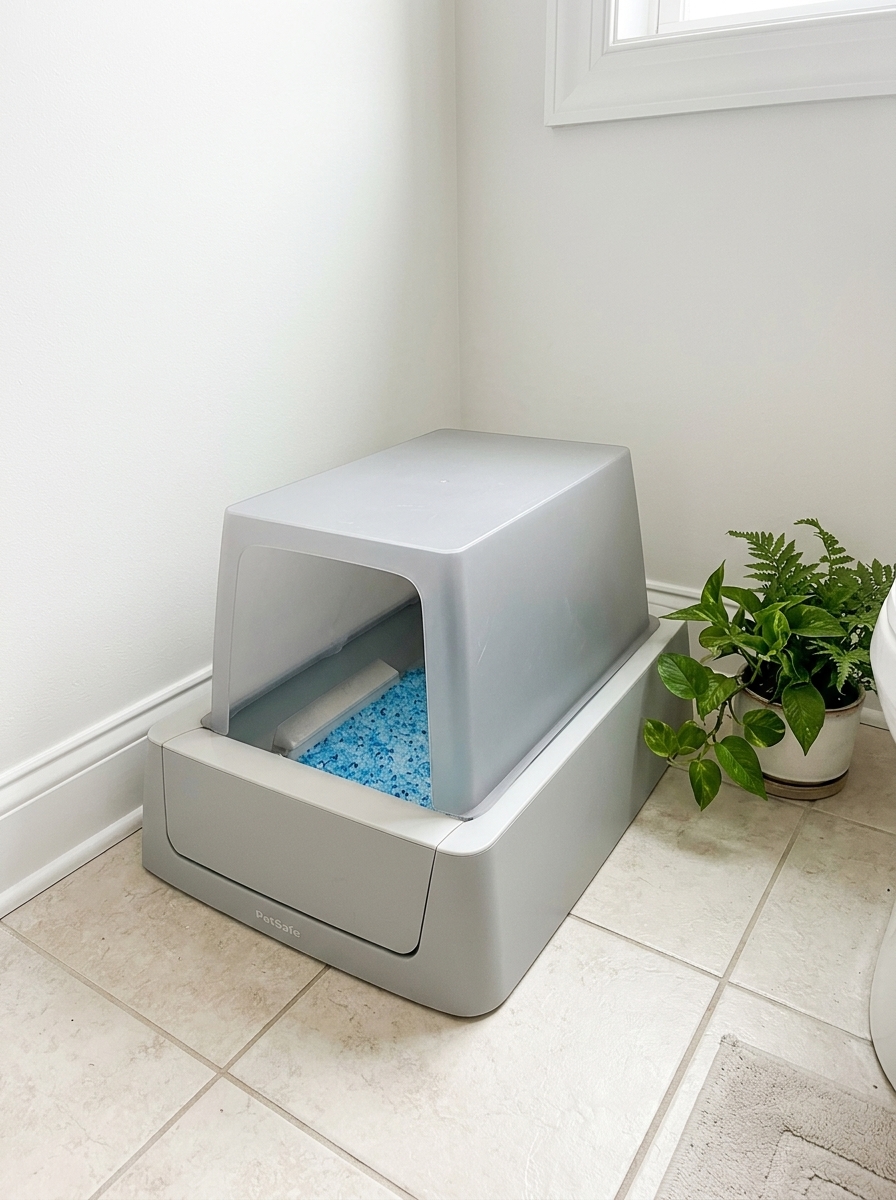
Budget Self-Cleaning Litter Boxes: A Data Shortlist
The six lowest tracked purchase prices in the category, $219.99–$359.99. Best score under $300: PetSafe ScoopFree Crystal Smart at 8.4/10.
Lab 01: Pet Tech · Automatic Litter Boxes
Email me when Litter-Robot 4 drops to my target price. The confirmation includes a manage link — use it any time to list or remove your alerts at Your price alerts. Lowest price tracked so far: USD 699.00 — a target below that is below the historical low and less likely to be reached.
Affiliate disclosure: AIBuyLab may earn a commission if you buy through links on this page, at no extra cost to you. This guide is based on catalog specifications and published product data — we did not hands-on test these units.
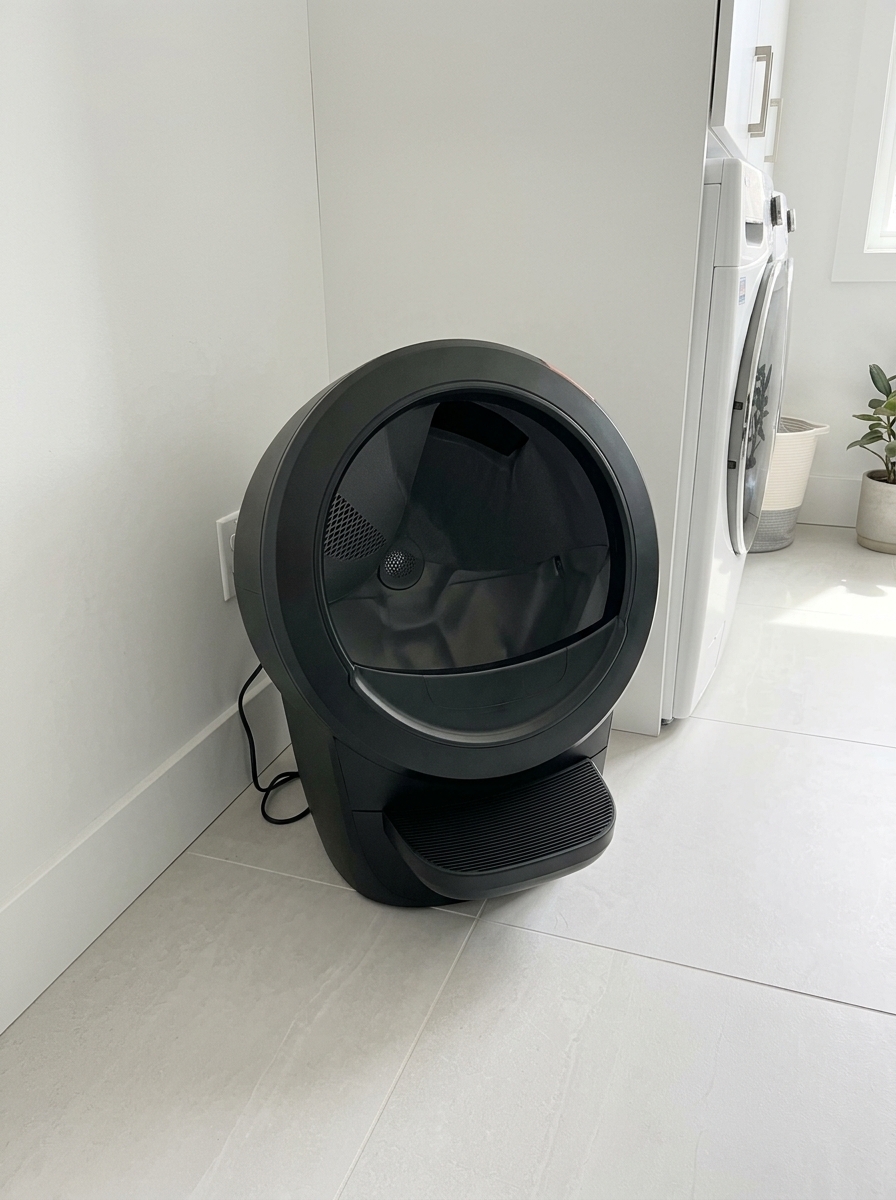
Our pick: Litter-Robot 4 — check the current price at the retailer.
The Litter-Robot 4 is a self-cleaning litter box built around a rotating globe: after a cat exits, the globe turns and sifts waste out of the clumping litter into a sealed drawer, so the owner empties a bin instead of scooping daily. In our catalog it carries a Score v1.0 rating of 6.9, app control, a maximum cat weight of 11.3 kg, a rating of up to 4 cats per household, a 40 cm entry width, and a 1-year warranty. It has no camera and requires no subscription. Those numbers — not the marketing — are what decide whether it fits your home, and several of them draw clear lines.
This is the hardest line on the spec sheet. The Litter-Robot 4's maximum cat weight is 11.3 kg. That is not a soft guideline: a weight-based sensor and a globe sized around that ceiling mean a genuinely large cat — a big Maine Coon, a Ragdoll at the top of the breed range, or simply a heavy domestic cat — sits outside the machine's rated envelope. A cat that close to or over the cap risks unreliable cycle triggering and a cramped interior, and no firmware update changes the physical rating.
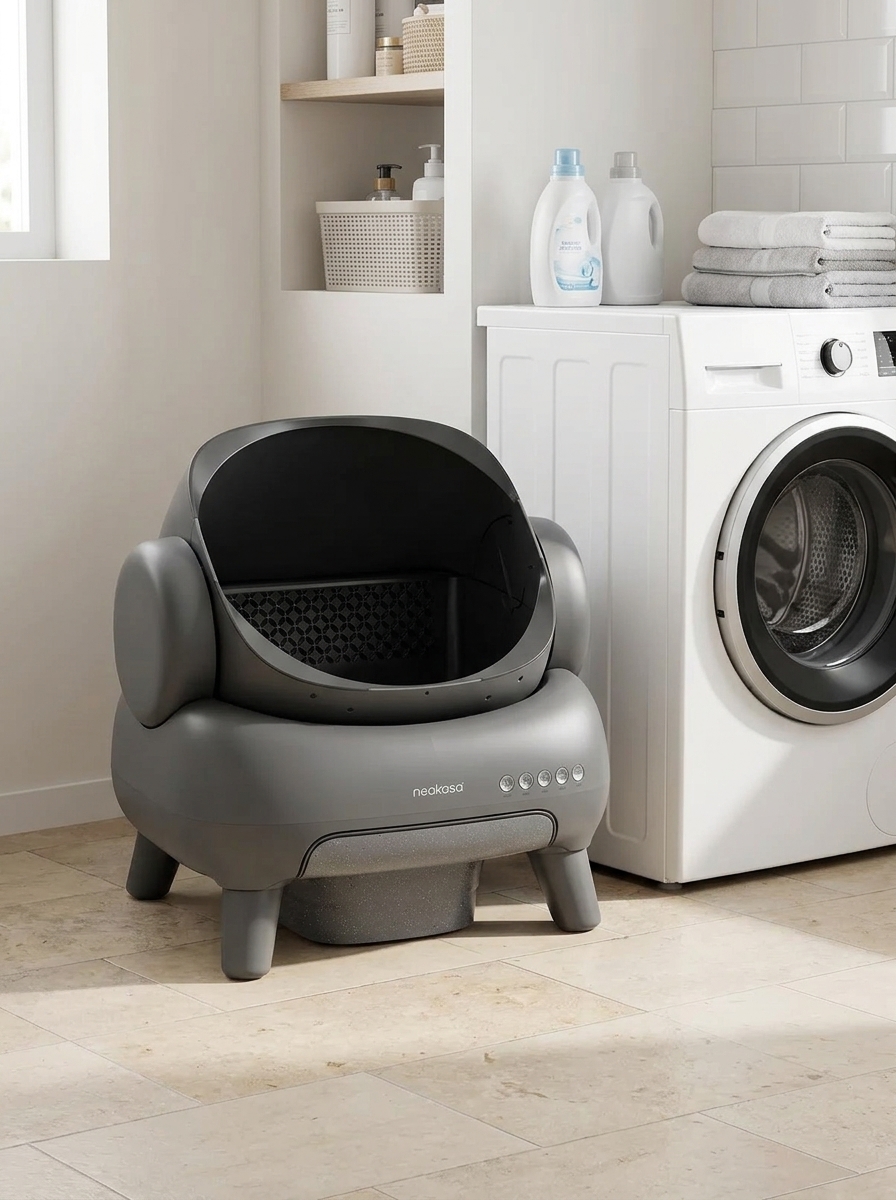
Buy instead: the Neakasa M1, which our catalog scores at 8.6 — higher than the Litter-Robot 4 — with a maximum cat weight of 15 kg. The M1 takes a different mechanical approach (an open-top sifting design rather than an enclosed rotating globe), and its waste drawer holds 11.23 L. If your cat's weight is the deciding factor, the M1's extra 3.7 kg of headroom is the spec that matters, and it happens to come from the higher-scored product in our data.
The Litter-Robot 4 is rated for up to 4 cats. That capacity is a genuine virtue in a multi-cat home — it is the core of the fairness case below — but it also means a single-cat household is paying for throughput it will never use. Waste volume from one cat fills a drawer slowly; the multi-cat rating buys you nothing except a longer interval between emptying, which mid-tier rotating-globe boxes also deliver at their own capacity ratings.
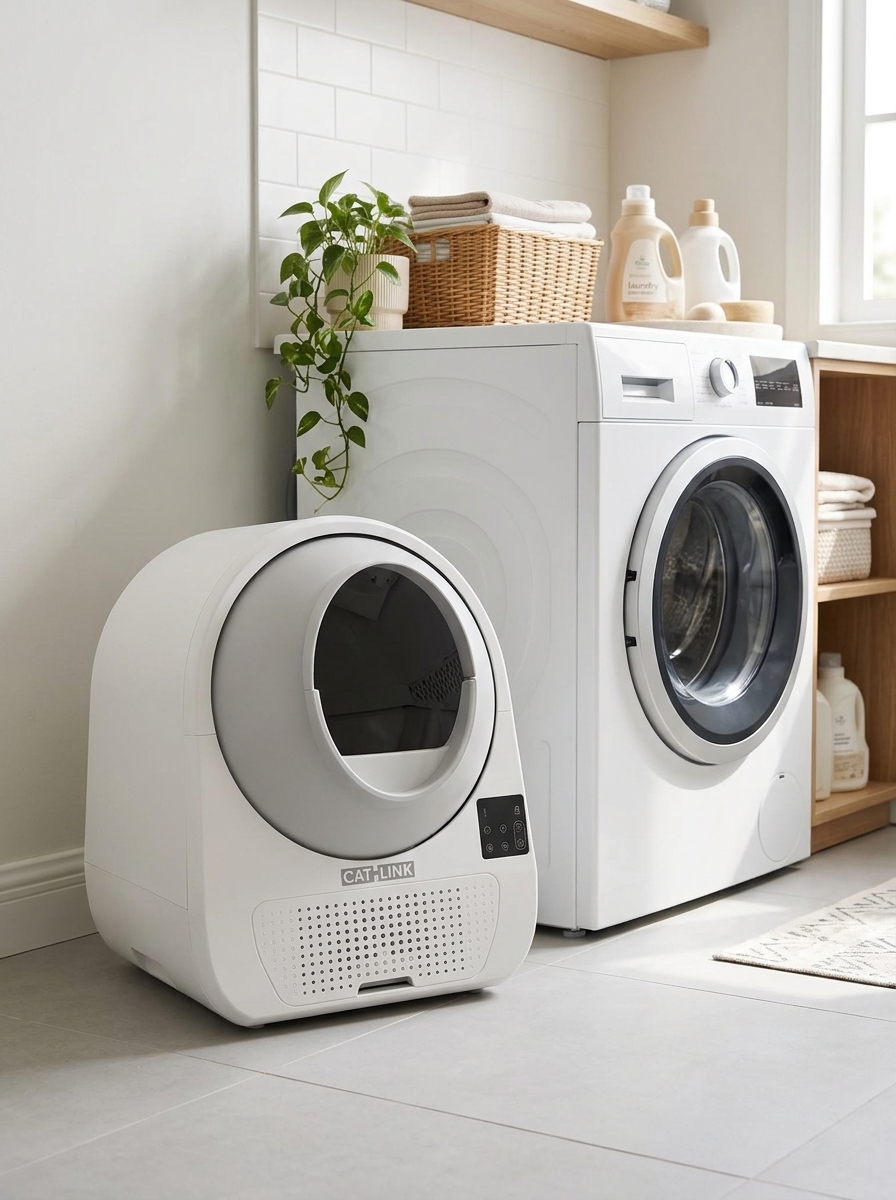
Buy instead: a mid-tier globe such as the PETKIT PuraMax 2 (Score 6.6 in our catalog). The score gap between 6.6 and 6.9 is modest, and for one cat the day-to-day experience — automatic sifting of clumping litter, app control, no subscription — is in the same class. The honest framing is not that the Litter-Robot 4 is bad value in absolute terms; it is that a single-cat home is purchasing capacity headroom as its main upgrade, and capacity is the one thing it does not need.
The Litter-Robot 4 has no camera. That is a clean, factual gap in the spec sheet: app control is present, so you get cycle notifications and usage data, but there is no visual confirmation of which cat used the box, no way to eyeball a health concern (a cat straining, or avoiding the box), and no visual check when you're traveling.
For some owners this is a non-issue — arguably a privacy plus. For others, especially anyone monitoring a cat with a urinary history or managing a multi-pet home where identifying the user matters, the camera is the feature, and no accessory retrofits it into this model.
Buy instead: a camera-equipped model. Several automatic litter boxes in our catalog ship with built-in cameras as a headline feature; if visual monitoring is on your requirements list, filter for it first rather than treating it as a nice-to-have, because it is the one capability the Litter-Robot 4 cannot grow into. (If a camera is a deal-breaker for you in the other direction — you don't want one — this skip case inverts into a point in the Litter-Robot 4's favor.)
Automatic litter boxes detect a cat's presence largely by weight, and every model has a minimum weight below which cycles may not trigger reliably or safely. Our catalog does not track a published minimum-weight figure for the Litter-Robot 4, so we will not state one here — and that gap is itself the guidance.
If your household includes a young kitten or an unusually small adult cat, treat the minimum-weight question as a verification step, not an assumption: check the manufacturer's current documentation for the minimum cat weight before purchasing, and plan on running any automatic box in a supervised or manual mode until a kitten is well clear of it. This caution applies to the whole product category, but it is a legitimate reason to pause on any specific model — including this one — when the cat in question is at the very light end of the range.
A filter is only useful if it also says who passes. The Litter-Robot 4's spec sheet points at a clear buyer:
Its Score v1.0 rating of 6.9 places it solidly in the upper-middle of the automatic boxes we track. Nothing in this guide argues it is a poor product; the argument is narrower — that its hard specs exclude specific homes, and those homes have better-matched options.
Skip the Litter-Robot 4 if your cat exceeds 11.3 kg (get the Neakasa M1), if you need a camera, if you're a single-cat home that would be paying for four-cat capacity, or if a very light kitten makes the minimum-weight question one you can't yet answer. At the other end of the size range, the ChillX AutoEgg (Score 5.5) shows how far the category stretches: a raking design with a 7 kg maximum cat weight, suited only to small cats — a reminder that matching the weight envelope matters in both directions. For multi-cat, app-first homes with standard-size cats, the Litter-Robot 4 remains a rational buy. Check the current price and full spec table on its product page before deciding.
Where to buy: Litter-Robot 4 · Neakasa M1 · PETKIT PuraMax 2 — retailer links run through our /go/ tracker; the product pages track prices daily.
What is the maximum cat weight for the Litter-Robot 4? 11.3 kg, per our catalog data. Cats above that should look at a higher-rated model such as the Neakasa M1 (15 kg maximum).
Does the Litter-Robot 4 have a camera? No. It has app control, but no built-in camera. If visual monitoring matters to you, choose a camera-equipped model instead.
Does the Litter-Robot 4 require a subscription? No. App control is included without a subscription in our catalog data.
How many cats can use the Litter-Robot 4? It is rated for up to 4 cats, which is why multi-cat homes get the most value from it — and why single-cat homes may be overbuying.
What litter does the Litter-Robot 4 use? Clumping litter only, per its catalog specifications.
What warranty does the Litter-Robot 4 carry? A 1-year warranty, per our catalog data.
Last updated: November 27, 2026
November 27, 2026 — Added retailer buying links (Our pick and Where to buy) for the products covered in this article.
The six lowest tracked purchase prices in the category, $219.99–$359.99. Best score under $300: PetSafe ScoopFree Crystal Smart at 8.4/10.
The six lightest tracked boxes by published unit weight (5–10.35 kg) — a stated proxy, because makers do not publish footprints consistently. Lightest: ChillX AutoEgg.
8 boxes meet the multi-cat rule (maker-rated for 2+ cats, or a waste drawer of 10 L+ where no rating is published), ranked by Score v1.0. Top: Neakasa M1 at 8.5/10.
PETKIT PuraMax 2 by the numbers: Score v1.0 6.7/10 (#9 of 16 in its category), owner rating 4.20/5 from 2,729 reviews, tracked from $380.99.
Discussion
No comments yet