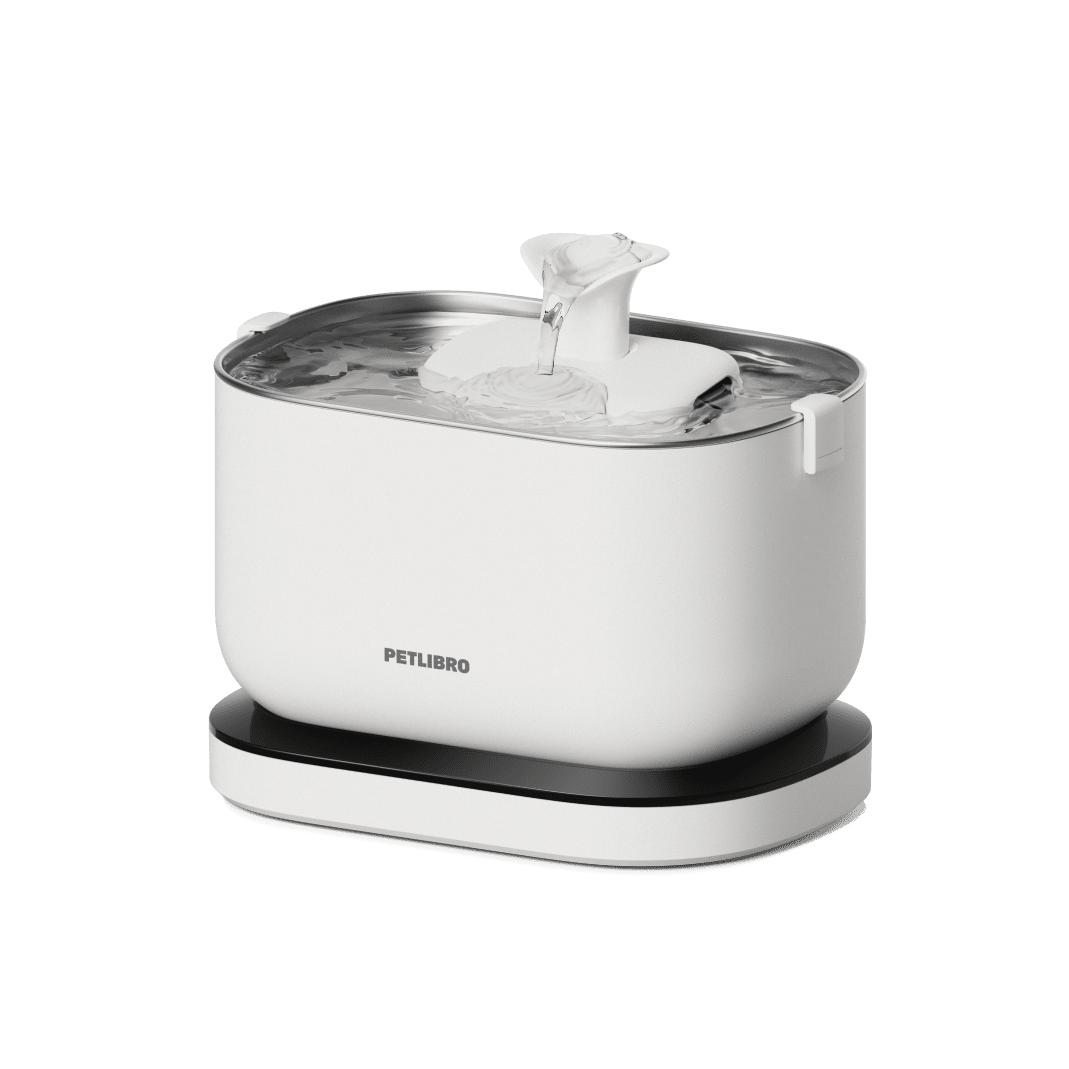
Email me when Petlibro Dockstream Cordless Fountain drops to my target price. The confirmation includes a manage link — use it any time to list or remove your alerts at Your price alerts. Lowest price tracked so far: USD 69.99 — a target below that is below the historical low and less likely to be reached.
Disclosure: AI Buy Lab tracks prices and specifications from manufacturer and retailer listings. If you buy through a link on this site in the future, we may earn a commission at no extra cost to you. This guide is based on the published specifications of the fountains in our catalog.
TL;DR
When a cat ignores a fountain, the cause is almost always one of five things: the fountain sits next to the food bowl or litter area, it replaced the old bowl overnight with no transition, the flow setting startles or bores the cat, pump noise or vibration is putting the cat off at close range, or the water tastes of a new plastic unit or an overdue filter. Fix them in that order — placement first, because it is free — and give each change several days. Only if the cat still will not drink should you look at a different fountain style from our pet water fountain category, such as a cordless model you can put where the cat actually wants to drink.
A pet water fountain is a recirculating drinking station that pumps water through a filter and presents it as a stream, bubbling surface or gentle sheet, on the theory that moving water attracts cats and stays fresher than a standing bowl. That theory works on many cats — but a fountain is also a new, humming, splashing object inserted into a territory a cat has already mapped. Refusal is information about the setup, not stubbornness. The fountains in our catalog span a wide spec range — capacities from 1.8 L to 3 L, noise ratings from 23 dB to 26 dB among models that publish them, plastic and stainless-steel bodies, corded and cordless designs — and those specs map directly onto the fixes below. The ranked overview is in best pet water fountains.
Fix 1: Move it away from food and litter
Cats instinctively prefer water separated from food — in the wild, water near a kill is water at risk of contamination — and they dislike drinking near litter for obvious reasons. If the fountain went down beside the food bowl because that is where the old water bowl lived, you have reproduced the exact arrangement many cats tolerate rather than like. Move the fountain to a quiet spot a few metres away, ideally along a wall the cat already passes, and leave the old bowl in place during the transition. This single change resolves a large share of refusals and costs nothing.
Fix 2: Run old and new side by side
An overnight swap removes the cat's known water source and replaces it with a novel object. Instead, keep the familiar bowl filled next to the fountain for one to two weeks. Curiosity does the work: cats investigate running water on their own schedule, and the first voluntary drink usually happens when nobody is watching. Removing the old bowl before that first drink turns a preference question into a thirst standoff, which helps nobody.
Fix 3: Change the flow, not the cat
Most fountains in our catalog offer more than one flow presentation or an intermittent mode. A cat that flinches from a free-falling stream may happily drink from a bubbling surface; a cat bored by a still sheet may be drawn to a stream. If your model has settings, try the gentlest one first for several days. Cordless models add another pattern: the Petlibro Dockstream Cordless Fountain class of battery fountains often runs intermittently to save power, which some cats read as "sometimes water, sometimes sculpture" — if your cat only drinks when the pump is audibly on, a continuous-flow setting or a corded model may suit it better.
Fix 4: Attack noise and vibration
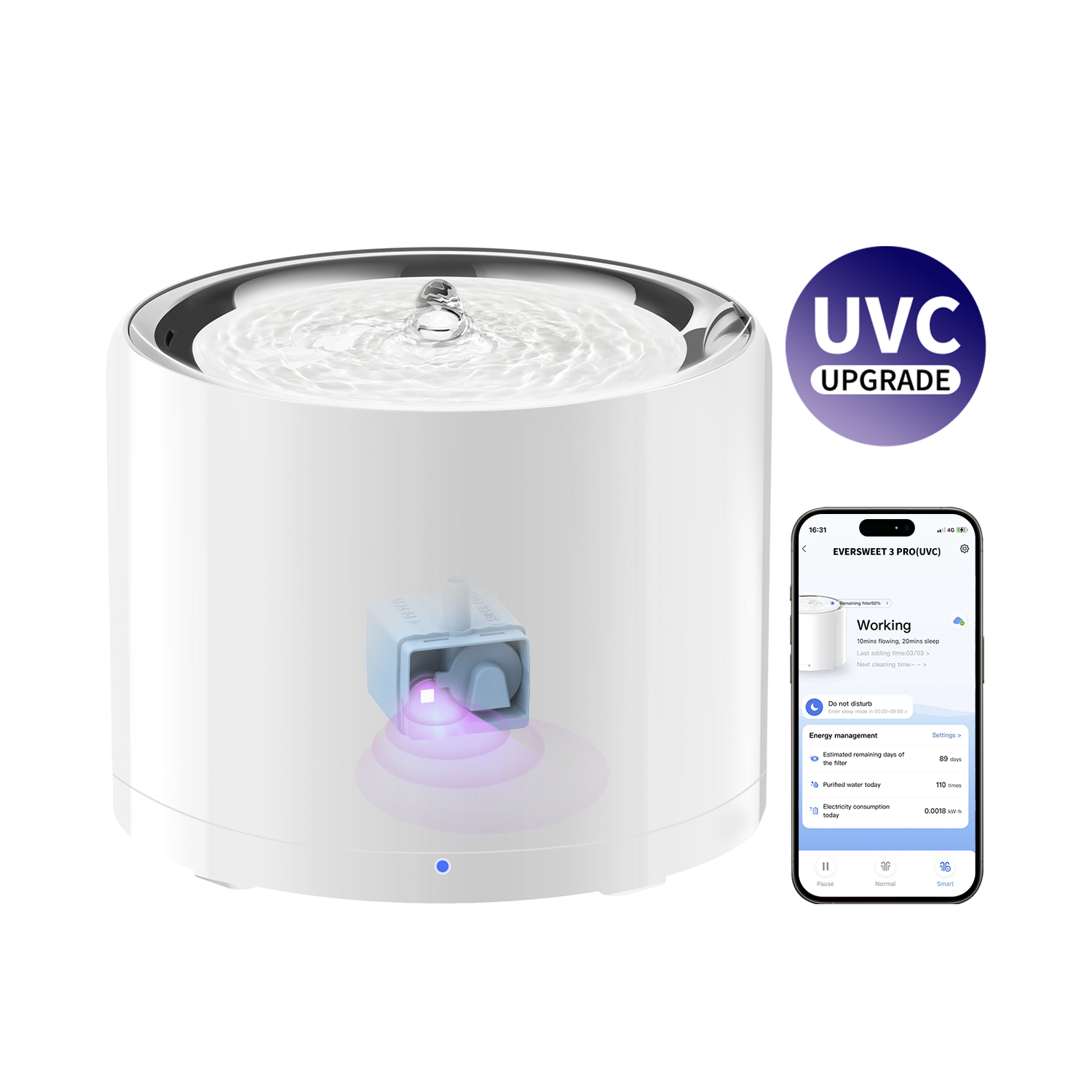
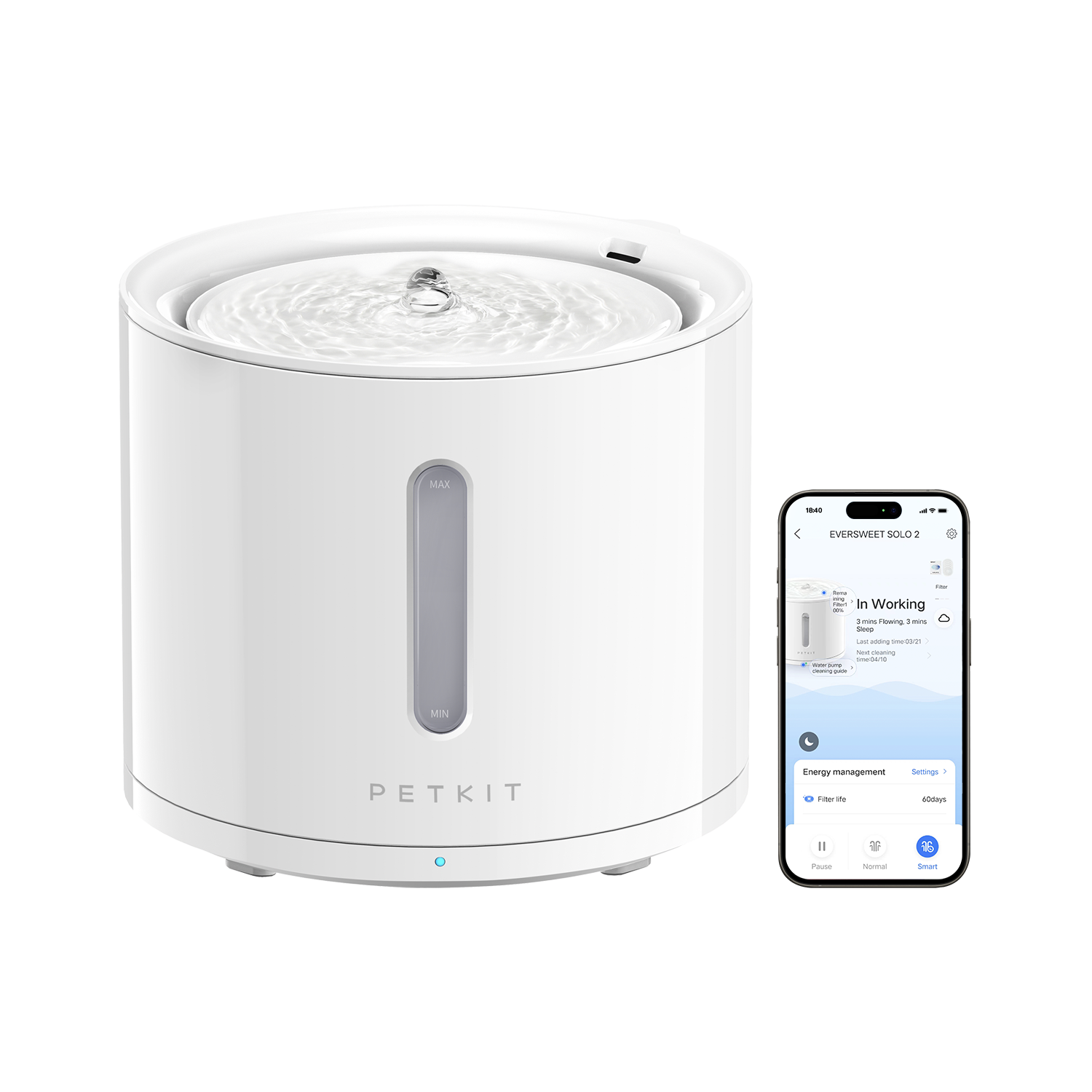
Published noise figures in our catalog run from 23 dB (the Dockstream, which is also cordless, so no cable hum path) to 25 dB for the PETKIT Eversweet 3 Pro and 26 dB for the PETKIT Eversweet Max. Those are quiet numbers, but cats hear the pump through the floor as much as through the air. Put the fountain on a mat, keep it level, top up the water — a low reservoir makes pumps louder — and clean the pump impeller, because a gritty pump is a loud pump. Hygiene is not optional maintenance anyway; our guide to pet water fountain hygiene and filter costs covers the cleaning and filter schedule that keeps both noise and taste under control.
Fix 5: Fix the taste
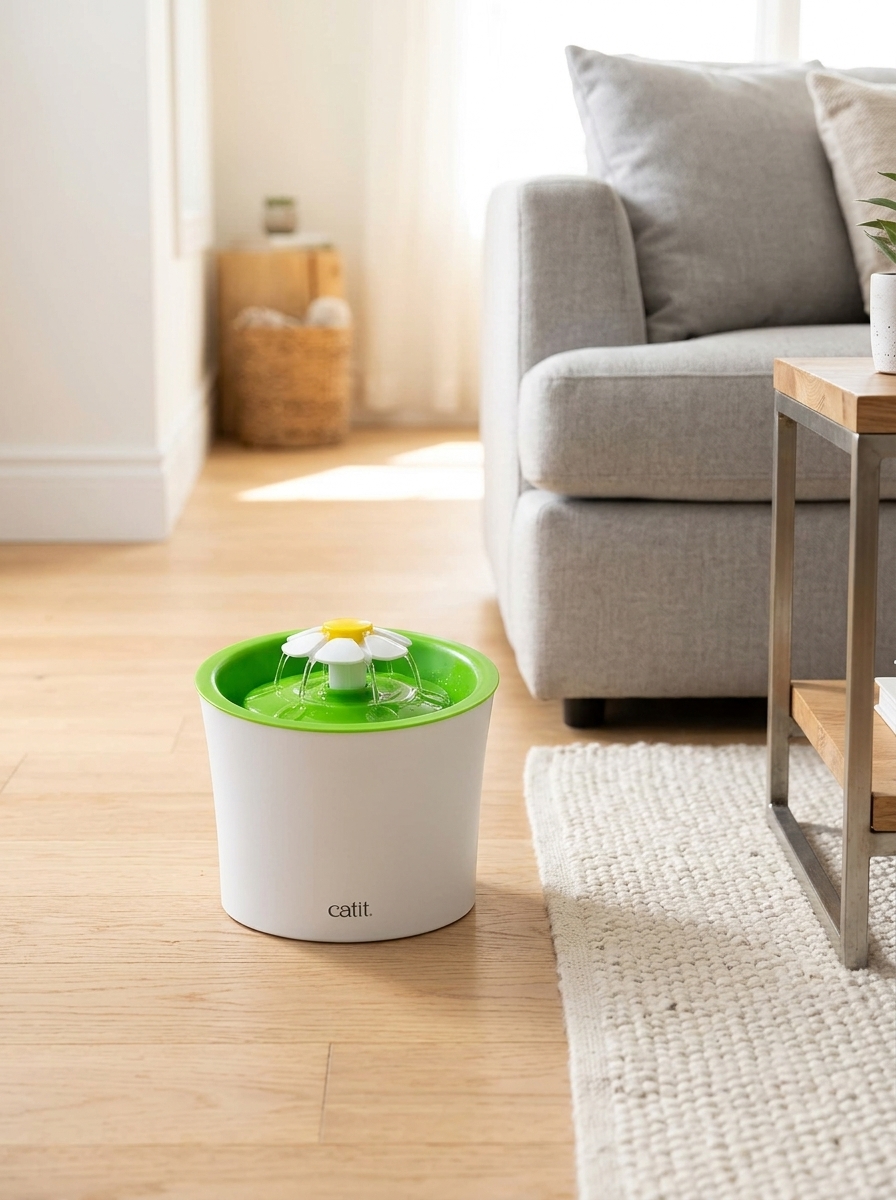
A brand-new plastic fountain can carry a manufacturing taste for the first days; a thorough wash before first use is in most manuals for a reason. After that, taste problems usually mean the filter is overdue. The Dockstream's tracked consumable cost works out to $6.75 per month on a two-week filter replacement cycle — a useful reminder that filters are a running cost with a schedule, not a fit-and-forget part. If your cat drinks happily from a freshly cleaned fountain and drifts away over two weeks, the filter calendar is your prime suspect. Material is the longer-term variable: the Eversweet 3 Pro is stainless steel (1.8 L, plug-in), while the Catit PIXI and Eversweet Max are plastic at 2.5 L and 3 L respectively; a cat that persistently rejects plastic may accept steel.
When to change fountains instead
Swap the unit, not just the settings, if: your cat drinks from taps but never from this fountain's flow style; the only workable location has no outlet and your model is corded (cordless models publish battery life from 30 days for the Dockstream to 83 days for the Eversweet Max, so placement freedom is a spec, not a hope); or your cat is simply too small or arthritic for the fountain's drinking height. Any replacement should be chosen against the category data — capacity, noise, material, filtration — rather than by novelty.
How long should I give a cat to accept a fountain? Give each single change several days, and allow one to two weeks of side-by-side running with the old bowl before judging. Cats adopt new water sources slowly and usually at night or when unobserved.
Why does my cat drink from the tap but not the fountain? The tap offers a fresh, aerated stream at height with no pump noise and no reservoir taste. Mimic what you can: gentlest stream setting, scrupulously clean water, fresh filters, and a quiet, level placement.
Is a cordless fountain better for a reluctant cat? It can be, purely through placement: no outlet constraint means you can put water where the cat already likes to be. Published battery life in our catalog runs 30 to 83 days depending on model, so the trade-off is a charging routine.
Could the filter be the problem? Yes — an overdue filter is a common cause of a cat drifting away from a fountain it previously used. The tracked example in our catalog costs $6.75 per month on a two-week replacement cycle; check your model's schedule.
Should I put the fountain next to the food bowl? We advise against it. Many cats prefer water separated from food. Try a quiet spot a few metres away first — it is the cheapest fix on this list.
Last updated: November 26, 2026.
Changelog
November 27, 2026 — Added retailer buying links (Our pick and Where to buy) for the products covered in this article.
Related in this category
Pet Tech · Pet Water Fountains · Updated Nov 22, 2026
Across 17 tracked fountains: plastic dominates (12 of 17), capacities run 1.5–9.5 L, and only 1 maker publishes a filter cost — the hygiene field that decides what a fountain really costs to keep clean.
Pet Tech · Pet Water Fountains · Updated Nov 21, 2026
As of 2026-11-21, we track 17 pet water fountains from 11 brands, scored with Score v1.0 from owner ratings, spec strength and ownership cost. Catit Flower Fountain leads the list at 8.2/10. Tracked prices run from $17 to $100; the full table below is sortable by score and price.


Discussion
No comments yet