Price alerts — Petlibro Dockstream RFID Smart Fountain
Price-drop alert
Email me when Petlibro Dockstream RFID Smart Fountain drops to my target price. The confirmation includes a manage link — use it any time to list or remove your alerts at Your price alerts. Lowest price tracked so far: USD 99.99 — a target below that is below the historical low and less likely to be reached.
Affiliate disclosure: This article is desk research based on catalog specifications and published product data. We did not hands-on test either fountain. AIBuyLab may earn a commission from qualifying purchases made through links on this page, at no extra cost to you.
TL;DR
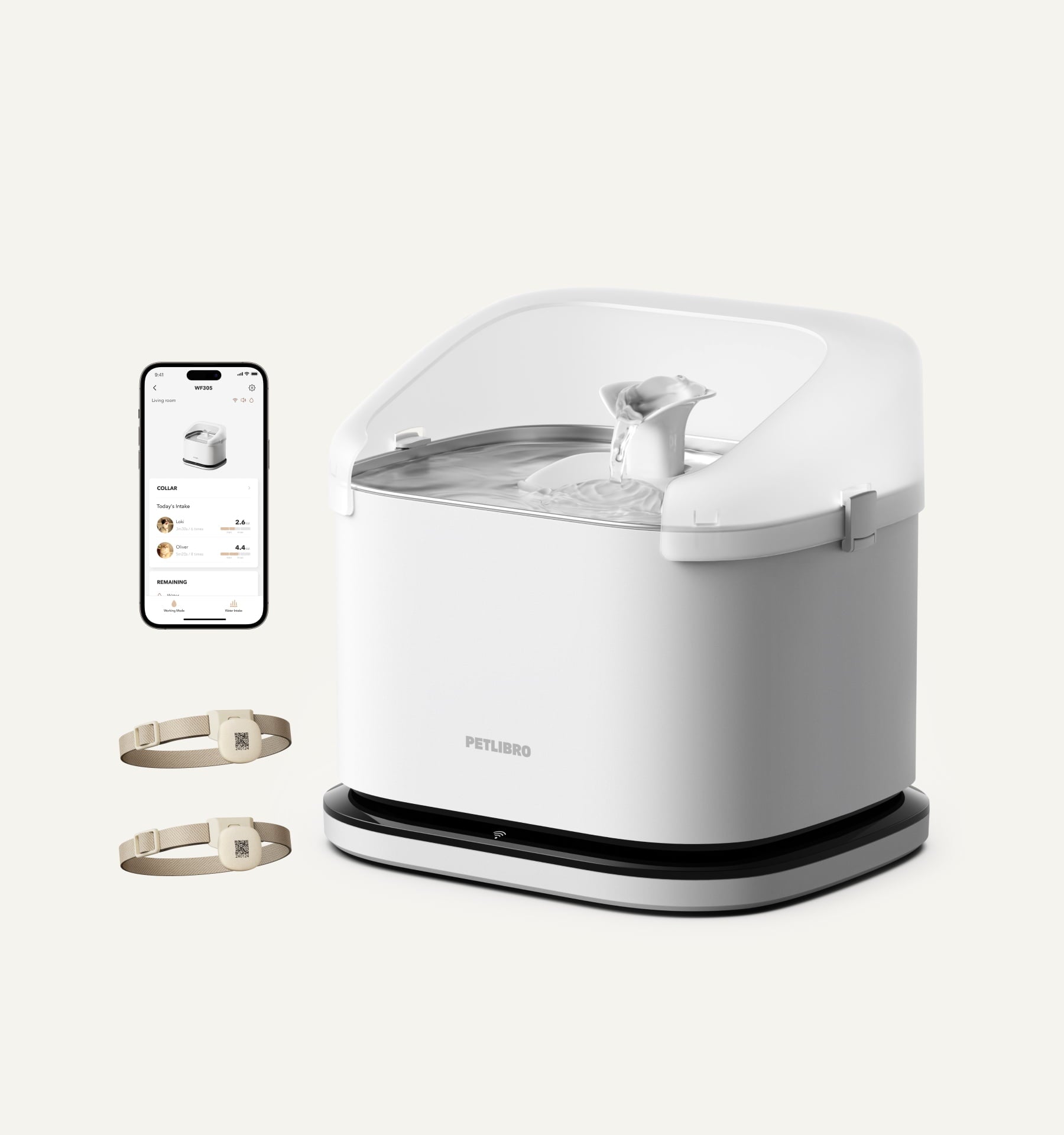
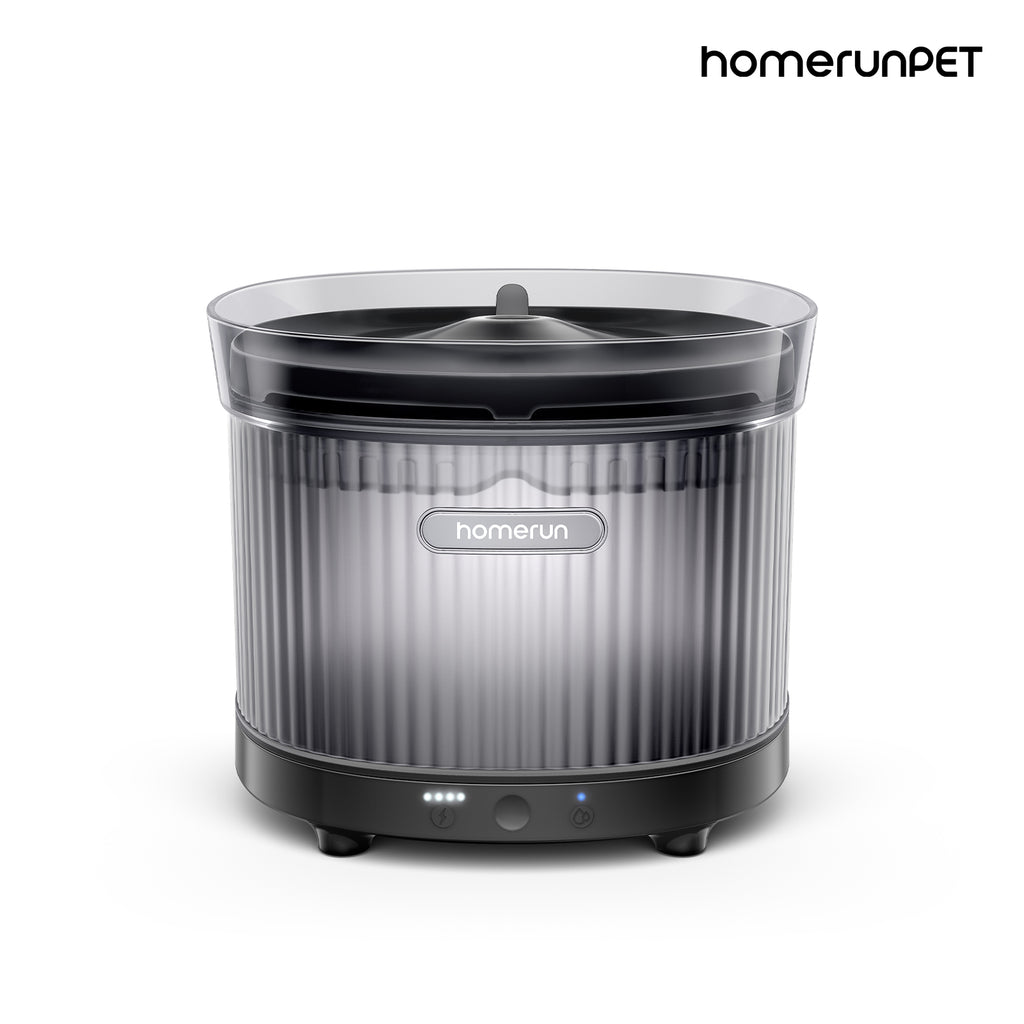
The Petlibro Dockstream RFID Smart Fountain (Score 7.1) and the Homerunpet Wireless Pet Water Fountain BF10 (Score 6.1) answer the same question — where can a pet fountain live? — in opposite ways. The Dockstream must sit near a power outlet, but it brings a stainless-steel basin, app control, per-pet RFID access, a larger 3 L capacity, and a 2-year warranty. The BF10 runs cordless on a battery rated for 30 days and is rated by its manufacturer at a very quiet 20 dB, so it can live almost anywhere — but it holds 2 L, is made of plastic, and has no app control at all. Pick the Dockstream for a fixed, feature-rich watering station; pick the BF10 for placement freedom and quiet.
What a pet water fountain is — and what "RFID access" means
A pet water fountain is a recirculating water station: a pump moves water from a reservoir through a filter and over a drinking surface, which encourages cats and dogs to drink more often than they would from a still bowl and keeps the water filtered between refills. The two design decisions that shape daily life with one are where it can sit (corded fountains are tethered to an outlet; cordless ones are not) and what the water touches (stainless steel versus plastic).
RFID access, the feature in the Dockstream's name, is a per-pet identification system. RFID stands for radio-frequency identification: a small tag worn on a pet's collar carries a unique ID, and a reader in the fountain recognizes that ID when the tagged pet approaches. In a fountain, this class of feature is generally used to control or personalize access per pet — for example, in multi-pet homes where one animal is on a special routine and the household wants to know, or decide, which pet drinks. It is a categorically different feature from app control: the app talks to you, while RFID identifies the pet at the bowl.
The spec table
Specification
Petlibro Dockstream RFID
Homerunpet BF10
AIBuyLab Score (v1.0)
7.1
6.1
Capacity
3 L
2 L
Basin material
Stainless steel
Plastic
Filtration
Multi-stage
Multi-stage
Power
Corded (requires outlet)
Cordless, 30-day battery
Noise
Not tracked in our catalog
20 dB (manufacturer figure)
App control
Yes
No
Per-pet RFID access
Yes
No
Warranty
2 years
Not tracked in our catalog
Both fountains use multi-stage filtration, so filtration depth is not the deciding factor here. Everything else on the table pulls in opposite directions — which is exactly what makes this a placement decision first and a features decision second.
Placement: the outlet question decides more than you'd think
The BF10's cordless design removes the single biggest constraint in fountain ownership. Most rooms have one or two sensible outlet locations, and they are rarely where a pet actually wants to drink: a quiet corner away from food, a hallway nook, a spot near where the cat already sleeps. A cordless fountain can go in any of those places, and it can move — to a different room during a heat wave, to a pet sitter's house, to wherever a new kitten is being kept while it settles in. The 30-day battery rating means recharging is a monthly chore rather than a weekly one, though like all battery figures it is a rating, not a guarantee for every usage pattern.
The Dockstream trades that freedom away. It needs an outlet, full stop. In exchange, it never runs flat: there is no battery to age, no week where the pump quietly stops because a recharge was forgotten. For a permanent watering station — the spot your pet will drink from for years — a cord is a one-time inconvenience rather than a recurring one. The honest summary: the BF10 wins the first week (put it anywhere, today), and the Dockstream wins the years after (nothing to remember, ever).
Hygiene and capacity: steel and 3 liters vs plastic and 2
Stainless steel is the Dockstream's second big argument. Steel basins are the material most often recommended for pet bowls because the surface is non-porous and holds up to repeated scrubbing without developing the fine scratches that plastic accumulates over time — scratches that can harbor residue between cleanings. The BF10's plastic construction is lighter and is part of how it achieves its go-anywhere design, but it asks for more diligent cleaning to stay in the same condition.
Capacity compounds the difference. At 3 L, the Dockstream holds 50% more water than the BF10's 2 L. In practice, capacity is refill frequency: a larger reservoir stretches the interval between top-ups, which matters most in multi-pet homes and for owners who travel for a weekend. Neither figure changes how often the water itself should be refreshed and the fountain cleaned — a bigger tank is a convenience buffer, not a hygiene substitute — but if both fountains are cleaned on the same schedule, the Dockstream owner makes fewer unscheduled refill trips.
Smart features: app and RFID vs deliberate simplicity
The Dockstream is the connected option on two levels. App control puts the fountain's management on your phone rather than on the unit itself. RFID access adds the per-pet layer described above: in a household where two cats share a home but not a diet or a health plan, knowing and controlling which pet uses the fountain is a feature no amount of app polish can substitute for.
The BF10 has no app control, and it is worth being precise about what that means rather than treating it as a simple missing checkbox. There is nothing to pair, no account to create, no firmware to update, and nothing that stops working if a phone changes or a service shuts down. What you give up is remote visibility and control; what you keep is a fountain whose entire interface is the fountain. For a single-pet home that just wants quiet, fresh water in a cord-free spot, that trade is entirely rational.
Noise: the BF10's headline number
Homerunpet rates the BF10 at 20 dB — a manufacturer figure, not an independent measurement, and noise ratings for small pumps are best treated as directional rather than absolute. Directionally, though, 20 dB is a very low claim, in the class of a whisper-quiet appliance, and it fits the BF10's design brief: a fountain meant to sit in a bedroom corner or next to a desk without announcing itself. Our catalog does not track a comparable noise figure for the Dockstream, so we will not invent one; if the fountain will live where you sleep, the BF10 is the only one of the two that even makes a documented quiet claim, and that asymmetry is itself useful information.
Warranty and the long view
The Dockstream carries a 2-year warranty, the longer commitment of the two as far as our catalog tracks — the BF10's warranty term is not listed in our catalog data. Combined with its steel basin and always-on power, the Dockstream reads as the "buy once, install once" option. The BF10's long-view question is its battery: a 30-day-per-charge rating is excellent, but rechargeable batteries are consumable components over a multi-year horizon in a way a power cord is not.
Verdict
Choose the Petlibro Dockstream RFID if the fountain has a permanent home near an outlet and any of these apply: you have multiple pets and per-pet RFID access solves a real problem, you want app control, you prefer stainless steel for hygiene, or you want the larger 3 L capacity and 2-year warranty. It is the higher-scoring fountain in our catalog (7.1 vs 6.1) for structural reasons, not marginal ones.
Choose the Homerunpet BF10 if placement is the problem: no outlet where the fountain needs to go, a bedroom or office where the manufacturer-rated 20 dB quiet matters, a kitten room or temporary setup that will move, or a household that simply does not want another app-connected device. You give up a liter of capacity, the steel basin, and all smart features — and for the right room, that is the correct trade.
Does the Dockstream RFID work without the app? App control is a tracked feature of the Dockstream, but the fountain's core job — pumping filtered water — is a function of the unit itself. The app is the control and monitoring layer; the RFID access feature works at the bowl, where the reader identifies the tagged pet.
How does RFID access actually help in a two-cat home? Each pet wears a tag with a unique ID, and the fountain's reader recognizes which pet is at the bowl. That per-pet identification class is used to personalize or control access — useful when one cat is on a special routine and you need the fountain itself, not your memory, to keep track of who drinks.
Is the BF10's 30-day battery life guaranteed? No. Thirty days is the manufacturer's rating for the BF10's battery. Actual intervals depend on usage and pump settings, so treat it as "roughly monthly recharging" rather than a promise — and note that a cordless fountain that runs flat stops circulating until it is recharged, unlike the corded Dockstream.
Is 20 dB really quiet? The 20 dB figure is Homerunpet's manufacturer rating, not an independent test result, and pump-noise ratings are measured under maker-chosen conditions. As a directional claim it places the BF10 in the very quiet class of small appliances. Our catalog tracks no noise figure for the Dockstream, so no direct comparison is possible from spec data alone.
Which fountain is easier to keep hygienic? On materials, the Dockstream: stainless steel resists the scratching that plastic accumulates, and both fountains use multi-stage filtration. On upkeep burden, the larger 3 L tank also means fewer refills. The BF10 asks for more attentive scrubbing of its plastic basin to reach the same standard.
Which one should a first-time fountain buyer pick? If you already know where the fountain will live and an outlet is there, the Dockstream is the safer default — more capacity, better material, longer warranty, and features you can grow into. If you are still figuring out where your pet likes to drink, the BF10's cordless freedom lets you experiment with placement before committing.
Last updated: November 27, 2026
Changelog
November 27, 2026 — Added retailer buying links (Our pick and Where to buy) for the products covered in this article.
Related in this category
Pet Tech · Pet Water Fountains · Updated Nov 22, 2026
Across 17 tracked fountains: plastic dominates (12 of 17), capacities run 1.5–9.5 L, and only 1 maker publishes a filter cost — the hygiene field that decides what a fountain really costs to keep clean.
Pet Tech · Pet Water Fountains · Updated Nov 21, 2026
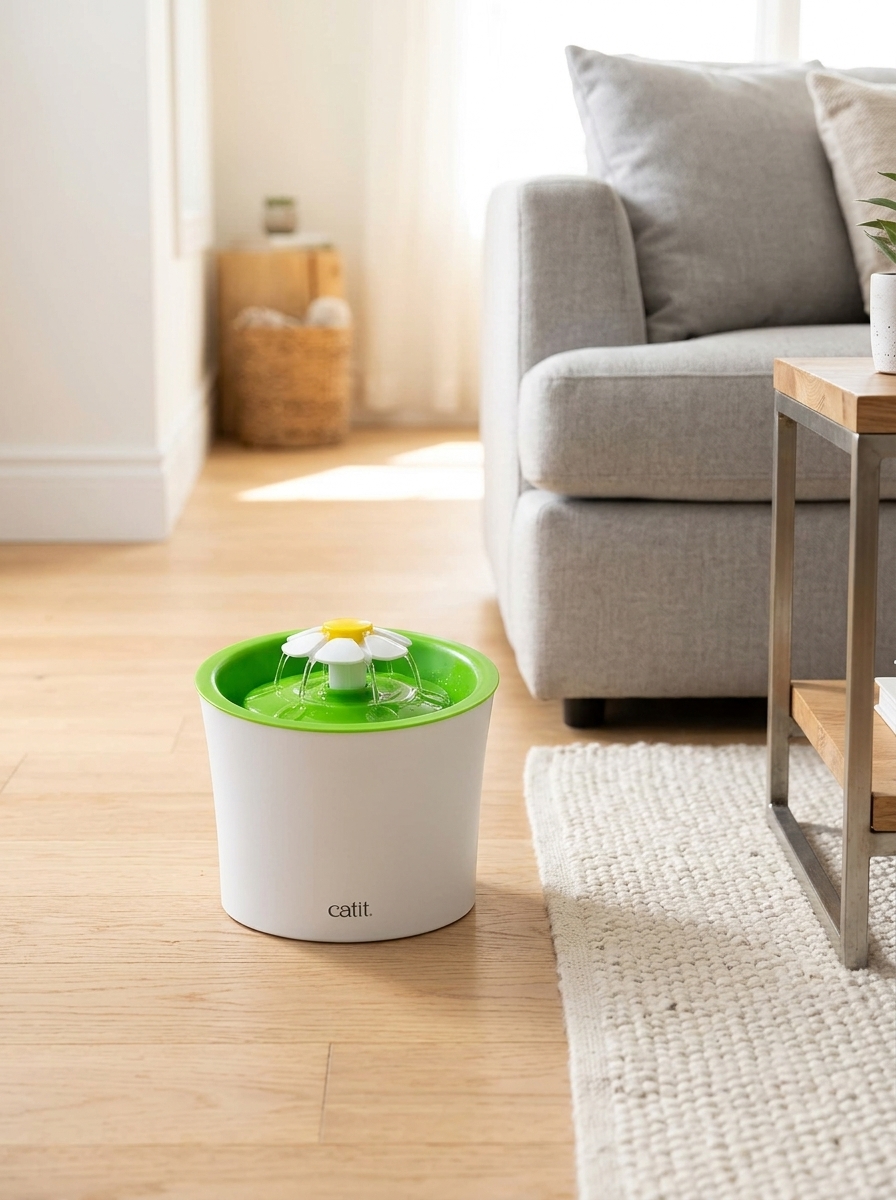
As of 2026-11-21, we track 17 pet water fountains from 11 brands, scored with Score v1.0 from owner ratings, spec strength and ownership cost. Catit Flower Fountain leads the list at 8.2/10. Tracked prices run from $17 to $100; the full table below is sortable by score and price.

Discussion
No comments yet