Price alerts — GIOTOHUN Cat Water Fountain Stainless Steel S11
Price-drop alert
Email me when GIOTOHUN Cat Water Fountain Stainless Steel S11 drops to my target price. The confirmation includes a manage link — use it any time to list or remove your alerts at Your price alerts. Lowest price tracked so far: USD 19.94 — a target below that is below the historical low and less likely to be reached.
Affiliate disclosure: This article is desk research based on catalog specifications and manufacturer-published data. We did not hands-on test either fountain. If you buy through links on this page, we may earn a commission at no extra cost to you.
TL;DR
The GIOTOHUN S11 and the NPET WF050 are both deliberately basic fountains: corded, no app control, and the same multi-stage filtration class. That means the decision collapses to two things — material and size. The S11 is stainless steel with a 2.2 L tank and a Score v1.0 of 5.8; the WF050 is plastic with a 1.5 L tank and a score of 4.0. Pick the S11 if you want the steel hygiene and durability argument plus fewer refills; pick the WF050 if a smaller single-cat footprint matters more than either. Weight is a non-factor here — 0.57 kg versus 0.5 kg is a rounding error, and we will not pretend otherwise.
What a pet water fountain is — and what "multi-stage filtration" means
A pet water fountain is a recirculating water bowl: a small pump pushes stored water through a filter and back into the drinking area, so the water stays moving and filtered instead of sitting still. "Multi-stage filtration" means the water passes through more than one treatment step — typically a debris screen plus an activated-carbon stage — rather than a single filter layer. Both fountains in this comparison use that same filtration class, so neither wins on filtration architecture. What differs is the box the water sits in: its material and how much it holds.
Spec comparison
Field
GIOTOHUN S11
NPET WF050
Score v1.0
5.8
4.0
Material
Stainless steel
Plastic
Capacity
2.2 L
1.5 L
Filtration
Multi-stage
Multi-stage
Power
Corded
Corded
App control
No
No
Weight
0.57 kg
0.5 kg
Read the table top to bottom and the pattern is clear: the rows are identical until you hit material and capacity. Those two rows are the entire comparison.
Material: the steel argument vs the plastic argument
Stainless steel is the S11's headline claim, and it is a real one. Steel is non-porous, so its surface gives biofilm less to grip than a scratched plastic surface does, and it tolerates scrubbing without the micro-scratches that accumulate on plastic over months of cleaning. That matters for a device whose whole job is holding drinking water — the tank and drinking surface are in constant contact with water, and the material they are made of is a hygiene variable, not just an aesthetic one. Steel is also the more durable choice against chewing, dropping, and heat from a dishwasher cycle.
The plastic argument for the WF050 is narrower but honest: plastic is cheaper to manufacture, which is how a 1.5 L fountain ends up as the smaller, simpler option in a lineup. What plastic does not give you is a weight advantage here — and this is where we want to be explicit. The WF050 weighs 0.5 kg; the S11 weighs 0.57 kg. That 70-gram gap is less than the weight of the water either fountain holds. If you were hoping the plastic model would be meaningfully easier to carry to the sink, it is not: both are one-hand carries when empty, and both get heavy the same way when full. Portability does not decide this comparison.
One more steel caveat, stated plainly: a stainless tank does not exempt you from filter changes or regular washing. Multi-stage filters are consumables on both models, and steel slows surface degradation — it does not eliminate cleaning.
Capacity: 2.2 L vs 1.5 L is a refill-cadence difference
The 0.7 L gap between these tanks sounds small until you convert it into refill trips. A single cat drinks roughly 200–300 ml of water a day, and evaporation and splash loss add to that. On those planning figures — estimates, not measurements — the WF050's 1.5 L lands you at the sink about every four to five days for one cat, while the S11's 2.2 L stretches that to roughly a week. For a two-cat household, the WF050's cadence tightens to every two to three days, and the S11 stays closer to twice a week.
Capacity also decides who each fountain is actually for. The WF050's 1.5 L tank and compact body suit a single cat in a small space — a studio corner, a laundry shelf, a second water station in a hallway. It is the wrong shape for a multi-cat home, where the tank size becomes a chore multiplier. The S11 at 2.2 L is the mid-size answer: enough runway for one cat to go a week or two cats to go several days, without stepping up to the large 4–5 L class of fountains that dominate a floor corner.
Neither fountain helps you monitor any of this remotely. There is no app control on either model — no low-water alerts, no consumption logs, no pump scheduling. You check the water level by looking at it. For some owners that simplicity is the point; for anyone who wants alerts, both of these are the wrong shelf, and no spec in this comparison changes that.
What the scores do and do not say
The S11 scores 5.8 and the WF050 scores 4.0 under Score v1.0. That gap is consistent with what the spec sheet shows: the S11 matches the WF050 on filtration, power, and connectivity while adding the steel build and roughly 47% more capacity. But a score is a summary, not a verdict for your household. If your constraint is a small footprint for one cat, the WF050's lower score does not make it the wrong purchase — it makes it the smaller one. Scores rank products against the whole catalog; your floor plan ranks them against your home.
Verdict
Buy the GIOTOHUN S11 if: you want the stainless-steel hygiene and durability argument, you have one or two cats, and you'd rather refill weekly than every few days. It is the stronger all-round spec sheet of the two, and the score gap reflects that.
Buy the NPET WF050 if: you have a single cat, limited space, and want the smallest, simplest fountain that still filters through multiple stages. Accept the trade plainly: plastic instead of steel, and a refill cadence roughly twice as frequent.
Skip both if: you need app control, low-water alerts, or cordless placement. Neither model offers any of those, and that absence — not the material or the tank — would be your deciding spec.
Is stainless steel actually more hygienic than plastic for a pet fountain? Steel is non-porous and resists the micro-scratching that plastic accumulates from scrubbing, so its surface gives biofilm less purchase. That is a genuine material advantage for the S11 — but it reduces, rather than replaces, regular washing and filter changes on either fountain.
How much longer does the S11 go between refills? Using planning estimates of 200–300 ml per cat per day, the 2.2 L S11 runs about a week for one cat versus four to five days for the 1.5 L WF050. Treat those as cadence estimates, not measured figures — actual intake, evaporation, and splash loss vary by household.
Is the WF050 easier to carry because it's plastic? No, and this is worth stating directly: the WF050 weighs 0.5 kg and the steel S11 weighs 0.57 kg. The difference is negligible empty and irrelevant full, since the water dominates the carried weight in both. Do not let portability drive this choice.
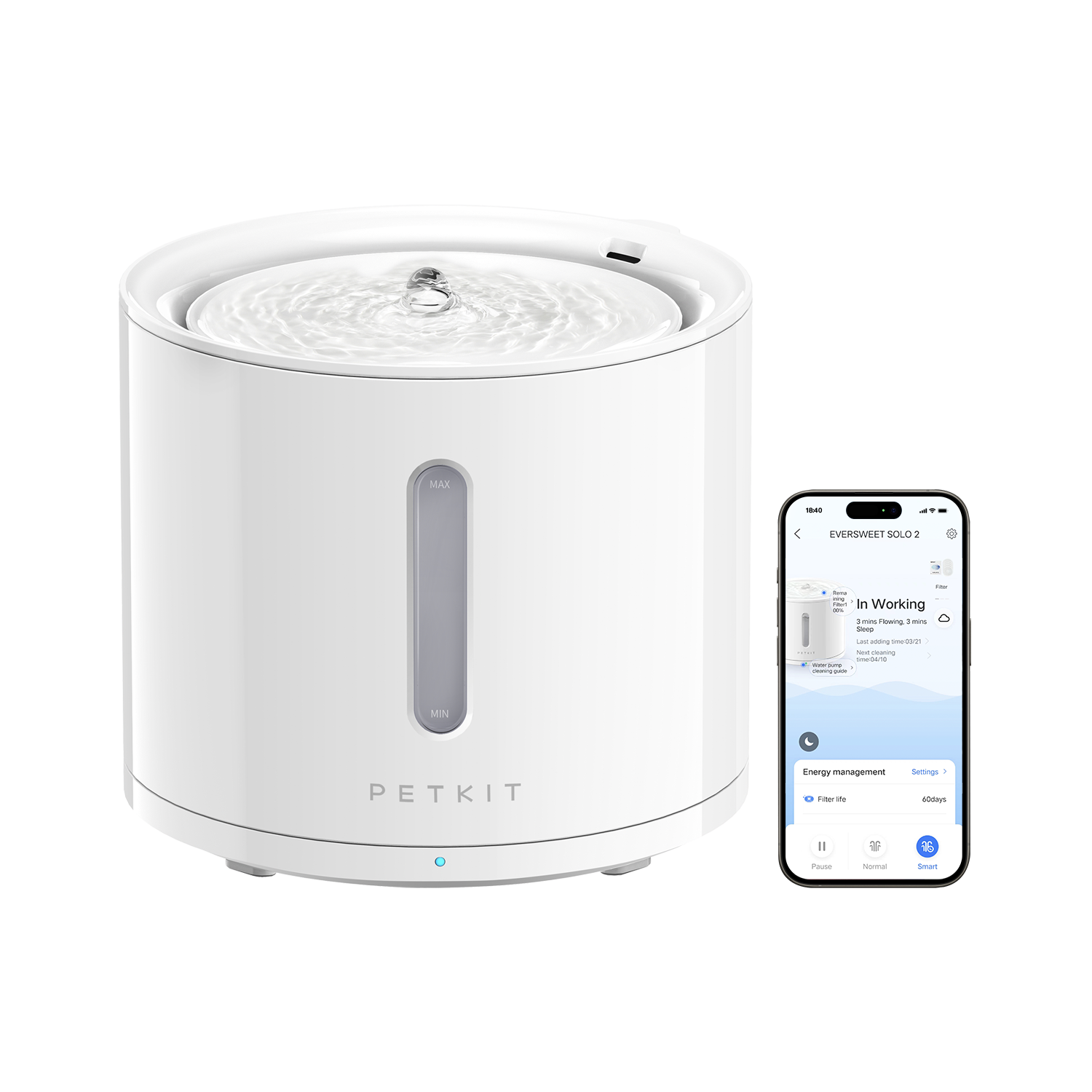
Do either of these fountains have an app or low-water alerts? No. Both are corded, app-free models with no connectivity features in our catalog data. Checking the water level is a visual task on both.
Which one suits two cats? The S11, on capacity math alone: 2.2 L keeps a two-cat refill cadence near twice a week, while the WF050's 1.5 L drops to every two to three days. The WF050 is best understood as a single-cat fountain.
Does the filtration differ between them? Not by class — both are listed with multi-stage filtration. The meaningful differences in this pairing are material (steel vs plastic) and capacity (2.2 L vs 1.5 L), not the filter architecture.
Last updated: November 27, 2026
Changelog
November 27, 2026 — Added retailer buying links (Our pick and Where to buy) for the products covered in this article.
Related in this category
Pet Tech · Pet Water Fountains · Updated Nov 22, 2026
Across 17 tracked fountains: plastic dominates (12 of 17), capacities run 1.5–9.5 L, and only 1 maker publishes a filter cost — the hygiene field that decides what a fountain really costs to keep clean.
Pet Tech · Pet Water Fountains · Updated Nov 21, 2026
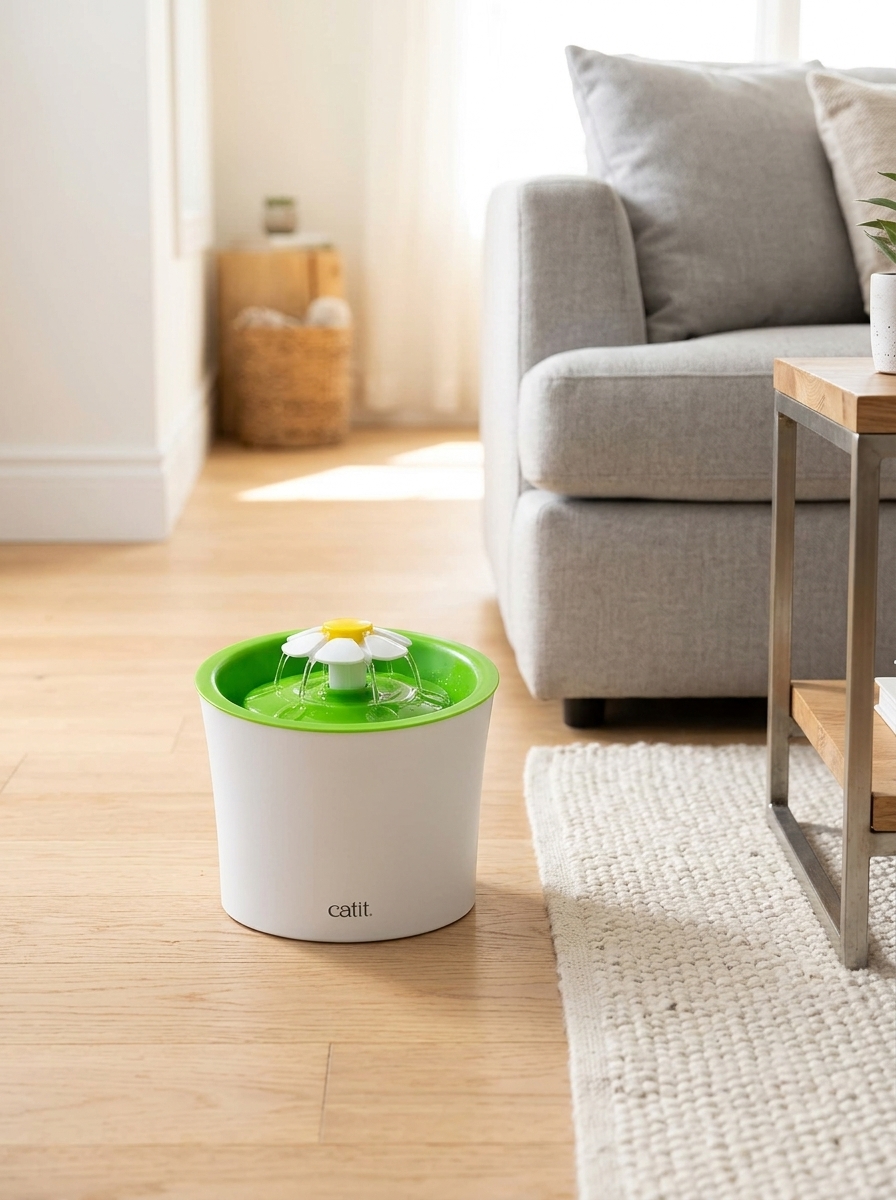
As of 2026-11-21, we track 17 pet water fountains from 11 brands, scored with Score v1.0 from owner ratings, spec strength and ownership cost. Catit Flower Fountain leads the list at 8.2/10. Tracked prices run from $17 to $100; the full table below is sortable by score and price.

Discussion
No comments yet