Price alerts — Homerunpet Wireless Pet Water Fountain BF10
Price-drop alert
Email me when Homerunpet Wireless Pet Water Fountain BF10 drops to my target price. The confirmation includes a manage link — use it any time to list or remove your alerts at Your price alerts. Lowest price tracked so far: USD 69.99 — a target below that is below the historical low and less likely to be reached.
Disclosure: AIBuyLab articles may contain affiliate links. If you buy through a link on this page, we may earn a commission at no extra cost to you. This comparison is based on manufacturer specifications and our catalog data — we have not hands-on tested either fountain.
TL;DR
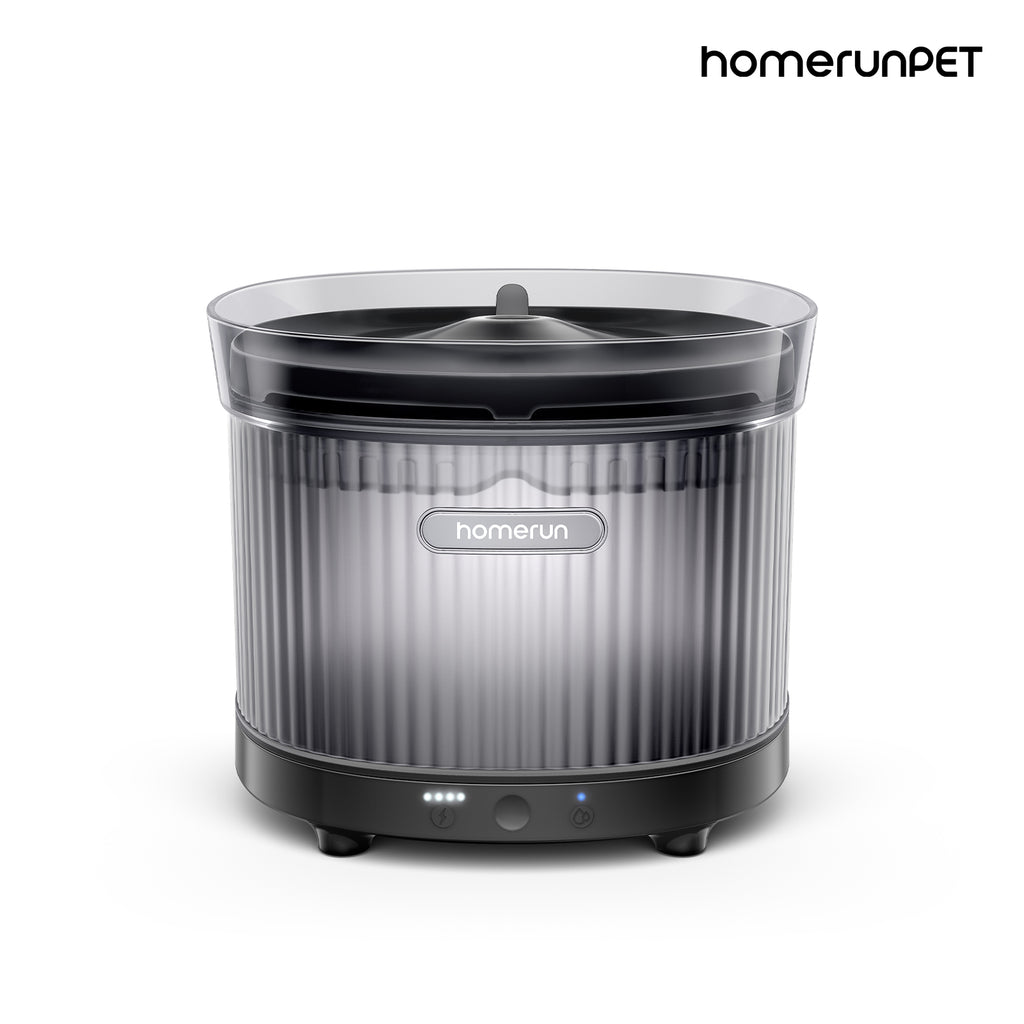
The Homerunpet BF10 (Score 6.1) is a cordless, battery-powered fountain with a tracked battery life of about 30 days, a 2 L reservoir, and a manufacturer-stated noise figure of 20 dB. It can sit anywhere in the home — no outlet required.
The GIOTOHUN S11 (Score 5.8) is a corded stainless steel fountain with a slightly larger 2.2 L reservoir and a very light 0.57 kg body. It trades placement freedom for a material that is easier to keep hygienic.
Capacities are nearly identical (2 L vs 2.2 L), and both use multi-stage filtration with no app control. The real decision is where the fountain will live and how you prefer to clean it.
A cat water fountain is an electric or battery-powered drinking station that continuously circulates water through a filter and presents it as a moving stream or bubbling surface. The movement encourages many cats to drink more than they would from a still bowl, and the filtration stage traps hair, dust, and debris so the water stays cleaner between refills. The two design questions that matter most are how the pump gets its power — a wall outlet or a rechargeable battery — and what the reservoir is made of, because that determines both placement and the weekly cleaning routine.
Spec Comparison
Spec
Homerunpet BF10
GIOTOHUN S11
AIBuyLab Score (v1.0)
6.1
5.8
Power source
Cordless, battery
Corded
Battery life
~30 days (tracked)
n/a
Capacity
2 L
2.2 L
Filtration
Multi-stage
Multi-stage
Material
Plastic
Stainless steel
Weight
Not tracked
0.57 kg
Noise
20 dB (manufacturer figure)
Not tracked in our catalog
App control
No
No
Placement Freedom: The BF10's Whole Argument
The BF10's defining feature is that it has no cord. With roughly 30 days of battery life per charge in our catalog data, it only needs to visit an outlet about once a month. That changes where a fountain can go: a hallway corner away from any socket, a quiet room where a cat actually prefers to drink, a bathroom with no free outlet, or a spot far from the food bowls. Cats often drink more when the water station is separated from feeding areas and foot traffic, and a cordless unit makes those locations practical instead of theoretical.
The manufacturer-stated noise figure of 20 dB also points the BF10 toward bedrooms and living spaces — that figure is in the range of a whisper, though as with all maker-supplied numbers it reflects the manufacturer's own test conditions rather than an independent measurement.
The GIOTOHUN S11, by contrast, must live within cord's reach of a wall outlet. In a kitchen with a spare socket near the floor, that is no hardship at all — and kitchens are where most fountains end up anyway. But if your cat's preferred drinking spot has no outlet, the S11 simply cannot go there, and no spec advantage can fix a placement problem.
Material and Hygiene: The S11's Whole Argument
The S11's reservoir is stainless steel; the BF10's is plastic. This matters for cleaning. Stainless steel has a smooth, non-porous surface that resists the scratches and micro-abrasions plastic develops over months of scrubbing, and those scratches are where biofilm takes hold. A stainless reservoir is also generally dishwasher-friendly in a way plastic fountain parts often are not, which makes a thorough weekly deep-clean a lower-effort job: lift the unit — at 0.57 kg it is exceptionally light — empty it, and wash it properly.
Plastic is not disqualified by this. It is lighter to tool and shape, and with disciplined weekly washing a plastic reservoir stays hygienic. But the discipline is the point: the S11 makes the hygienic outcome easier to achieve, while the BF10 asks a little more of your routine. If you know you will scrub on schedule, the gap narrows; if you know you won't, the steel is the safer choice.
One data gap to note honestly: we do not have a tracked noise figure for the S11 in our catalog, so we cannot compare the two on sound output beyond the BF10's manufacturer number.
The Cordless Trade-Off: Pumps, Batteries, and Maintenance
Cordless fountains are not maintenance-free fountains — they move the maintenance rather than removing it. Structurally, a battery fountain introduces three obligations a corded one does not have:
A charging cycle. Roughly once a month, the BF10 needs to be taken to an outlet and recharged. Forget, and the pump stops — a corded fountain never has this failure mode.
Battery aging. Rechargeable cells lose capacity over years of charge cycles. The 30-day figure is the tracked life for the unit as catalogued; an aging battery will shorten the interval between charges, and eventually the battery becomes the component that decides the fountain's lifespan.
Pump placement constraints. Battery fountains typically run lower-power pumps to stretch runtime, which is one reason the maker can quote a low noise figure — but it also means the design prioritizes efficiency over raw flow.
The corded S11 inverts all three: continuous power, no cell to wear out, and a pump that never has to ration energy. Its maintenance list is the classic one — filter changes on the multi-stage cartridge's schedule, weekly reservoir washing, and periodic pump descaling if your water is hard. Both fountains use multi-stage filtration, so filter replacement is a shared, ongoing cost of ownership for either choice; neither has app control, so neither will remind you — the calendar is the reminder.
Capacity and Cat Count
On paper the reservoirs are a near-tie: 2 L for the BF10, 2.2 L for the S11. That 0.2 L difference is not a deciding factor for any household. What matters more is refill cadence, which scales with cat count. A single cat drinking from a 2 L-class fountain typically means topping up every few days and a full wash weekly; two or three cats will roughly halve the top-up interval and make the weekly wash non-negotiable, because more mouths mean faster biofilm growth.
For a multi-cat home, neither unit is a large-capacity answer — both are compact fountains, and heavy multi-cat households usually step up to bigger reservoirs. Between these two specifically, the S11's easier deep-clean scales slightly better with the extra washing multi-cat use demands, while the BF10's freedom to sit in a second location can serve as a second water station — a role where cordless placement is worth more than a marginal capacity edge.
Verdict
Choose the Homerunpet BF10 if your cat's best drinking spot has no outlet, if you want a fountain in a bedroom or quiet room and the manufacturer-stated 20 dB figure appeals, or if you are setting up a second water station away from the kitchen. Accept the monthly charging habit and the long-term battery question as the price of that freedom.
Choose the GIOTOHUN S11 if the fountain will live in a kitchen or utility area with a free socket, if easy and thorough cleaning matters more to you than placement, or if you want the lightest possible unit to lift and wash. Accept the cord as the price of a simpler, longer-lived mechanical design.
Either way, you are getting multi-stage filtration, roughly 2 L of capacity, and no app ecosystem to manage. The scores — 6.1 for the BF10 and 5.8 for the S11 — reflect how close this is: the BF10 wins on flexibility, the S11 on material, and your floor plan should make the call. See the full catalog entries for the Homerunpet BF10 and the GIOTOHUN S11 for current details.
How long does the Homerunpet BF10 battery actually last? Our catalog tracks approximately 30 days of battery life for the BF10. Real-world runtime depends on the pump mode used and will decline gradually as the rechargeable battery ages over years of use.
Is stainless steel really more hygienic than plastic for a cat fountain? Stainless steel has a smoother, non-porous surface that resists scratching, and scratches in plastic are where biofilm establishes itself. Steel is also typically easier to deep-clean, including in a dishwasher. Plastic remains fine with consistent weekly washing — the difference is effort, not safety.
Which fountain is quieter? We can only report what is tracked: Homerunpet states 20 dB for the BF10, which is a manufacturer figure. Our catalog does not have a noise figure for the GIOTOHUN S11, so a verified head-to-head on sound is not possible from spec data alone.
Do either of these fountains have an app? No. Neither the BF10 nor the S11 offers app control, so there are no filter-change reminders or water-level alerts from an app — maintenance runs on your own schedule for both.
Which is better for two or three cats? Both are compact ~2 L fountains, so multi-cat homes will refill and wash frequently with either. The S11's stainless build makes the extra washing easier; the BF10 can alternatively serve as a cordless second station in another room, which many multi-cat homes find more useful than a single larger fountain.
What ongoing maintenance do both fountains share? Both use multi-stage filtration, so filter cartridges are a recurring replacement item for each, and both need a weekly reservoir wash and periodic pump cleaning. The BF10 adds a monthly recharge to that list; the S11 adds nothing beyond the standard routine.
Last updated: November 27, 2026
Changelog
November 27, 2026 — Added retailer buying links (Our pick and Where to buy) for the products covered in this article.
Related in this category
Pet Tech · Pet Water Fountains · Updated Nov 22, 2026
Across 17 tracked fountains: plastic dominates (12 of 17), capacities run 1.5–9.5 L, and only 1 maker publishes a filter cost — the hygiene field that decides what a fountain really costs to keep clean.
Pet Tech · Pet Water Fountains · Updated Nov 21, 2026
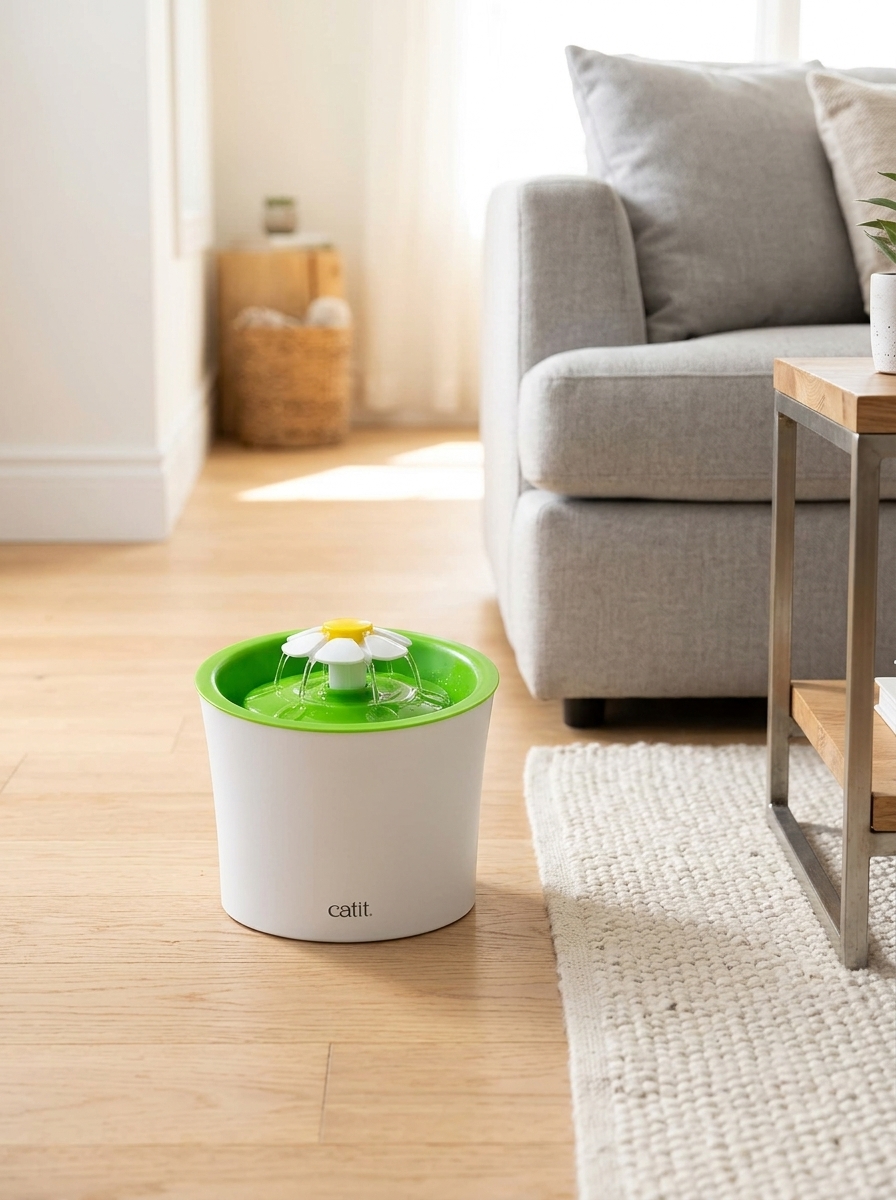
As of 2026-11-21, we track 17 pet water fountains from 11 brands, scored with Score v1.0 from owner ratings, spec strength and ownership cost. Catit Flower Fountain leads the list at 8.2/10. Tracked prices run from $17 to $100; the full table below is sortable by score and price.

Discussion
No comments yet