Price alerts — PetSafe Drinkwell Platinum Pet Fountain
Price-drop alert
Email me when PetSafe Drinkwell Platinum Pet Fountain drops to my target price. The confirmation includes a manage link — use it any time to list or remove your alerts at Your price alerts. Lowest price tracked so far: USD 55.99 — a target below that is below the historical low and less likely to be reached.
Affiliate disclosure: AIBuyLab may earn a commission if you buy through links on this page, at no extra cost to you. This comparison is desk research based on catalog specs and manufacturer data — we did not hands-on test either fountain.
TL;DR
The PetSafe Drinkwell Platinum (Score 7.8) holds 4.97 L — nearly double the Catit PIXI (Score 7.2) at 2.5 L — but filters with a carbon-only stage.
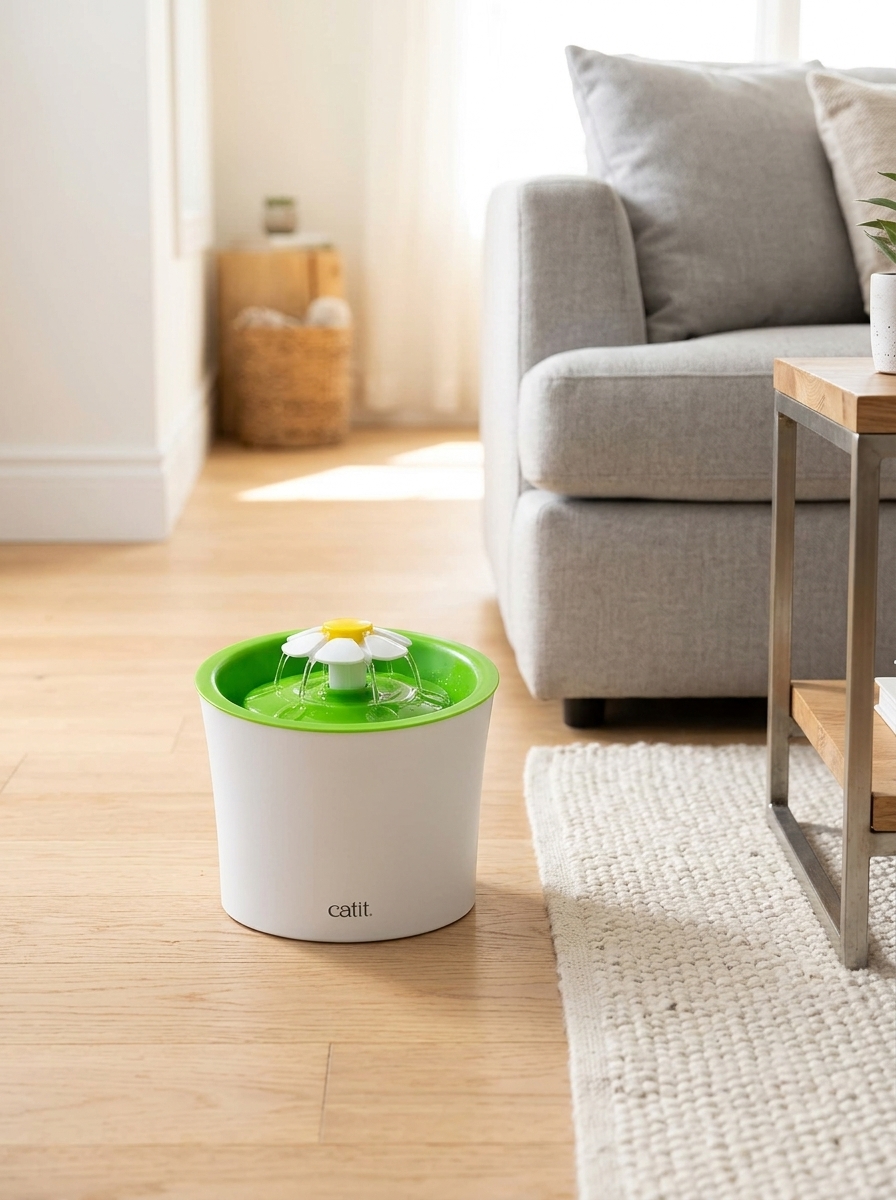
The Catit PIXI holds half the water, yet runs multi-stage filtration, so each litre it serves has passed through a deeper treatment chain.
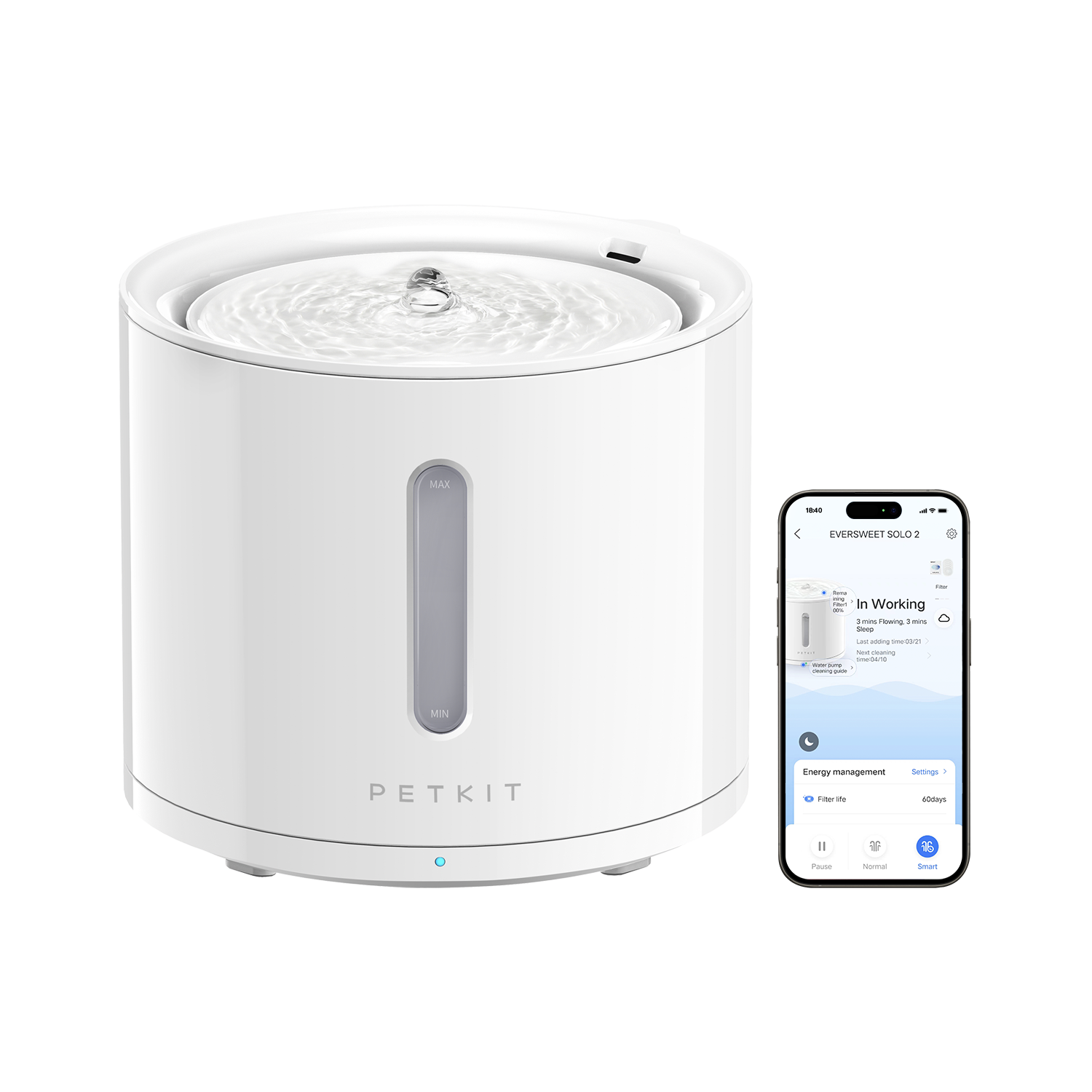
Neither fountain has app control or any smart electronics. This is a plumbing decision, not a technology decision: volume versus water treatment.
Pick the Drinkwell Platinum if you have several pets, hate refilling, and would rather change a simple filter more often. Pick the PIXI if you have one or two cats, limited counter space, and care more about what the filtration does than how much the tank holds.
A pet water fountain is a recirculating drinking station: a pump moves water from a reservoir through a filter and back to a drinking surface, so the water stays oxygenated, moving, and screened for hair and debris. Cats in particular are drawn to moving water, and a fountain's real job is to encourage drinking while stretching the interval between full cleanings. Within that category, designs split into philosophies. Some fountains compete on reservoir size — fewer refills, more slack for multi-pet households. Others compete on filtration depth — more stages between the tank and your pet's tongue. The Drinkwell Platinum and the Catit PIXI sit on opposite sides of that split, and neither muddies the choice with apps, sensors, or subscriptions.
Spec comparison
Field
PetSafe Drinkwell Platinum
Catit PIXI
AIBuyLab Score (v1.0)
7.8
7.2
Capacity
4.97 L
2.5 L
Filtration
Carbon
Multi-stage
Material
Plastic
Plastic
Power
Corded
Corded
App control
No
No
The table is short because these are simple machines. Everything that separates them flows from two rows: capacity and filtration.
Capacity: the refill math
The Drinkwell Platinum's 4.97 L reservoir is 1.99 times the PIXI's 2.5 L — call it double. That ratio translates directly into refill frequency. Whatever your household's daily consumption, the Platinum asks for roughly half as many refill trips as the PIXI. For a single cat, both fountains stretch refills out comfortably, and the difference is a minor convenience. For a three- or four-pet household, or a home with a large dog sharing the station, consumption climbs fast enough that the PIXI's 2.5 L becomes a recurring chore while the Platinum's tank absorbs the demand.
There is a counterweight, and it matters: water sitting in a reservoir is water aging. A bigger tank refilled less often means the average litre in the Platinum has been circulating longer before it is replaced. That is exactly where filtration enters the argument — and it is the PIXI's home turf.
Filtration: depth versus simplicity
The Catit PIXI uses multi-stage filtration, meaning water passes through more than one treatment step — typically a combination of mechanical screening and media that addresses taste and odor compounds — before returning to the drinking surface. The Drinkwell Platinum relies on carbon filtration alone: a single-stage approach centered on a carbon filter, which targets taste and odor but does less of the layered particulate and chemical work a multi-stage chain performs.
Neither approach is free. Multi-stage systems use more elaborate cartridges with more components to replace. A carbon-only setup is simpler and its filter is a single, straightforward consumable. The honest framing is this: the PIXI treats a smaller volume of water more thoroughly; the Platinum stores a larger volume and treats it more lightly. If your tap water is heavily chlorinated or your pets are fussy about taste, filtration depth is the deciding row. If your water is fine and your bottleneck is sheer throughput for several animals, capacity wins.
Footprint follows capacity
A 4.97 L tank is a physically larger object than a 2.5 L tank, and the Platinum's footprint on a counter, floor corner, or feeding mat grows accordingly. The PIXI's compact reservoir is the easier fit in small kitchens, apartments, and tucked-away feeding spots. Both fountains are plastic and corded, so neither offers a material or placement advantage beyond size: both need to live within reach of an outlet, and both are light enough to carry to the sink for cleaning. The footprint question is really a restatement of the capacity question — you are choosing how much of your floor the water supply occupies.
Living with a deliberately dumb fountain
Both models skip app control entirely. There are no low-water phone alerts, no filter-life notifications, no usage logs, and no subscription attached to either machine. For some buyers that is a relief: nothing to pair, nothing to update, no account to create, and a pump-and-tank design that is easy to understand and troubleshoot. For others it means discipline — you must remember refills and filter changes yourself, and with the Platinum's larger tank it is easy to let a cleaning slide precisely because the water has not run out yet.
This shared simplicity also means reliability questions reduce to the basics: a pump, a filter, and a reservoir. There is no electronics layer to fail. If you want monitoring and reminders, neither fountain is your product; if you want a fountain that behaves like an appliance rather than a gadget, both qualify, and the choice returns to volume versus treatment.
You have one or two cats and counter space is tight.
Filtration depth matters more to you than tank size.
You would rather refill a smaller tank more often than let a large volume circulate.
You prefer the more thorough treatment chain of multi-stage filtration.
On the scoreboard the Platinum's 7.8 edges the PIXI's 7.2, and that gap largely reflects the capacity advantage most households feel day to day. But scores average many households into one number; your household's actual constraint — refill labor or water treatment — should make this call.
Which fountain is better for multiple cats? The Drinkwell Platinum. Its 4.97 L capacity is nearly double the PIXI's 2.5 L, so it sustains several cats with roughly half the refills. The PIXI can serve multiple cats, but you will be topping it up far more often.
Does multi-stage filtration actually beat carbon filtration? It treats water more thoroughly: multiple stages can combine mechanical screening with media that address taste and odor, while the Platinum's carbon-only stage focuses on taste and odor alone. Whether that difference matters depends on your tap water and how often you change filters and refresh the tank.
Do either of these fountains need a subscription or an app? No. Neither model has app control, and neither ties any feature to a subscription. The only recurring cost for either is replacement filters.
How much space does the Drinkwell Platinum take up compared with the PIXI? Noticeably more. Footprint follows capacity: a 4.97 L reservoir is a bigger object than a 2.5 L one. Both are corded, so each also needs to sit within cord reach of an outlet.
Which one is easier to maintain? Day to day, the PIXI's smaller tank is quicker to empty, rinse, and refill, while the Platinum asks for that work half as often but on a larger reservoir. The Platinum's carbon-only filter is the simpler consumable; the PIXI's multi-stage cartridge is the more elaborate one.
Is the Score difference (7.8 vs 7.2) a reason to ignore the PIXI? No. The gap is modest, and the two fountains optimize for different things. If filtration depth and compact size are your priorities, the PIXI's design brief matches you better than the higher-scored Platinum's does.
Last updated: November 27, 2026
Changelog
November 27, 2026 — Added retailer buying links (Our pick and Where to buy) for the products covered in this article.
Related in this category
Pet Tech · Pet Water Fountains · Updated Nov 22, 2026
Across 17 tracked fountains: plastic dominates (12 of 17), capacities run 1.5–9.5 L, and only 1 maker publishes a filter cost — the hygiene field that decides what a fountain really costs to keep clean.
Pet Tech · Pet Water Fountains · Updated Nov 21, 2026
As of 2026-11-21, we track 17 pet water fountains from 11 brands, scored with Score v1.0 from owner ratings, spec strength and ownership cost. Catit Flower Fountain leads the list at 8.2/10. Tracked prices run from $17 to $100; the full table below is sortable by score and price.


Discussion
No comments yet