When Do Cats Stop Growing? (Kitten to Adult Timeline)
Most cats reach their adult body size at about 10 to 12 months, and full physical and behavioural maturity around two years. Growth is fastest in the first six months, slows markedly after that, and varies by breed.
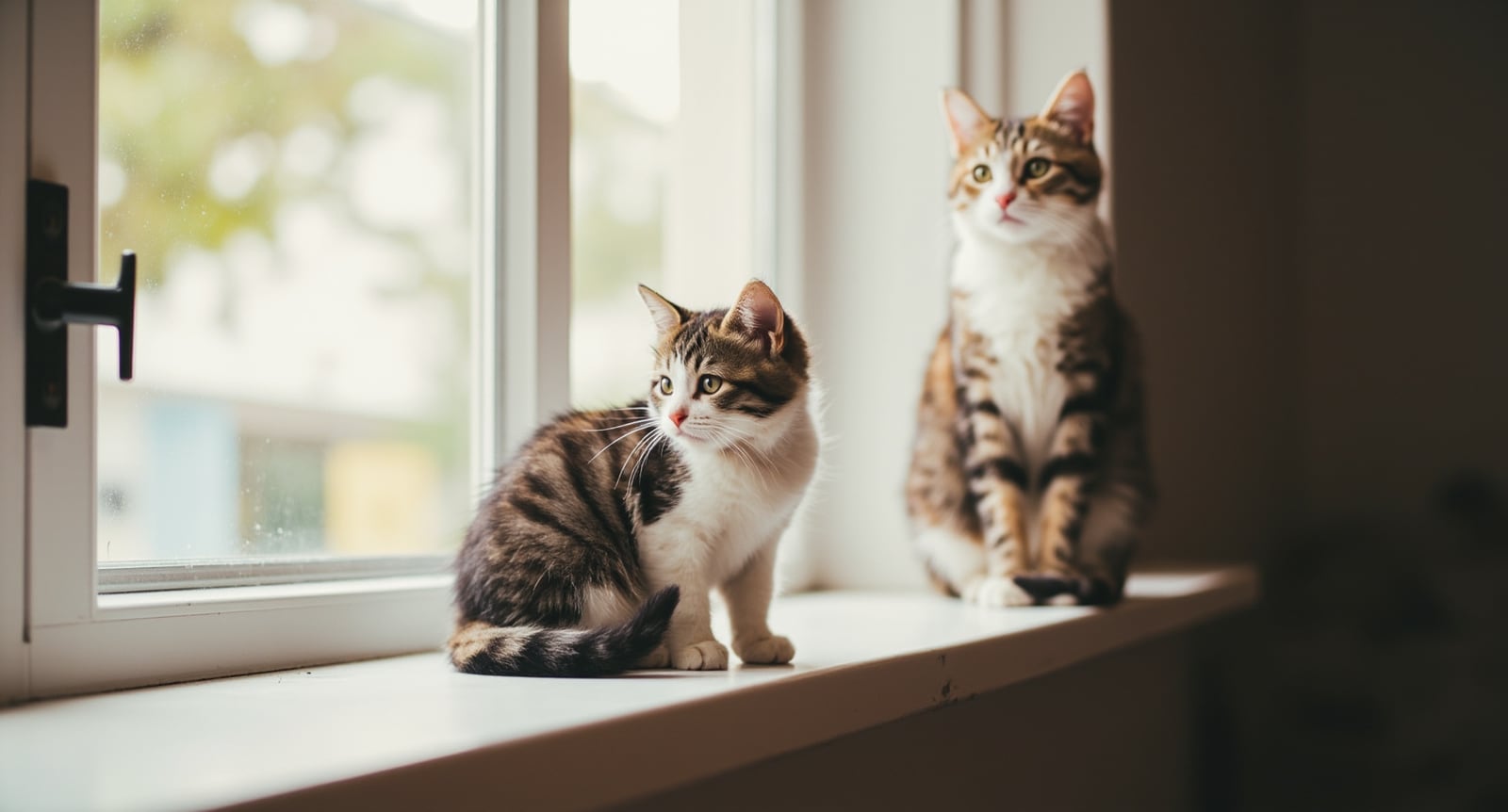
When Do Cats Stop Growing? (Kitten to Adult Timeline) — editorial image.

Information sources
This article is built from published veterinary and animal-behaviour sources — the professional references named in the article itself — and every figure it cites appears in those sources. It is general information, not veterinary advice: if your pet is unwell or the behaviour changes suddenly, please consult your veterinarian.
AIBUYLAB does not sell pet products, and this article is not shopping guidance — we earn no commission from any purchase. Where our site covers pet tech products, that coverage lives in our reviews and best lists, scored on our published 10-point index.
The Short Answer
VCA states kittens reach about 80% of their adult size at around 30 weeks and their adult body size at about 40 weeks — roughly 10 months — and describes cats as adults at one year old. International Cat Care, whose life-stage framework runs to 2 years in its junior stage, describes growth and development as complete by the end of that stage. So the practical answer is adult size by 10–12 months, and a fully mature adult cat by about 2 years. Breed, nutrition and environment all shift that timeline, which is why the sources give ranges rather than a single date.
Why It Happens
- The growth curve. VCA's feeding guidance for growing kittens sets the milestones: kittens are typically fully weaned at about 8 weeks, reach about 80% of adult size at 30 weeks, and reach adult body size at about 40 weeks.
- Life stage frameworks differ on purpose. The 2021 AAHA/AAFP Feline Life Stage Guidelines — published in the Journal of Feline Medicine and Surgery and JAAHA — define kitten as birth up to 1 year, young adult 1–6 years, mature adult 7–10 years and senior 10 years and older. International Cat Care uses kitten 0–6 months, junior 7 months to 2 years, adult 3–6 years, mature 7–10, senior 11–14 and super senior 15+.
- Sexual maturity is a separate clock. Most cats are neutered by 5–6 months, and VCA advises a growth-formulated diet until 10–12 months before transitioning to a young adult food — the clock behind the size and the clock behind the behaviour run at different speeds.
- Breed and nutrition move the line. VCA notes growth rate varies by breed with complex interactions among genetics, nutrition and environment, and that nutrient density and food amount strongly affect how fast a kitten grows.
What the Sources Actually Say
This article paraphrases three verified veterinary sources. VCA Animal Hospitals' "Feeding Growing Kittens" page, written with veterinary nutrition input, gives the 8-week, 30-week and 40-week milestones and the optimal-versus-maximal growth guidance. The American Association of Feline Practitioners' page for the 2021 AAHA/AAFP Feline Life Stage Guidelines publishes the official five-stage framework. International Cat Care's life-stage guidance, first published in 2024 and updated in 2025, describes the junior stage ending at 2 years with the cat having reached full size, and its life-stage hub describes cats over 2 years as having finished their growth and development.
One commonly repeated claim we could not verify: that large breeds such as Maine Coons keep growing until 3 or 4 years. No core veterinary source we checked states it — iCatCare actually frames growth as complete by about 2 years. If you have heard it, treat it as breed-club lore rather than veterinary fact, and simply expect large cats to mature more slowly than small ones.
What You Can Do
- Feed for optimal, not maximal, growthVCA is explicit: high-energy foods, overfeeding and free-choice feeding raise obesity risk. Portion-feed 3–4 small meals a day on a growth-formulated diet.
- Check the food's growth statementLook for an AAFCO statement for growth, and avoid foods below urinary pH 6.2. Excess calcium can cause growth abnormalities, so do not supplement a complete diet without asking a vet.
- Switch food at the right timeKeep a kitten on growth food until 10–12 months, then move to a young adult formula — VCA's published guidance for the transition.
- Weigh and score regularlyTrack weight and body condition with your vet team during growth; after growth, body condition matters more than the number on the scale.
- Ask before supplementingVCA advises consulting the vet before adding any vitamin or mineral supplement to a complete kitten diet.
When to See a Vet
When to See a Vet
- Regular weigh-ins and body condition checks with the vet team during the growth period — VCA frames this as routine, not reactive
- Before adding any vitamin or mineral supplement to a complete diet
- Obesity prevention matters early: excess weight raises the risk of hypertension, heart disease, diabetes, osteoarthritis and heat intolerance
- Any cat whose growth or weight trajectory seems off for its breed and life stage
Growth is a routine reason for a vet visit, not an emergency one — but it is worth asking about at every appointment rather than waiting.
Related Reading
- Best automatic feeders for picky cats — portion-controlled feeding is the practical half of optimal growth
- Best pet water fountains — hydration supports a growing kitten's water intake
- Best automatic litter boxes for multiple cats — very relevant if the growing kitten shares a home with adult cats
Frequently Asked Questions
When do cats stop growing?
Most cats reach adult body size at about 40 weeks, roughly 10–12 months (VCA), and full physical and behavioural maturity around 2 years (International Cat Care). Both figures are ranges, and breed shifts them. Source: this article, When Do Cats Stop Growing? (Kitten to Adult Timeline)
What are the cat life stages?
The 2021 AAHA/AAFP guidelines define kitten as birth to 1 year, young adult 1–6 years, mature adult 7–10 years and senior 10 years and older. International Cat Care adds a junior stage from 7 months to 2 years, which is when growth completes. Source: this article, When Do Cats Stop Growing? (Kitten to Adult Timeline)
When is a cat an adult?
VCA considers cats adults at 1 year old and senior at 7–8 years. Neutering usually happens by 5–6 months, and a growth-formulated diet is advised until 10–12 months. Source: this article, When Do Cats Stop Growing? (Kitten to Adult Timeline)
How fast should a kitten grow?
Aim for optimal — slow, steady — growth, not maximal. VCA warns that high-energy foods, overfeeding and free-choice feeding increase obesity risk; protein, fat and calcium needs are high and excess calcium can cause growth abnormalities. Source: this article, When Do Cats Stop Growing? (Kitten to Adult Timeline)
Do big breeds take longer to mature?
VCA confirms growth rate varies by breed. The specific claim that Maine Coons grow until 3–4 years could not be verified from core veterinary sources — treat it as breed-club lore, and simply expect large cats to mature more slowly. Source: this article, When Do Cats Stop Growing? (Kitten to Adult Timeline)
- 2026-11-07 — First published: growth timeline paraphrased from VCA, the 2021 AAHA/AAFP Feline Life Stage Guidelines and International Cat Care. The Maine Coon 3–4 year claim was checked, could not be verified from a veterinary source, and is labelled as such. Health note: this article is general information, not veterinary advice.
You may also like
 Best List
Best Automatic Cat Feeder for Picky Eaters: 5 Editor Picks
Five automatic feeders ranked for picky cats — compared on portion control, food types, exclusivity and offline behaviour from their published specifications.
 Best List
Best Automatic Litter Box for Multiple Cats: 5 Editor Picks
Five automatic litter boxes ranked for multi-cat homes — compared on cat count, waste interval, entry size and litter compatibility from their published specifications.
 Best List
Best Pet Water Fountain: 4 Editor Picks
Four pet water fountains ranked for cats and small dogs — compared on capacity, filtration, materials, noise and power from their published specifications.