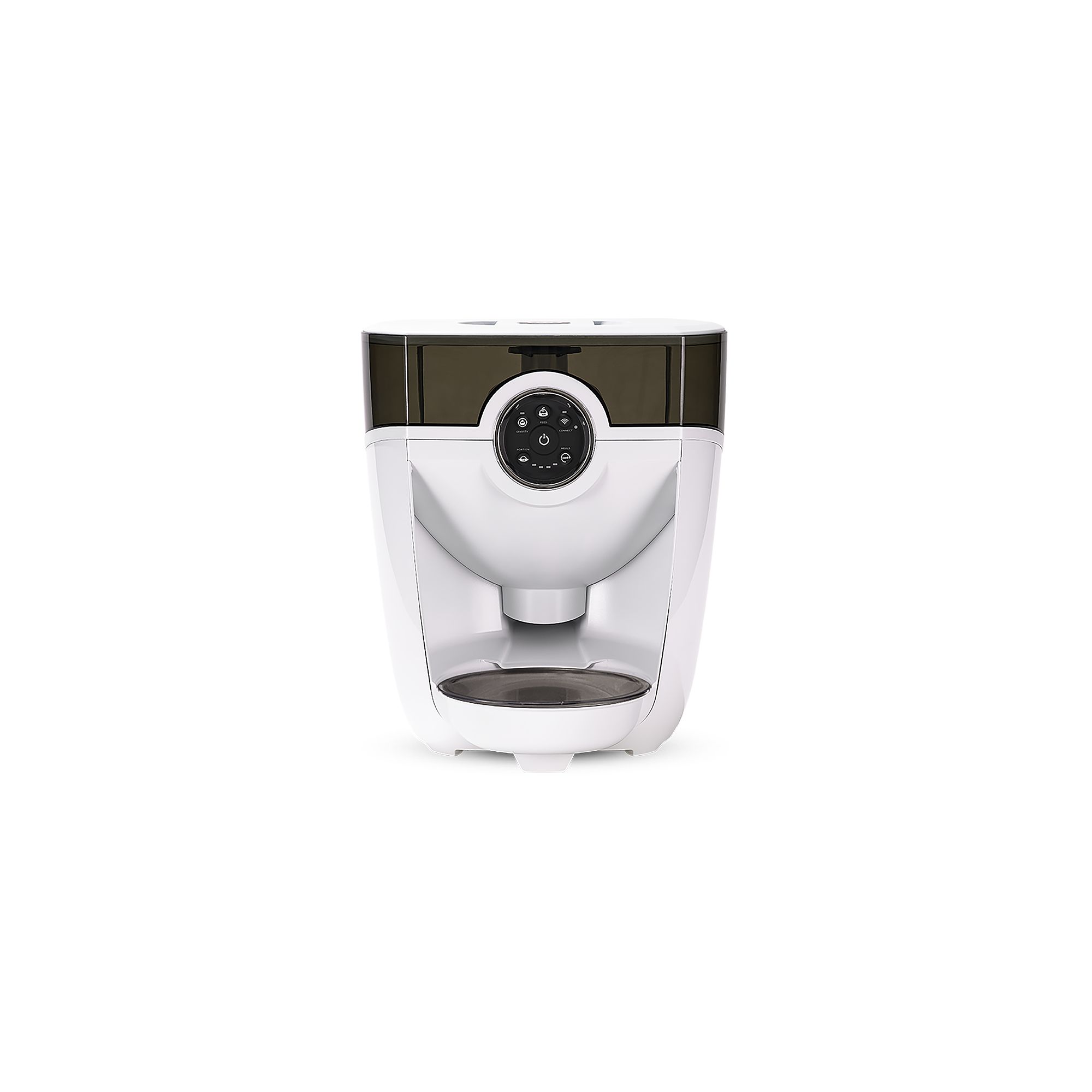
Price alerts — Petlibro Granary Camera Monitoring Feeder
Price-drop alert
Email me when Petlibro Granary Camera Monitoring Feeder drops to my target price. The confirmation includes a manage link — use it any time to list or remove your alerts at Your price alerts. Lowest price tracked so far: USD 139.99 — a target below that is below the historical low and less likely to be reached.
Affiliate disclosure: AIBuyLab may earn a commission from qualifying purchases made through links on this page, at no extra cost to you. This comparison is desk research built from our tracked catalog specifications and manufacturer-published data — we did not hands-on test either feeder, and no score below is based on in-person use.
TL;DR
The Petlibro Granary Camera Monitoring Feeder and the Whisker Feeder-Robot tie at 4.1/10 in our Score v1.0 ratings, so the decision comes down to the spec sheet — and the spec sheet describes two different philosophies. The Granary's whole argument is its camera: you can see the bowl, confirm your cat showed up, and verify food was actually eaten. The Feeder-Robot's argument is capacity math: its 7.68 L hopper is 54% larger than the Granary's 5 L, which means fewer refills and a longer runway for multi-cat homes or travel days. Both are dry-food-only, app-controlled, subscription-free, and carry battery backup for power outages. Pick the Granary if remote verification matters more than refill intervals; pick the Feeder-Robot if hopper volume is your binding constraint.
An automatic pet feeder is a hopper-and-dispenser appliance: dry kibble sits in a sealed reservoir and drops into a bowl on a schedule you set in an app, measured out meal by meal. A camera feeder adds a lens aimed at the bowl area, so the "did it dispense?" question becomes visible rather than assumed — you can check the bowl, watch a pet eat, and spot a jam or an empty hopper from your phone. A non-camera feeder like the Feeder-Robot skips the lens and spends its design budget elsewhere, in this case on a substantially larger hopper. Neither approach is inherently better; they answer different anxieties. Camera feeders answer "is my cat eating?" Capacity feeders answer "how long can this run before I have to think about it again?"
The spec table
Spec
Petlibro Granary Camera Feeder
Whisker Feeder-Robot
AIBuyLab Score v1.0
4.1/10
4.1/10
Camera
Yes
No
Hopper capacity
5 L
7.68 L
Meals per day
Up to 10
Up to 8
Battery backup
Yes
Yes
App control
Yes
Yes
Food type
Dry only
Dry only
Pet recognition
None
None
Weight
1.7 kg
Not tracked in our catalog
Warranty
2 years
1 year
Subscription required
No
No
One honest note on the scores: both feeders sit at 4.1/10, and Score v1.0 leans partly on aggregated owner-rating data, which is thin for automatic feeders as a category. A tie at this level tells you the aggregated signals are similar — it does not tell you the machines are interchangeable. The differences that matter are in the rows above, not the headline number.
The camera: the Granary's whole argument
The Granary Camera Monitoring Feeder is built around one feature the Feeder-Robot simply does not have: a camera. That single spec changes what the feeder is for. Without a camera, an automatic feeder is a trust exercise — the app says a meal dispensed, and you believe it. With a camera, you can look at the bowl. You can confirm the food dropped, confirm which cat ate it, and notice problems (a pet that stopped eating, a bowl that's backing up) that a dispense log would never show you.
That matters most in specific situations: a cat on a monitored diet, a pet recovering from illness whose appetite is a health signal, a multi-pet home where one animal guards the bowl, or an owner who travels and wants visual confirmation rather than a notification. What the camera does not do is identify individuals — pet recognition is listed as none on the Granary, so you're doing the recognizing yourself by watching. It's a window, not a smart system.
Capacity math: the Feeder-Robot's counter-argument
The Feeder-Robot answers with volume. Its hopper holds 7.68 L against the Granary's 5 L — 54% more dry food on board. Hopper capacity is the spec that decides how often the feeder interrupts your life. Every refill is a task: open, pour, reseal, wipe the inevitable kibble dust. A 54% larger hopper stretches the interval between those tasks by roughly the same proportion, and the effect compounds in exactly the homes that need feeders most. Two cats eating from one unit drain a hopper about twice as fast as one cat; a long weekend away consumes runway at the same rate whether you're home or not. In both cases, the bigger reservoir is the difference between "the feeder handles it" and "I need a backup plan."
The Feeder-Robot also gives up little elsewhere to get that volume. It still offers app control, still schedules up to 8 meals a day (against the Granary's 10), and still runs dry food only with no subscription. What it doesn't give you is any way to see the bowl — if verification matters, no amount of capacity substitutes for a lens.
What they share: outage safety and scheduling
The most reassuring row in the table is identical on both sides: battery backup. An automatic feeder's worst failure mode isn't a missed notification — it's a power outage silently turning scheduled meals into no meals. Both of these feeders carry battery backup, so a tripped breaker or a storm outage doesn't stop the schedule. If you feed on a strict routine (medication-adjacent meals, a kitten's frequent small portions), this shared trait is arguably more important than either headline difference.
Scheduling depth is close too. The Granary allows up to 10 meals per day, the Feeder-Robot up to 8. For most cats — typically fed two to four measured meals daily — both ceilings are comfortably above need. The Granary's extra headroom only becomes relevant for grazing-style micro-meal plans or kitten schedules. Both are dry-food-only machines, both are app-controlled, and neither requires a subscription to function, which keeps the long-term cost of ownership to the purchase itself plus kibble.
Warranty and the smaller print
The Granary carries a 2-year warranty; the Feeder-Robot carries 1 year. On an appliance with a motor, a dispensing mechanism, and daily duty cycles, the extra year is real coverage, and it's one of the few rows where the Granary wins outright rather than trading blows. The Granary is also the lighter, known quantity at 1.7 kg — relevant if the feeder lives on a counter or gets moved for cleaning. We don't have a tracked weight for the Feeder-Robot in our catalog, so we won't guess at one; its larger hopper alone tells you it occupies the bigger footprint class.
Verdict
Choose the Petlibro Granary Camera Monitoring Feeder if seeing is the point: you want to verify meals visually, monitor a cat whose eating is a health signal, or check in during travel. You also get the longer 2-year warranty and finer scheduling headroom (10 meals/day). You'll refill its 5 L hopper more often — that's the price of the camera.
Choose the Whisker Feeder-Robot if capacity is the point: multiple cats, long stretches between refills, or trips where hopper runway is the plan. The 7.68 L reservoir is the largest argument in this comparison, and battery backup plus app control mean you give up nothing on reliability — only the ability to watch.
Either way, you get outage protection and a subscription-free dry-food feeder. The tie in score is genuine; the tie in purpose is not.
Is a camera on a pet feeder actually useful, or a gimmick? It depends on what you're verifying. If your only question is "did the meal dispense," an app log answers it. The camera earns its place when the question is "did my cat eat, and how much" — appetite changes are an early health signal, and in multi-pet homes a camera shows you which animal is eating. The Granary has no pet recognition, though, so you're interpreting the footage yourself.
How much longer does the Feeder-Robot's hopper really last? Proportionally: 7.68 L versus 5 L is 54% more food on board, so at the same daily consumption it runs roughly half again as long between refills. The gap widens in multi-cat homes, where consumption — and therefore refill frequency — is highest.
Do either of these feeders work during a power outage? Yes. Both the Granary and the Feeder-Robot list battery backup in our catalog, so scheduled meals continue through an outage instead of silently stopping.
Can either feeder handle wet food? No. Both are dry-food-only machines. Wet food requires refrigerated feeder designs, which are a different product category entirely.
Why do both feeders score exactly 4.1/10? Score v1.0 blends specification data with aggregated owner ratings, and owner-rating data for automatic feeders is thin — so similar aggregated signals produce similar scores. Treat the tie as "no separation on aggregate data" and decide on the spec differences: camera versus capacity, warranty length, and scheduling headroom.
Do I need a subscription for either feeder? No. Neither feeder requires a subscription according to our catalog data; both run their core scheduling and app-control functions without one.
---
Last updated: November 27, 2026
Changelog
November 27, 2026 — Added retailer buying links (Our pick and Where to buy) for the products covered in this article.
Related in this category
Pet Tech · Automatic Cat Feeders · Updated Nov 21, 2026
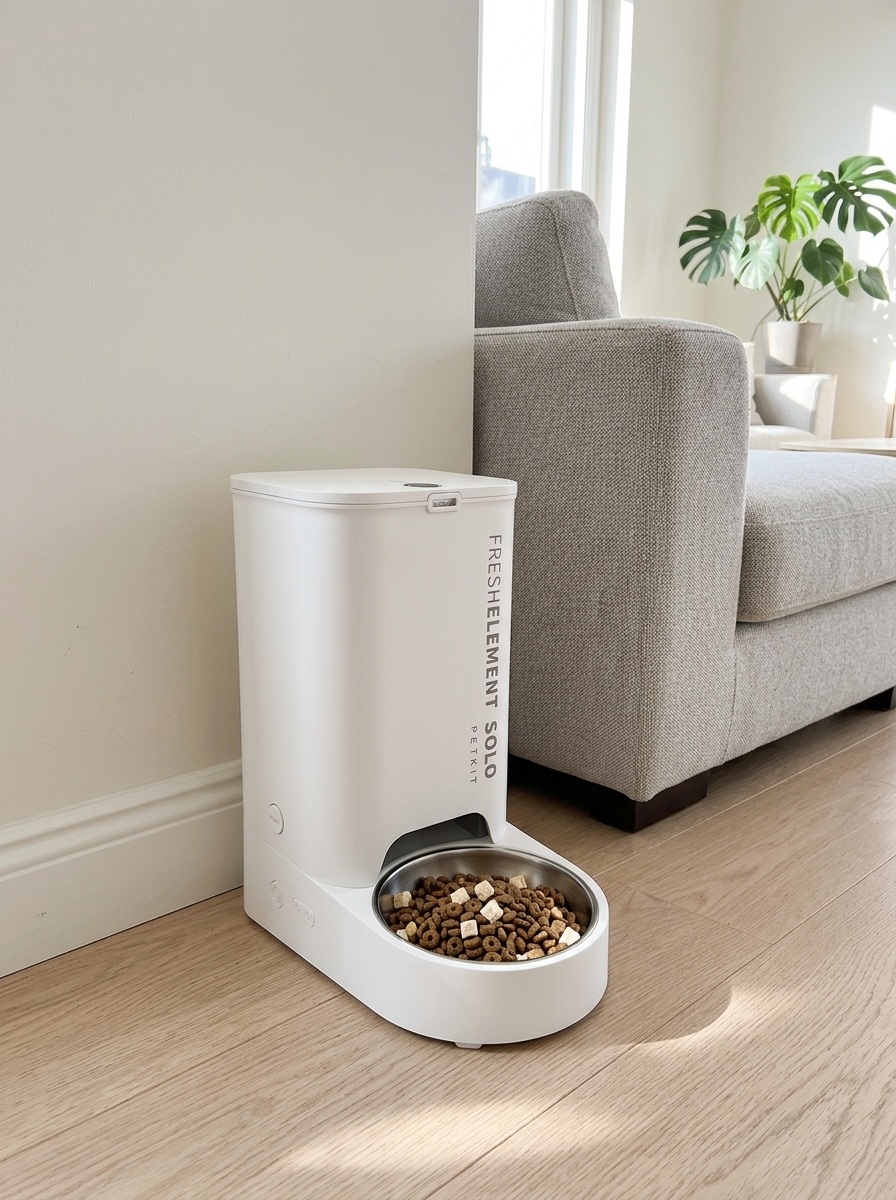
As of 2026-11-21, we track 16 automatic cat feeders from 9 brands, scored with Score v1.0 from owner ratings, spec strength and ownership cost. PETKIT Fresh Element Solo leads the list at 8.0/10. Tracked prices run from $47 to $299; the full table below is sortable by score and price.
The VOLUAS Automatic Cat Feeder 4L (Score 7.8 in our catalog) has no app, no camera, and no account — so its entire ownership contract is physical: desiccant, dust, seals, and batteries.
- The working

Discussion
No comments yet