Price alerts — Petlibro Granary Camera Monitoring Feeder
Price-drop alert
Email me when Petlibro Granary Camera Monitoring Feeder drops to my target price. The confirmation includes a manage link — use it any time to list or remove your alerts at Your price alerts. Lowest price tracked so far: USD 139.99 — a target below that is below the historical low and less likely to be reached.
Petlibro Granary Camera vs Petlibro One RFID: Watch or Gatekeep?
Affiliate disclosure: This article is based on desk research of manufacturer specifications and our product catalog only — we did not hands-on test either feeder. AIBuyLab may earn a commission through links on this page at no extra cost to you.
TL;DR
The Petlibro Granary Camera Monitoring Feeder (Score 4.1) and the Petlibro One RFID Smart Feeder (Score 3.8) solve opposite problems. The Granary Camera shows you who ate — it has a camera and a bigger 5 L hopper — but it cannot stop a food thief. The One RFID cannot show you anything, but its RFID collar tag physically decides which pet gets fed, making it the only real rationing tool of the two. Pick the Granary for single-pet monitoring, the One RFID for multi-pet homes where one animal steals the other's food.
Our pick: Petlibro Granary Camera Monitoring Feeder vs Petlibro One RFID Smart Feeder — check current prices at the retailers.
What Is a Smart Automatic Pet Feeder?
A smart automatic pet feeder is a programmable dry-food dispenser with app control that releases measured meals on a schedule, typically backed up by battery power so feeding continues during an outage. Beyond basic scheduling, models differ in how they handle which pet eats: some add a camera so owners can watch meals remotely, while others add pet recognition — such as an RFID collar tag — to restrict access to one specific animal. That distinction, watching versus gatekeeping, is exactly what separates these two Petlibro models.
The Two Feeders at a Glance
Spec | Petlibro Granary Camera | Petlibro One RFID |
|---|
AIBuyLab Score | 4.1 | 3.8 |
Camera | Yes | No |
Pet recognition | None | RFID tag |
Hopper capacity | 5 L | 3 L |
Meals per day | Up to 10 | Up to 10 |
Food type | Dry only | Dry only |
App control | Yes | Yes |
Battery backup | Yes | Yes |
Subscription required | No | No |
Weight | 1.7 kg | Not tracked in our catalog |
Warranty | 2 years | Not tracked in our catalog |
On paper the two feeders share the same skeleton: app scheduling, up to 10 dry-food meals a day, and battery backup on both. Everything interesting is in the differences — a camera and 2 extra liters of capacity on one side, RFID access control on the other.
Eyes: What the Granary Camera Actually Gives You
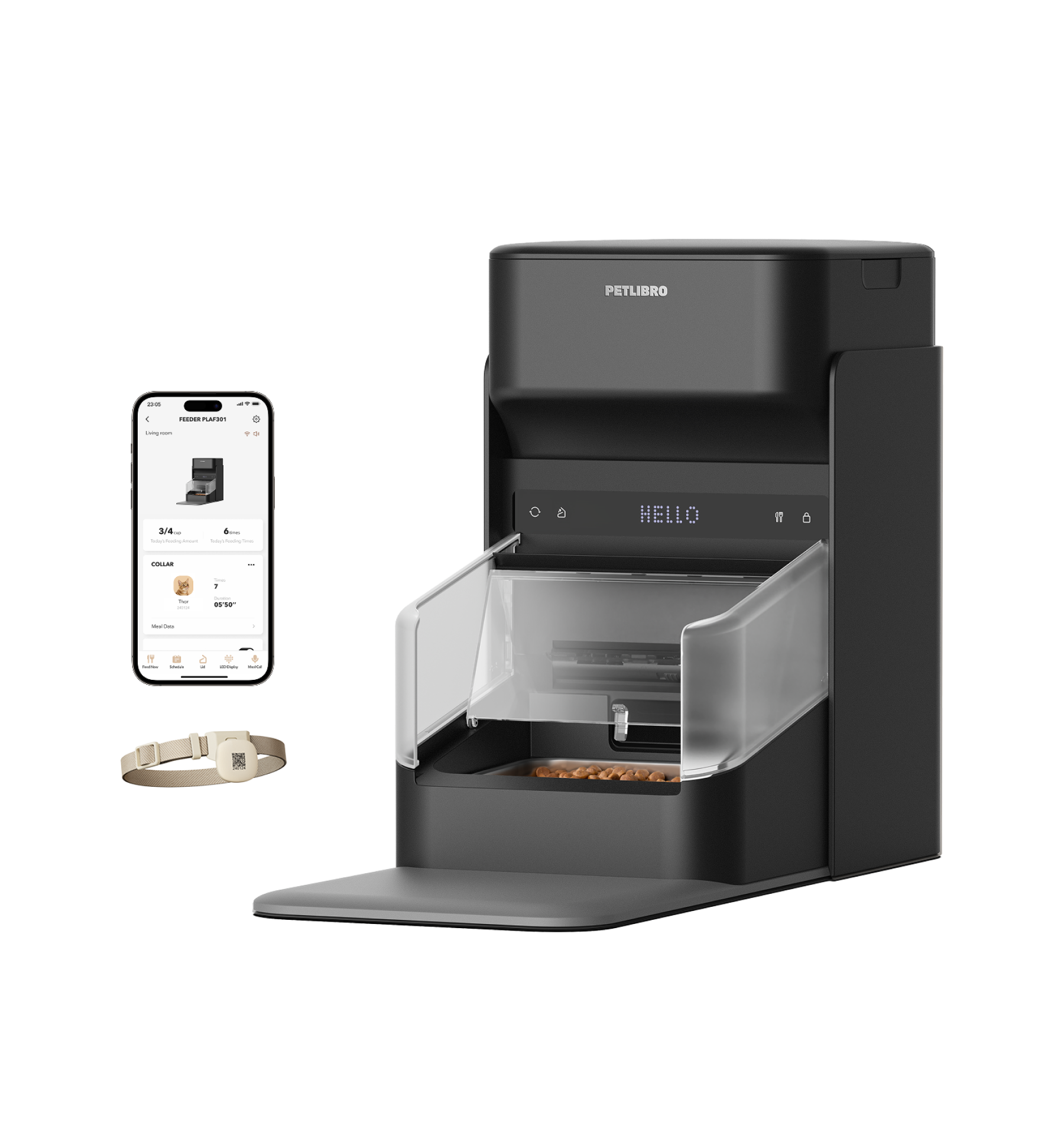
The Granary Camera Monitoring Feeder is built around visibility. Its camera lets you check in on a meal from the app, confirm the food actually dispensed, and see which pet showed up — useful if you travel, work long shifts, or simply want proof that a shy cat is eating at all.
That visibility has a hard limit, and it is the most important fact in this comparison: the Granary has no pet recognition. The camera records the crime; it does not prevent it. If your household problem is a bold cat eating a second dinner meant for a cat on a prescription diet, a camera feed of the theft is evidence, not a solution.
What the Granary does add beyond the camera is capacity. Its 5 L hopper is two-thirds larger than the One RFID's 3 L, which means fewer refills for a single pet or a pair of cats eating the same food. It weighs 1.7 kg and carries a 2-year warranty per our catalog — a longer stated warranty than we have tracked for its sibling.
Gatekeeper: What the One RFID Actually Gives You
The Petlibro One RFID Smart Feeder takes the opposite approach: no camera at all, but real enforcement. Its pet recognition works through an RFID collar tag — the feeder identifies the tagged pet and dispenses or grants access for that animal only. In a multi-pet home, that is the difference between hoping the right cat eats and structuring it so the wrong cat cannot.
This matters most in three common situations:
- Prescription or weight-management diets, where one pet's food is genuinely off-limits to the other.
- Food theft and resource guarding, where a dominant pet eats both portions and gains weight while the other loses it.
- Timed rationing, where a grazer needs small access-controlled meals rather than an open bowl.
The trade-offs are equally clear. With no camera, you get no visual confirmation — you trust the schedule and the tag system rather than seeing the meal happen. The 3 L hopper is smaller, so a multi-pet household will refill more often. And the RFID system only works if the intended pet wears its tag; a pet that loses collars is a real-world failure mode worth thinking about before you buy.
Scheduling and Everyday Use
Day to day, the two feeders are more alike than different. Both are scheduled through the app, both serve up to 10 dry-food meals per day, and both carry battery backup so a power cut does not skip a meal. Neither requires a subscription, which keeps the long-term cost of ownership simple: buy the feeder, buy the food.
Where daily life diverges is refill rhythm and confidence. The Granary's 5 L hopper stretches the interval between refills; the One RFID's 3 L hopper asks for more frequent top-ups but gives you confidence that each portion reached the right bowl. Neither feeder handles wet food — both are dry-only designs, so homes feeding wet or mixed diets will still need a separate solution for those meals.
Which Household Should Buy Which?
Choose the Granary Camera if you have one pet — or multiple pets who all eat the same food — and your real need is reassurance: seeing the meal happen, checking the bowl from work, and refilling less often thanks to the 5 L hopper. It is a monitoring tool first and a feeder second.
Choose the One RFID if your problem is which pet eats. Prescription diets, a food thief, or a pet on strict portions all point to the gatekeeper. Accept the smaller hopper and the lack of a camera as the price of actual portion control.
Choose neither if you need both enforcement and eyes — within this pair, no single model offers camera monitoring plus RFID recognition, so a two-feeder setup or a different product class would be the honest answer.
Verdict
The Score gap (4.1 vs 3.8) is small and, frankly, secondary. This is not a better-versus-worse decision; it is a diagnosis decision. If your household's problem is uncertainty — did she eat? — the Granary Camera answers it. If your problem is behavior — he keeps eating her food — only the One RFID's tag-based gatekeeping fixes it. Buy for the problem you actually have.
Where to buy: Petlibro Granary Camera Monitoring Feeder · Petlibro One RFID Smart Feeder — retailer links run through our /go/ tracker; the product pages track prices daily.
FAQ
Can the Granary Camera stop one pet from eating another's food? No. It has a camera but no pet recognition, so it can show you a theft after the fact but cannot prevent it. Preventing food theft is the One RFID's job.
How does the One RFID know which pet is which? It uses an RFID collar tag: the feeder recognizes the tagged pet and serves that animal. The untagged pet does not get access, which is how it enforces separate diets in a multi-pet home.
Do either of these feeders need a subscription? No. Per our catalog, neither model requires a subscription; both offer app control and scheduling without one.
Which feeder needs refilling less often? The Granary Camera. Its 5 L hopper holds substantially more dry food than the One RFID's 3 L hopper, so single-pet homes in particular will refill it less frequently.
Can these feeders handle wet food? No. Both are dry-food-only feeders. If your pet eats wet food, you would need a separate feeder designed for it.
What happens if the power goes out? Both models have battery backup, so scheduled meals continue during an outage rather than being skipped.
---
Last updated: November 27, 2026
Changelog
November 27, 2026 — Added retailer buying links (Our pick and Where to buy) for the products covered in this article.
Related in this category
Pet Tech · Automatic Cat Feeders · Updated Nov 21, 2026
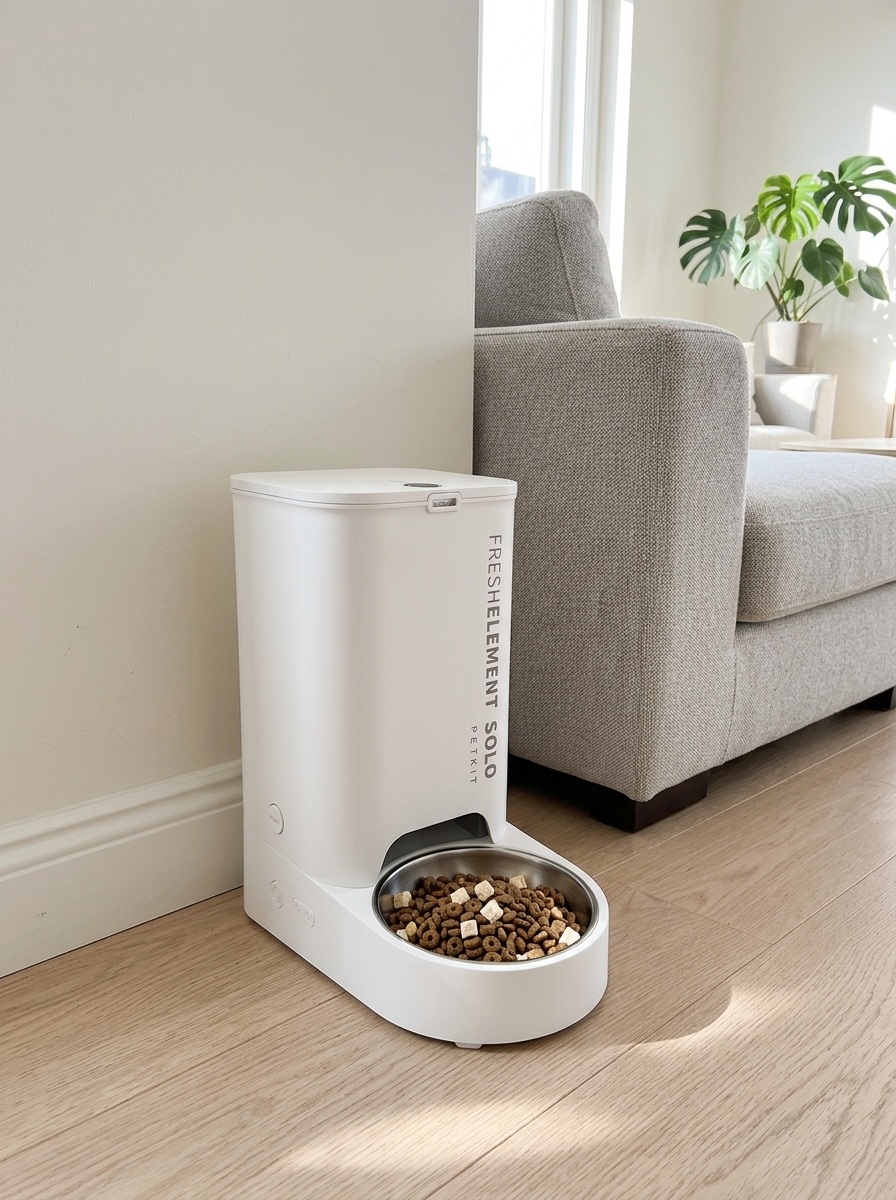
As of 2026-11-21, we track 16 automatic cat feeders from 9 brands, scored with Score v1.0 from owner ratings, spec strength and ownership cost. PETKIT Fresh Element Solo leads the list at 8.0/10. Tracked prices run from $47 to $299; the full table below is sortable by score and price.
Pet Tech · Automatic Cat Feeders
The VOLUAS Automatic Cat Feeder 4L (Score 7.8 in our catalog) has no app, no camera, and no account — so its entire ownership contract is physical: desiccant, dust, seals, and batteries.
- The working
Pet Tech · Automatic Cat Feeders
The PETKIT YumShare Dual-Hopper (Score 8.0 in our catalog) is built around one idea: two separate dry-food hoppers, 5 L combined, feeding u
Pet Tech · Automatic Cat Feeders
The PetSafe Smart Feed is the bigger, more flexible machine: a 5.76 L hopper and up to 12 meals a day, the deepest feeding schedule in this comparis
Report an error on this page

Discussion
No comments yet