Email me when PETKIT Fresh Element Solo drops to my target price. The confirmation includes a manage link — use it any time to list or remove your alerts at Your price alerts. Lowest price tracked so far: USD 49.90 — a target below that is below the historical low and less likely to be reached.
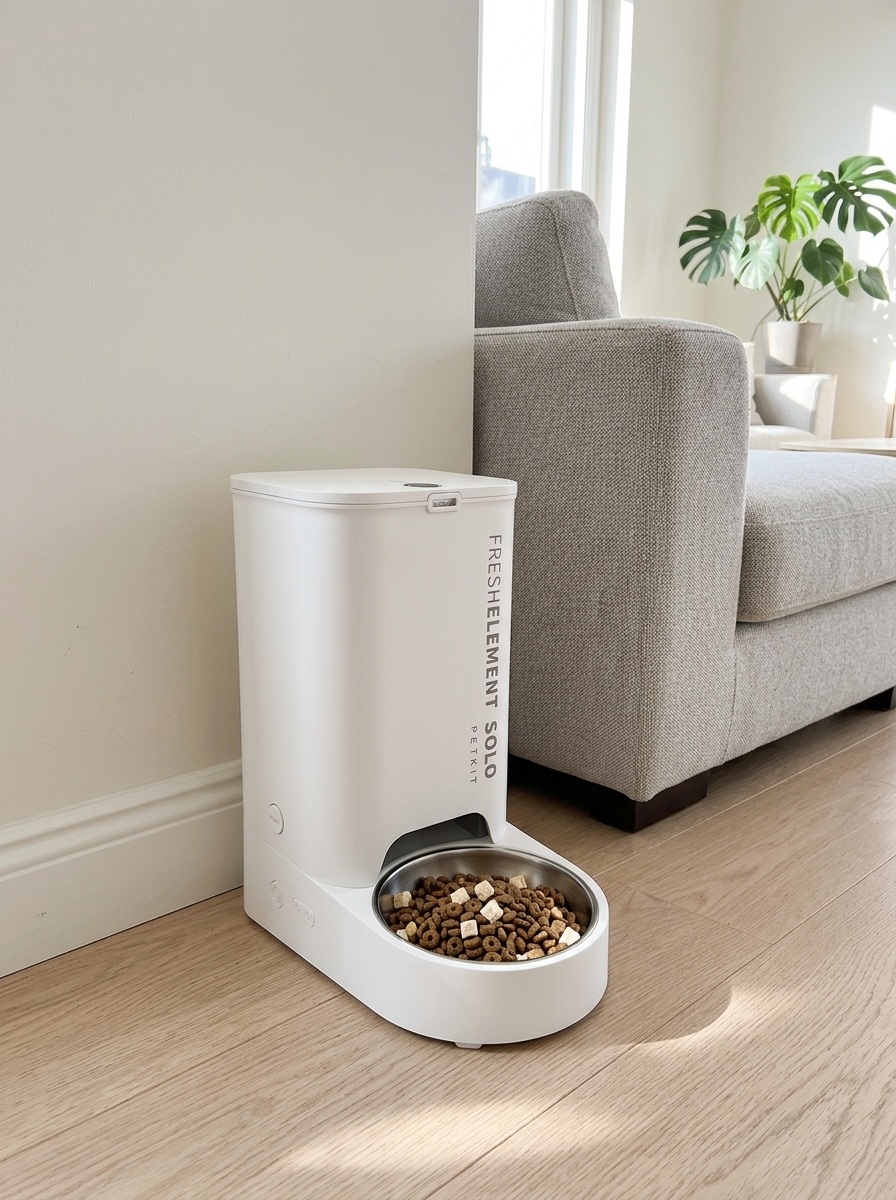
PETKIT Fresh Element Solo — AI-assisted lifestyle image
Affiliate disclosure: This article is desk research based on published specifications and catalog data. We have not hands-on tested this feeder, and nothing below is presented as measured test data. Where we suggest maintenance intervals, they are planning estimates — reasonable starting cadences for owners, not figures from a lab or from the manufacturer unless we say so. AIBuyLab may earn a commission from qualifying purchases made through links on this site, at no additional cost to you.
TL;DR
The PETKIT Fresh Element Solo is a compact dry-food feeder — 3 L hopper, up to 10 meals a day, 10 g minimum portion, app control, battery backup, and a catalog Score of 8.0 — whose upkeep is almost entirely about freshness discipline rather than mechanical repair. The schedule that keeps it earning that score: refresh the desiccant on a fixed monthly rhythm (planning estimate), empty and wipe the hopper every refill cycle, clean kibble dust from the portion wheel monthly (planning estimate), check the lid seal quarterly (planning estimate), and test the battery backup twice a year (planning estimate). None of it is hard; all of it is easy to forget, because the feeder keeps working while the food inside quietly goes stale.
The PETKIT Fresh Element Solo is an automatic dry-food pet feeder: a sealed 3 L hopper stores kibble, and an internal portioning mechanism dispenses measured meals — as little as 10 g at a time, up to 10 meals per day — on a schedule set through its app. It weighs 1.32 kg, making it the lightest feeder in its class in our catalog, and it runs on mains power with battery backup so a power cut does not skip a meal. It has no camera and no pet recognition: it feeds on schedule, not on identity. In our Score v1.0 system it rates 8.0, a high score for a feeder at this size.
That design shapes the maintenance picture. There is no camera lens to clean and no recognition sensor to recalibrate. What there is: stored food, a rotating portion mechanism, a lid seal, and a backup battery. The schedule below is organized around exactly those four things.
The Maintenance Schedule at a Glance
All intervals are planning estimates — sensible default cadences to start from. Adjust them to your home: a feeder in a humid kitchen works harder on freshness than one in a dry utility room.
Task
Cadence (planning estimate)
Why it matters
Refill check and hopper wipe
Every refill (roughly every 1–2 weeks at typical use)
Removes oil film and crumbs before they turn rancid
Desiccant refresh
Monthly
The moisture absorber saturates silently; stale desiccant protects nothing
Portion-wheel dust clean
Monthly
Kibble dust accumulates at the dispensing wheel and skews portions
Bowl wash
Weekly
The bowl collects oils and saliva; it is the highest-contact part
Lid seal inspection
Quarterly
A compressed or cracked seal defeats the freshness design
Full deep clean (hopper, wheel housing, chute)
Quarterly
Catches buildup the quick wipes miss
Battery-backup test
Twice a year
A backup you never test is a hope, not a backup
App schedule audit
Quarterly
Confirms meal count and portion sizes still match your pet's plan
Desiccant Cadence: The Freshness Clock
The single most skipped task on any sealed feeder is the desiccant. Dry kibble is not inert: its fats oxidize on contact with air and moisture, and a 3 L hopper in a warm kitchen can hold the same food for one to two weeks between refills. The desiccant pack in the lid is what slows that down — and it saturates gradually, with no visible change and no warning light. When it is spent, the hopper is just a box.
Our planning estimate is a monthly desiccant refresh, tied to a date rather than to refills, because refill timing varies with how much your pet eats. If you live somewhere humid, or the feeder sits near a steamy stove or dishwasher, treat three weeks as the safer interval (planning estimate). A simple discipline works: when you swap the desiccant, write the date on the new pack with a marker. The next swap then needs no memory at all.
The Portion Wheel: Where Kibble Dust Goes
The Fresh Element Solo portions food mechanically — a rotating wheel or auger-style mechanism meters out each 10 g-plus serving. Reasoning from that mechanism (this is mechanism reasoning, not a teardown): kibble is coated in fats and flavoring dust, and every rotation grinds a little of that dust into the wheel housing and dispensing chute. Over weeks, the buildup does two things. It narrows the effective passage, so portions drift slightly small; and it holds moisture-loving residue in the exact place fresh food passes through.
The fix is unglamorous: monthly (planning estimate), empty the hopper, remove what kibble you can reach, and wipe the wheel area and chute with a dry or barely damp cloth, then let everything dry fully before refilling. Dry is the operative word — a damp chute refilled with kibble cakes the next layer of dust on faster. If portions ever look visibly inconsistent meal to meal, dust buildup at the wheel is the first suspect, ahead of any app or motor problem.
Seal Checks: The Lid Is the Product
A feeder called "Fresh Element" is making a promise about its seal. The lid gasket is what keeps the 3 L of stored food from breathing room air between meals. Seals fail slowly: the gasket compresses where the lid latches, picks up a film of kibble oil, or — if it is ever washed and refitted wet — seats imperfectly.
Quarterly (planning estimate), pop the lid and run a finger around the gasket. It should feel continuous, springy, and clean. Wipe it with a damp cloth and dry it before closing. If you find a flat spot, a crack, or a section that no longer springs back, that is the feeder's real end-of-freshness moment regardless of what the desiccant is doing — a perfect desiccant cannot compensate for a hopper that leaks air at the rim.
Battery Backup: Test the Thing You Bought It For
The Solo's battery backup exists for exactly one scenario: the power goes out and your pet still eats. It is also the feature owners are least likely to ever verify. Batteries left on permanent standby age, and a backup that has silently died announces itself only during the outage it was meant to cover.
Twice a year (planning estimate), unplug the feeder at a moment when a meal is due within the hour and confirm it dispenses on battery. While you are there, check the app still shows the correct schedule — the audit takes two minutes and catches the other silent failure mode, a schedule edited by accident months ago and never re-checked. If your feeder uses replaceable cells rather than a sealed pack, replace them on the manufacturer's stated cycle or annually (planning estimate), whichever comes first.
What the Schedule Does Not Include
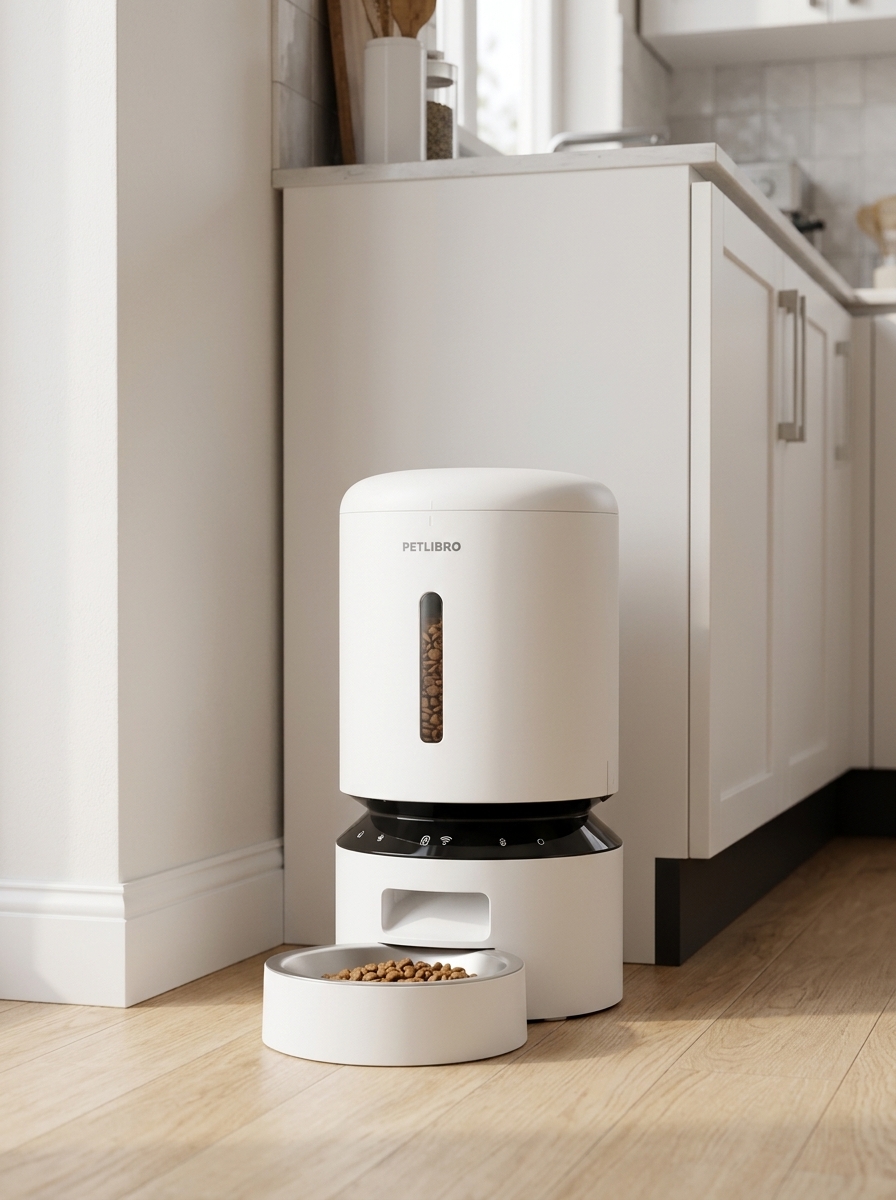
Because the Solo has no camera, there is no lens or night-vision array to maintain. Because it has no pet recognition, there are no collar tags to pair or chip registrations to update. And because it is dry-only, it avoids the daily wash-down discipline that wet-food feeders demand — the bowl still needs a weekly wash, but the food path itself stays dry, which is precisely why the dust-and-desiccant rhythm above is sufficient. If you are comparing against a larger app feeder such as the Petlibro Granary WiFi Feeder, the maintenance contrast is similar in kind — stored-food freshness and portion-path cleaning — with the Granary's bigger hopper stretching refill intervals but holding food longer per fill, which makes its desiccant discipline more important, not less.
Verdict
The Fresh Element Solo's maintenance burden is small but front-loaded onto one idea: freshness is perishable, and the feeder will not remind you. Owners who tie three habits to the calendar — monthly desiccant, monthly wheel wipe, quarterly seal-and-schedule check — will get the consistent portions and fresh food that the design promises and that its 8.0 catalog score reflects. Owners who treat it as fill-and-forget will still get fed pets; they will just be feeding them staler food in slightly drifting portions, with no symptom obvious enough to blame. For a 1.32 kg feeder that can sit anywhere, that is a fair trade — as long as you know the schedule is yours to keep.
How often should I replace the desiccant in the Fresh Element Solo? Monthly is our planning estimate for a typical home. In humid climates or steamy kitchens, every three weeks is the safer cadence (also a planning estimate). Date each new pack so the rhythm does not depend on memory.
Do I need to wash the whole hopper, or just wipe it? A wipe at every refill handles the oil film; a full wash belongs in the quarterly deep clean (planning estimate). Whatever you wash, dry it completely before refilling — residual moisture accelerates both staleness and dust caking at the portion wheel.
Why are my portions getting smaller over time? The most likely cause, reasoning from the dispensing mechanism, is kibble dust compacting around the portion wheel and chute, narrowing the passage. Clean the wheel area before assuming a motor or app fault. This is mechanism reasoning, not a measured diagnosis of any individual unit.
How do I know the battery backup still works? Unplug the feeder shortly before a scheduled meal, twice a year (planning estimate), and confirm it dispenses on battery power. A backup that is never tested may have aged out silently.
Does the lack of a camera or pet recognition reduce maintenance? Yes, modestly. There is no lens to clean and no recognition system to maintain, so the schedule concentrates on the food path: desiccant, dust, seal, and the bowl. The trade-off is functional, not maintenance-related — the feeder feeds on schedule only and cannot tell one pet from another.
What is the most important task if I only do one? The desiccant refresh. It is the only component whose failure is completely invisible while it directly degrades every meal in the hopper.
Last updated: November 27, 2026
Changelog
November 27, 2026 — Added retailer buying links (Our pick and Where to buy) for the products covered in this article.
Related in this category
Pet Tech · Automatic Cat Feeders · Updated Nov 21, 2026
As of 2026-11-21, we track 16 automatic cat feeders from 9 brands, scored with Score v1.0 from owner ratings, spec strength and ownership cost. PETKIT Fresh Element Solo leads the list at 8.0/10. Tracked prices run from $47 to $299; the full table below is sortable by score and price.
The VOLUAS Automatic Cat Feeder 4L (Score 7.8 in our catalog) has no app, no camera, and no account — so its entire ownership contract is physical: desiccant, dust, seals, and batteries.
- The working
Discussion
No comments yet