Email me when Dreame Z30 drops to my target price. The confirmation includes a manage link — use it any time to list or remove your alerts at Your price alerts. Lowest price tracked so far: USD 219.99 — a target below that is below the historical low and less likely to be reached.
Affiliate disclosure: This article is desk research based on catalog-tracked specifications and manufacturer-published figures. We did not hands-on test either vacuum, and we make no claim to have done so. AIBuyLab may earn a commission from qualifying purchases made through links on this page, at no extra cost to you.
TL;DR
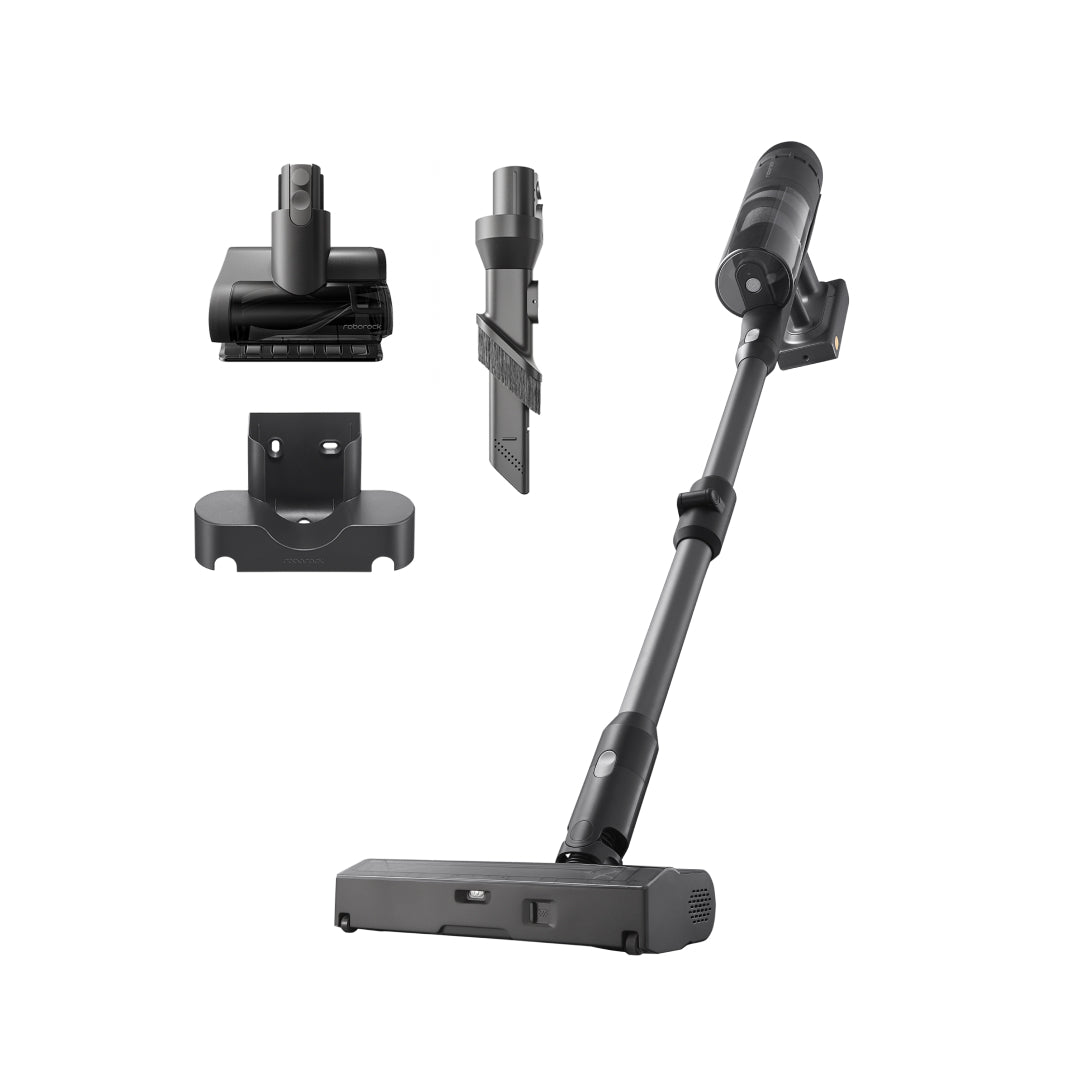
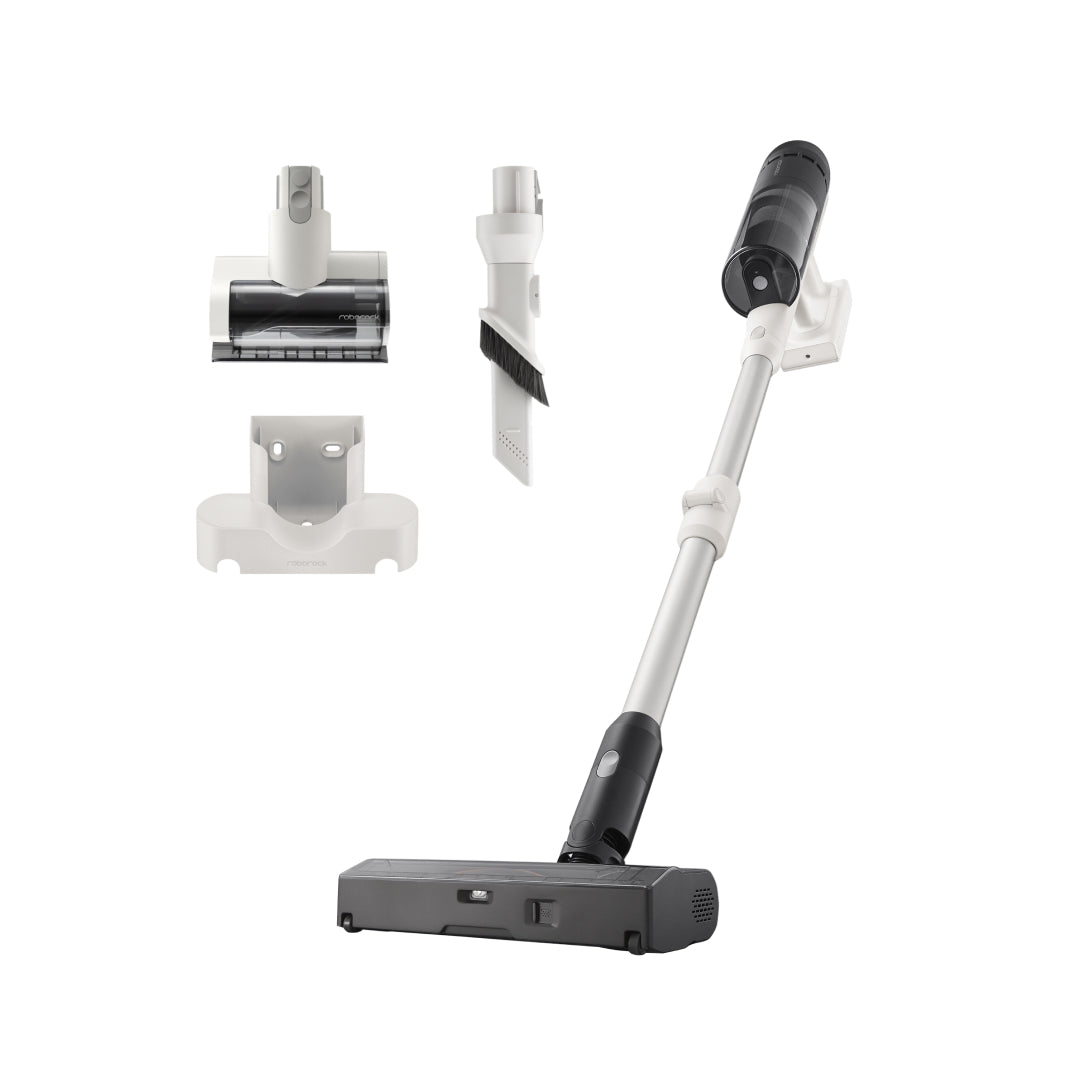
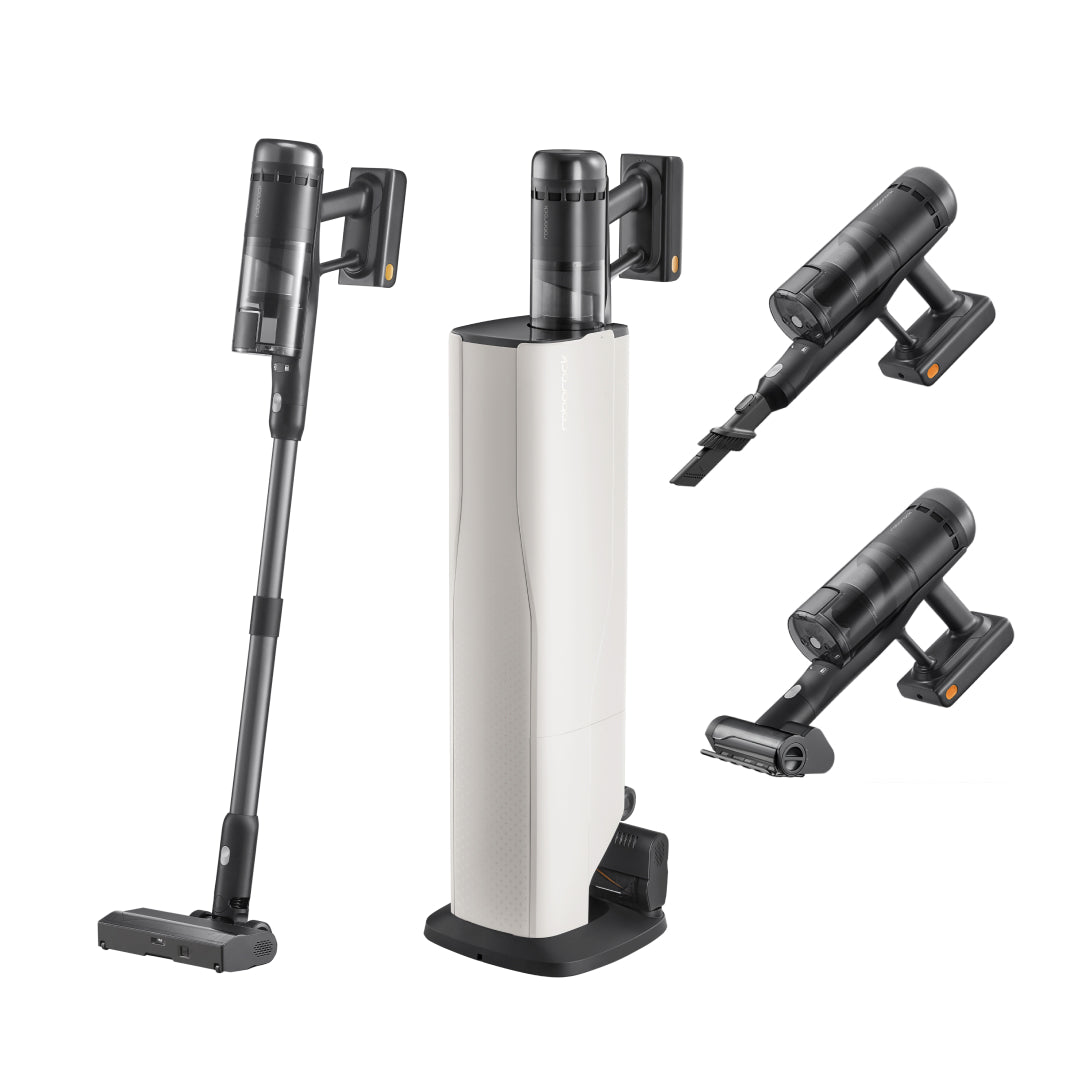
The Roborock H60 Hub Ultra (Score 5.7) is the lighter, longer-running machine: 1.68 kg, 90 minutes of runtime, and a bagged self-empty hub that swallows the contents of its small 0.49 L bin so you rarely touch dust.
The Dyson V15 Detect Absolute (Score 3.4) is the stronger extractor: 240 AW of suction against the Roborock's 210 AW, a bigger 0.77 L bin, and 7 attachments — but it weighs 3.1 kg, runs 60 minutes, and every gram of dirt leaves through your hands.
The Score gap is not a mistake. Our Score v1.0 rewards the things daily users feel every session — carry weight, runtime, and not handling dust — while the Dyson's advantages concentrate in deep-clean power and versatility.
Frequent light passes around a lived-in home: Roborock. Weekly deep cleans, thick carpet, and attachment-driven jobs: Dyson.
What These Two Vacuums Are
Both are cordless stick vacuums with whole-machine HEPA filtration, no app control, and no subscription of any kind. Beyond that shared skeleton, they are built around opposite ideas of what the annoying part of vacuuming is.
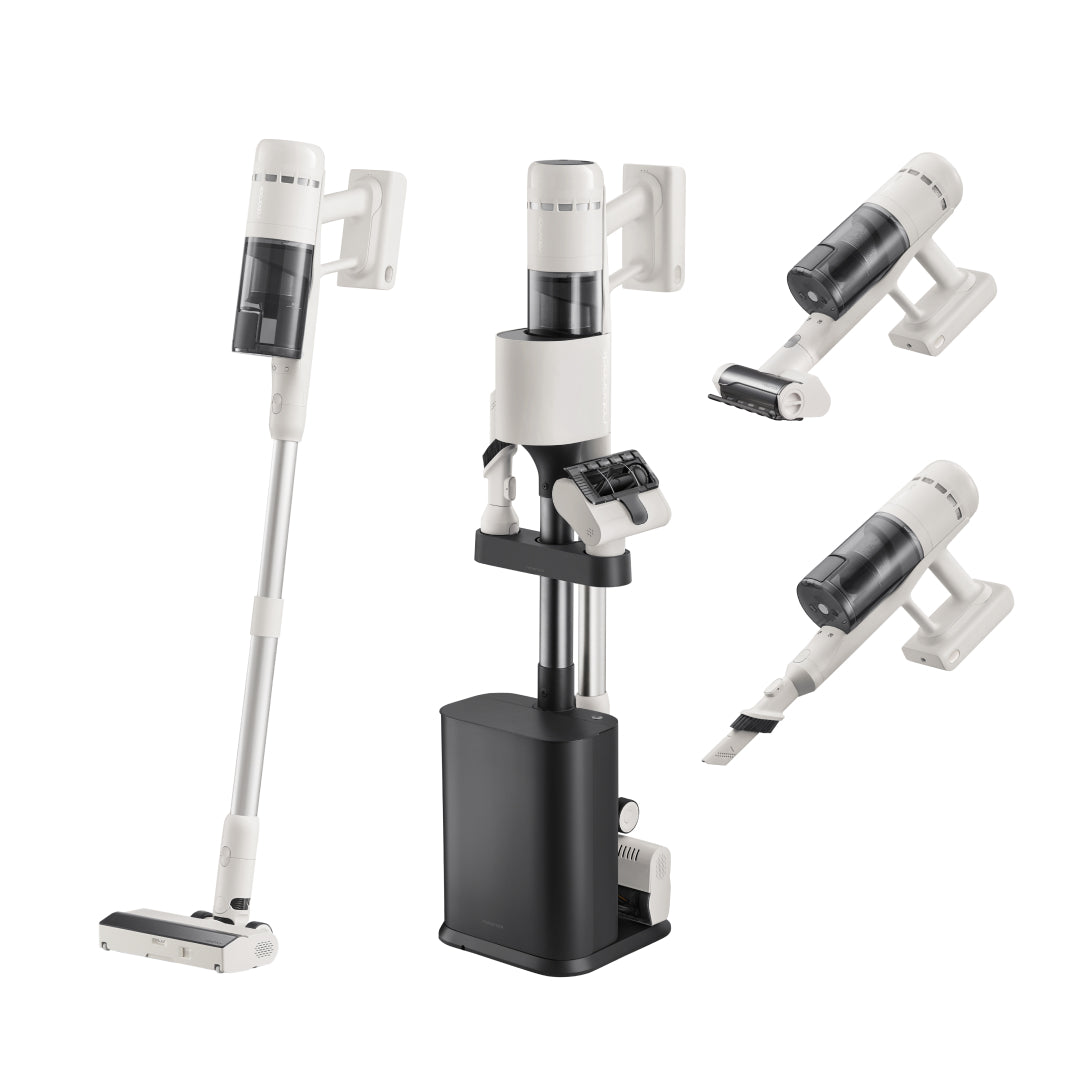
The Roborock H60 Hub Ultra treats dust handling as the annoyance. Its onboard bin is small — 0.49 L — because the bin is not really the container; the bagged hub it docks into is. You vacuum, you dock, the hub takes the debris into a sealed bag, and the stick goes back to being a 1.68 kg tool you can carry up stairs without thinking about it.
The Dyson V15 Detect Absolute treats extraction as the annoyance. It carries the larger bin (0.77 L), the stronger suction figure (240 AW), and a 7-attachment kit aimed at households that clean everything from carpet to car interiors with one machine. The trade is written on the spec sheet: 3.1 kg in hand and 60 minutes per charge.
Spec Table
Spec
Roborock H60 Hub Ultra
Dyson V15 Detect Absolute
Score v1.0
5.7
3.4
Suction
210 AW
240 AW
Runtime
90 min
60 min
Dustbin
0.49 L
0.77 L
Self-empty
Bagged hub
None
Weight
1.68 kg
3.1 kg
Attachments
Not tracked in our catalog
7
Filtration
HEPA
HEPA
App control
No
No
Subscription
None
None
Warranty
Not tracked in our catalog
2 years
Why the Score Lands This Way
A reader scanning the table will spot the puzzle immediately: the Dyson has more suction and a bigger bin, yet Scores 3.4 against the Roborock's 5.7. That is Score v1.0 working as designed, and it is worth explaining rather than smoothing over.
Our Score aggregates the full tracked spec record — runtime, weight, dust handling, filtration, and the rest — not a single headline number. The Roborock wins row after row that matters in daily use: 50% more runtime (90 vs 60 minutes), barely over half the carry weight (1.68 kg vs 3.1 kg), and a self-empty system that removes the most disliked chore in cordless ownership. The Dyson wins exactly two rows, but they are big ones: suction (240 vs 210 AW) and bin capacity (0.77 L vs 0.49 L), plus an attachment range the Roborock's tracked record does not match.
Neither number is "wrong." They answer different questions. The Score answers "which machine fits an ordinary week better?" The Dyson's spec peaks answer "which machine pulls harder when the job is serious?" The verdict below splits along exactly that line.
Runtime and Weight: The Everyday Argument
Ninety minutes against sixty is the difference between cleaning a whole home on one charge and planning around a recharge. For apartments and single-floor homes, both figures are honestly more than enough; for multi-floor houses, the Roborock's extra half hour is the margin that finishes the job.
Weight compounds the same way. At 1.68 kg, the Roborock is a grab-and-go tool — the kind of vacuum that actually gets used for a two-minute crumb patrol, because picking it up costs nothing. At 3.1 kg, the Dyson is nearly twice as heavy in hand, and that weight sits in your wrist through every above-floor job its 7 attachments invite you to do. Households that vacuum a little every day will feel the Roborock's lightness far more than they will miss 30 AW. Households that vacuum once a week, thoroughly, will feel the opposite.
Suction, Bin and Attachments: The Deep-Clean Argument
The Dyson's case rests on extraction. 240 AW is a 14% edge over the Roborock's 210 AW, and on deep-pile carpet and embedded grit that margin is the one that matters. Its 0.77 L bin is also 57% larger — relevant because a deep clean fills a bin fast, and the Dyson asks you to empty it by hand every time. The 7-attachment kit extends the machine to stairs, upholstery, mattresses and cars in a way the Roborock's tracked configuration does not attempt.
The Roborock's 0.49 L bin looks like a weakness until you account for the hub: the bin is a transfer chamber, not storage. After each session the debris moves into the hub's bag, so the small bin rarely becomes a mid-clean interruption. The honest cost of that convenience is a consumable. Our catalog does not track the hub's bag cost, so we will not quote one; as a planning estimate only, a household vacuuming daily should expect to cycle through roughly a bag every one to two months, and a weekly-cleaning household roughly one every three to four months — treat those counts as budgeting estimates, not manufacturer figures.
Shared Ground
The two machines agree on more than their rivalry suggests. Both filter through HEPA systems, both skip app control entirely — there is nothing to pair, update or troubleshoot — and neither carries a subscription. If you are tired of appliances that want an account, both of these are refreshingly indifferent. Both are also dry stick vacuums in the classic sense: no mopping claims appear in either tracked record, and neither should be bought as a wet-cleaning solution.
Verdict
Buy the Roborock H60 Hub Ultra if your cleaning style is frequent and light: daily or near-daily passes, stairs and upper floors in the rotation, hard floors and low-pile rugs, and a genuine dislike of emptying bins. The 90-minute runtime, 1.68 kg carry weight and bagged hub are worth more to that life than peak suction — just budget for hub bags as a recurring consumable, at the planning-estimate cadence above.
Buy the Dyson V15 Detect Absolute if your cleaning style is the weekly deep clean: thick carpet that needs real extraction, a large home's worth of debris per session, pets grinding hair into upholstery, and jobs — cars, stairs, mattresses — that justify 7 attachments. You will carry more weight and empty the bin yourself; in exchange you get the stronger motor and the bigger bin, backed by a tracked 2-year warranty.
Choose neither if you want app-based controls, mapping or mopping: neither machine offers them, and no accessory purchase changes that.
FAQ
Which vacuum has stronger suction, the Roborock H60 Hub Ultra or the Dyson V15? The Dyson V15 Detect Absolute, at 240 AW against the Roborock's 210 AW — about a 14% edge on the manufacturer-published figures our catalog tracks.
Why does the Roborock Score higher if the Dyson is more powerful? Because Score v1.0 aggregates the whole tracked record. The Roborock wins runtime (90 vs 60 minutes), carry weight (1.68 kg vs 3.1 kg) and dust handling (bagged self-empty vs manual emptying). The Dyson wins suction and bin size. The Score reflects everyday fit; the Dyson's peaks reflect deep-clean capability.
How often will I replace the Roborock's hub bags? Our catalog does not track the hub's bag cost or a manufacturer replacement interval. As a planning estimate, daily users might cycle a bag every one to two months and weekly users every three to four months. Treat these as budgeting estimates only.
Which is better for a large home? It depends on the home's floors. Large hard-floor homes favor the Roborock's 90-minute runtime and light carry weight across rooms. Large carpeted homes favor the Dyson's 240 AW extraction and 0.77 L bin, accepting a mid-clean recharge or a second pass on another day.
Does either vacuum need an app or a subscription? No. Both are tracked with no app control and no subscription. Everything each machine does, it does from its own controls.
Which is better for above-floor cleaning? The Dyson, on attachments: its tracked kit of 7 tools is built for stairs, upholstery and cars. The Roborock is the easier machine to lift at 1.68 kg, but its tracked record does not list a comparable attachment range.
As of 2026-11-22, we track 13 cordless stick vacuums from 5 brands, scored with Score v1.0 from owner ratings, spec strength and ownership cost. Dreame Z30 leads the list at 7.9/10. Tracked prices run from $130 to $1,100; the full table below is sortable by score and price.



Discussion
No comments yet