Email me when Roborock H60 Hub Ultra drops to my target price. The confirmation includes a manage link — use it any time to list or remove your alerts at Your price alerts. Lowest price tracked so far: USD 249.99 — a target below that is below the historical low and less likely to be reached.
Affiliate disclosure: AIBuyLab may earn a commission when you buy through links on this page, at no extra cost to you. This comparison is desk research built from manufacturer specifications and our product catalog — we did not hands-on test either vacuum, and every figure below comes from the listed specs rather than our own measurements.
TL;DR
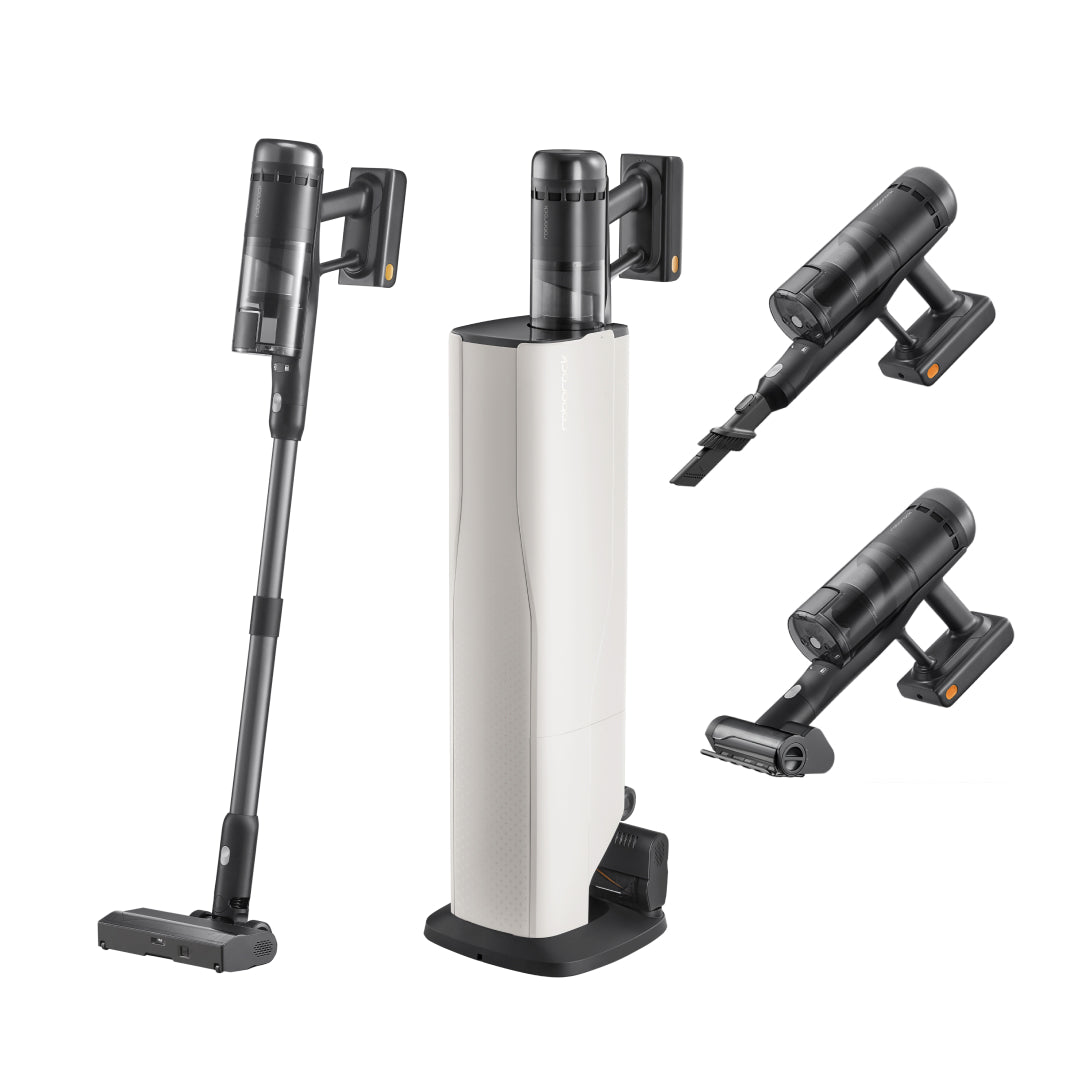
The Roborock H60 Hub Ultra is not the base stick plus a dock. It also upgrades suction from 115 AW to 210 AW and runtime from 60 to 90 minutes — it is a stronger vacuum that happens to self-empty.
The Roborock H60 keeps the same 1.68 kg body, same 0.49 L dustbin, and same HEPA filtration, and makes sense in small homes where 60 minutes already covers the whole clean.
The Hub Ultra's real costs are not in the spec sheet: a bagged station consumes replacement bags on a recurring cadence, and the hub needs permanent floor space. Our catalog does not track the hub's bag cost, so we express that cadence in counts, not dollars.
Scores in our system: H60 Hub Ultra 5.7, H60 4.1 — the gap reflects the power, runtime, and self-empty upgrades, not a different cleaning platform.
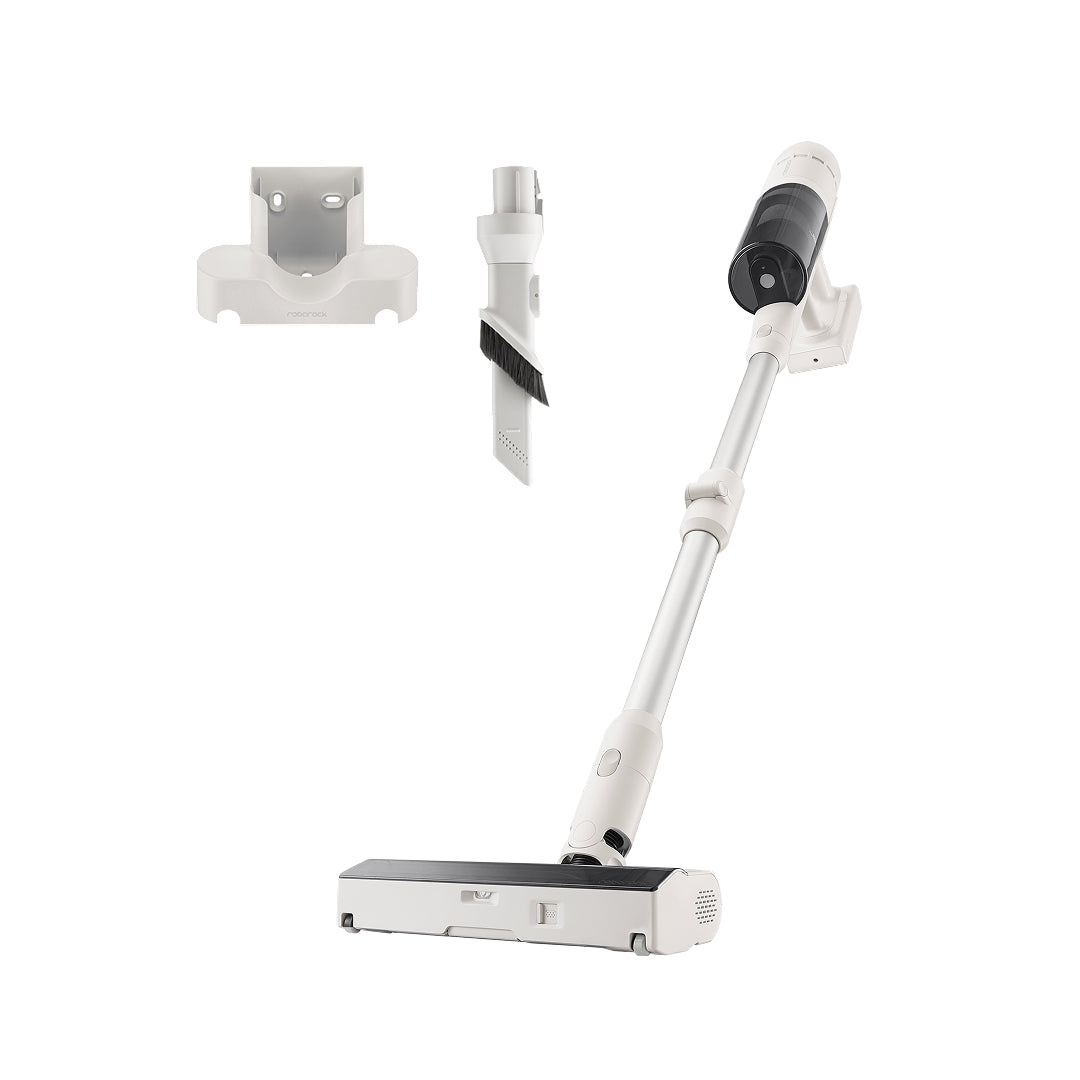
The Roborock H60 and H60 Hub Ultra are cordless stick vacuums from the same product family, sharing a lightweight 1.68 kg chassis, a 0.49 L onboard dustbin, and HEPA filtration. Neither model offers app control, and neither requires a subscription — these are deliberately simple, screen-and-trigger machines rather than connected appliances.
The difference is what happens at the top of the range. The H60 is the standalone stick: you vacuum, you empty the 0.49 L bin by hand, you put it away. The H60 Hub Ultra pairs a more powerful version of the stick with a bagged self-empty hub — a floor-standing station that pulls debris out of the stick's bin into a sealed bag after cleaning. So the comparison is really two questions stacked together: is the stronger stick worth it, and is never hand-emptying a small bin worth a station, its bags, and its footprint?
Spec Table
Spec
Roborock H60 Hub Ultra
Roborock H60
AIBuyLab Score
5.7
4.1
Suction
210 AW
115 AW
Runtime
90 min
60 min
Dustbin capacity
0.49 L
0.49 L
Self-empty
Yes — bagged hub station
None
Filtration
HEPA
HEPA
Weight
1.68 kg
1.68 kg
App control
No
No
Subscription required
No
No
The Stick Itself Is Not the Same Stick
It would be easy to assume the Hub Ultra is the H60 with a station bolted on, and that assumption would be wrong. The Hub Ultra's motor delivers 210 AW against the base model's 115 AW — a 95 AW gap, or roughly 83% more suction on paper. That matters most on carpet, where air watts translate into pulling embedded grit out of pile rather than skimming the surface, and on the heavy debris — litter granules, cereal, tracked-in gravel — that weaker sticks push around before they pick up.
Runtime widens by the same proportion: 90 minutes against 60. For a small apartment, that difference is academic, because neither limit gets reached. For a multi-room house cleaned in one session, the base H60's 60 minutes is the ceiling you plan around, while the Hub Ultra gives you a half-hour of headroom for a second pass over the worst rooms.
What does not change is the part you carry. Both sticks weigh 1.68 kg, so the Hub Ultra's extra power does not cost you anything in hand fatigue on stairs, upholstery, or overhead cobweb duty. And both keep HEPA filtration, so the exhaust-air story is identical. The upgrade is concentrated exactly where a spec sheet can show it — power and stamina — and nowhere you would feel it as a downside in the hand.
The Bin Problem the Hub Actually Solves
Both sticks carry a 0.49 L dustbin, and that number is the honest center of this comparison. Half a liter is small. In a home with a shedding pet, a long-haired household member, or a mudroom that collects grit, a 0.49 L bin can fill in a single session — and a full bin is not just an inconvenience, it chokes airflow and quietly degrades the suction you paid for until you empty it.
With the base H60, emptying is a manual ritual after nearly every meaningful clean: carry the stick to a trash can, open the bin, shake out the dust cloud, occasionally pick compacted hair off the filter area by hand. With the Hub Ultra, the stick docks, the station evacuates the bin into a sealed bag, and the 0.49 L bin starts every session empty. The sealed bag also matters for allergy-sensitive households — the dust you captured stays captured instead of puffing back into the air at the trash can.
That convenience has two costs the spec table cannot show. First, bags are a consumable: as a planning estimate, expect to replace the station bag roughly every one to two months in an average home, and more often — perhaps monthly — in a high-shedding pet home; that works out to something like 6 to 12 bags a year as a planning count. Our catalog does not track the hub's bag cost, so we will not put a dollar figure on that cadence — check current bag pricing before you buy, because it is a permanent running cost of the Hub Ultra and zero for the base H60. Second, the hub is furniture. It needs a permanent spot with floor space and an outlet, which is a real consideration in a small apartment where the base stick can hang in a closet.
Who Each One Fits
The base H60 fits the home where its limits never bind: a small apartment or studio, mostly hard floors, no heavy shedding, where a full clean takes well under 60 minutes and emptying a small bin afterward is a ten-second task rather than a chore. In that home, the Hub Ultra's station is floor space spent solving a problem you do not have, and its bags are a subscription in everything but name.
The Hub Ultra fits the home where the base model's limits bind every week: carpet that needs the 210 AW, a floor plan that pushes past an hour of cleaning, a pet whose hair fills 0.49 L before the session ends, or an allergy sufferer who should not be shaking dust bins into kitchen trash. In that home, the upgrade is not the dock — it is the stronger, longer-running stick, and the dock is what keeps its small bin from undermining it.
Verdict
Buy the H60 Hub Ultra if your home is big enough, carpeted enough, or hairy enough that the base model's 60 minutes, 115 AW, or hand-emptied 0.49 L bin would frustrate you weekly — and accept bags and a floor footprint as the standing price of that convenience. Buy the base H60 if your cleans are short, your floors are hard, and your bin rarely fills: you keep the same light body and HEPA filtration, skip the consumables entirely, and give up nothing you would actually use.
Where to buy: Roborock H60 Hub Ultra · Roborock H60 — retailer links run through our /go/ tracker; the product pages track prices daily.
FAQ
Is the H60 Hub Ultra just an H60 with a dock? No. Alongside the self-empty hub, the Hub Ultra raises suction from 115 AW to 210 AW and runtime from 60 to 90 minutes. The dock is only one of three upgrades.
How often will I replace the hub's dust bags? As a planning estimate, every one to two months in a typical home, and around monthly with heavy pet shedding — roughly 6 to 12 bags per year. Our catalog does not track bag pricing, so treat the bags as a recurring count, and check current prices before buying.
Does either model need an app or a subscription? No. Neither vacuum offers app control, and neither requires a subscription. Both are operated entirely on the device.
Is 0.49 L really too small for the base H60? It depends on debris volume, not floor size alone. A low-debris hard-floor home may empty it every few sessions; a shedding pet can fill it in one. If it fills mid-clean, suction suffers until it is emptied — that is the scenario the hub eliminates.
Which one is better for allergies? Both sticks have HEPA filtration while vacuuming. The Hub Ultra adds an edge at emptying time, because debris moves into a sealed bag instead of being shaken loose into the air from an open bin.
Is the weight difference a factor? No — both sticks weigh 1.68 kg, so handheld and overhead use feel the same. The Hub Ultra's extra hardware lives in the station, not in your hand.
Last updated: November 27, 2026
Changelog
November 27, 2026 — Added retailer buying links (Our pick and Where to buy) for the products covered in this article.
As of 2026-11-22, we track 13 cordless stick vacuums from 5 brands, scored with Score v1.0 from owner ratings, spec strength and ownership cost. Dreame Z30 leads the list at 7.9/10. Tracked prices run from $130 to $1,100; the full table below is sortable by score and price.
Discussion
No comments yet