Email me when Roborock H60 Hub drops to my target price. The confirmation includes a manage link — use it any time to list or remove your alerts at Your price alerts. Lowest price tracked so far: USD 149.99 — a target below that is below the historical low and less likely to be reached.
We may earn a commission when you buy through links on this page — at no extra cost to you. Every figure below is taken from the two product pages in our catalog, checked November 22, 2026. This is a comparison of published specifications and prices; neither vacuum's performance is described from hands-on use.
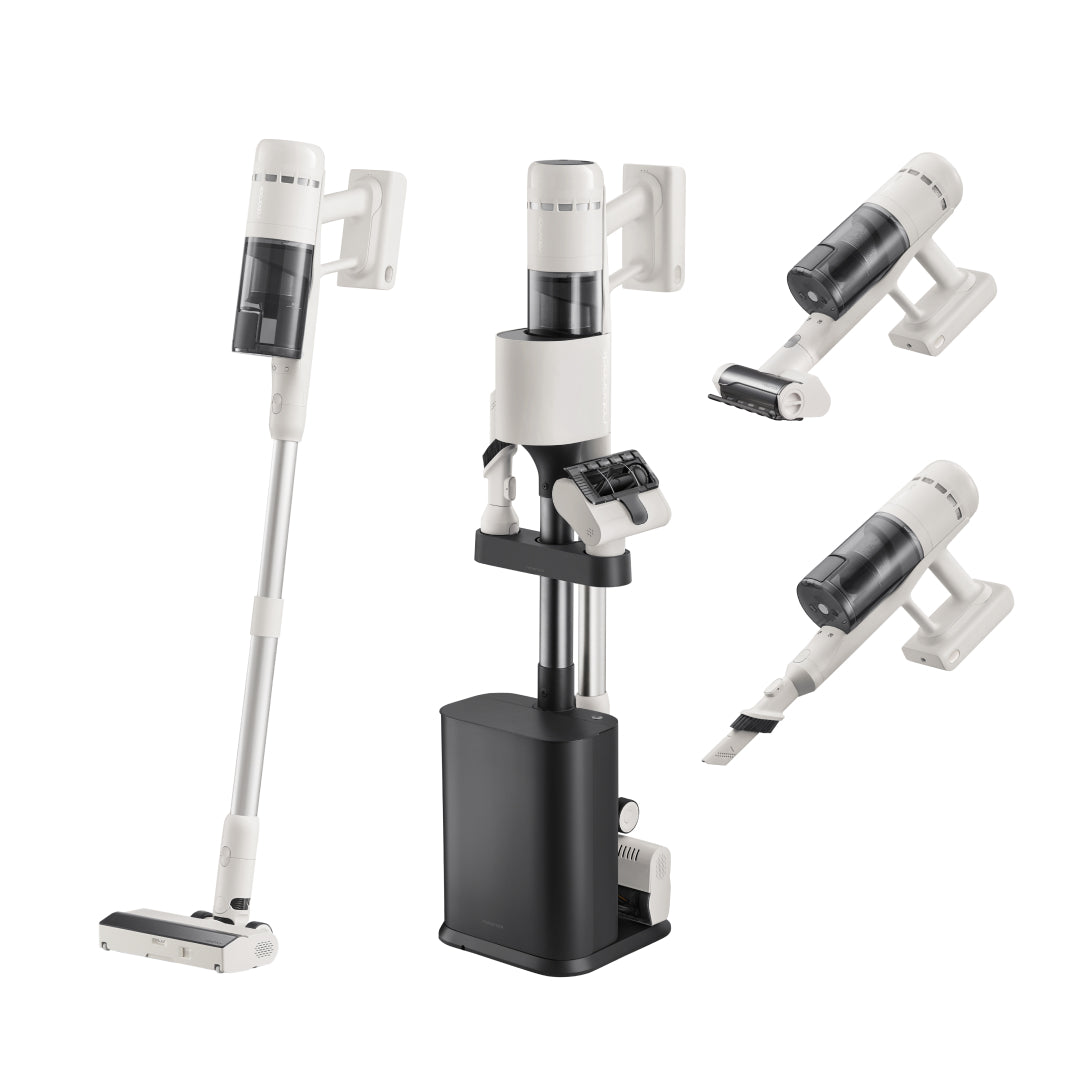
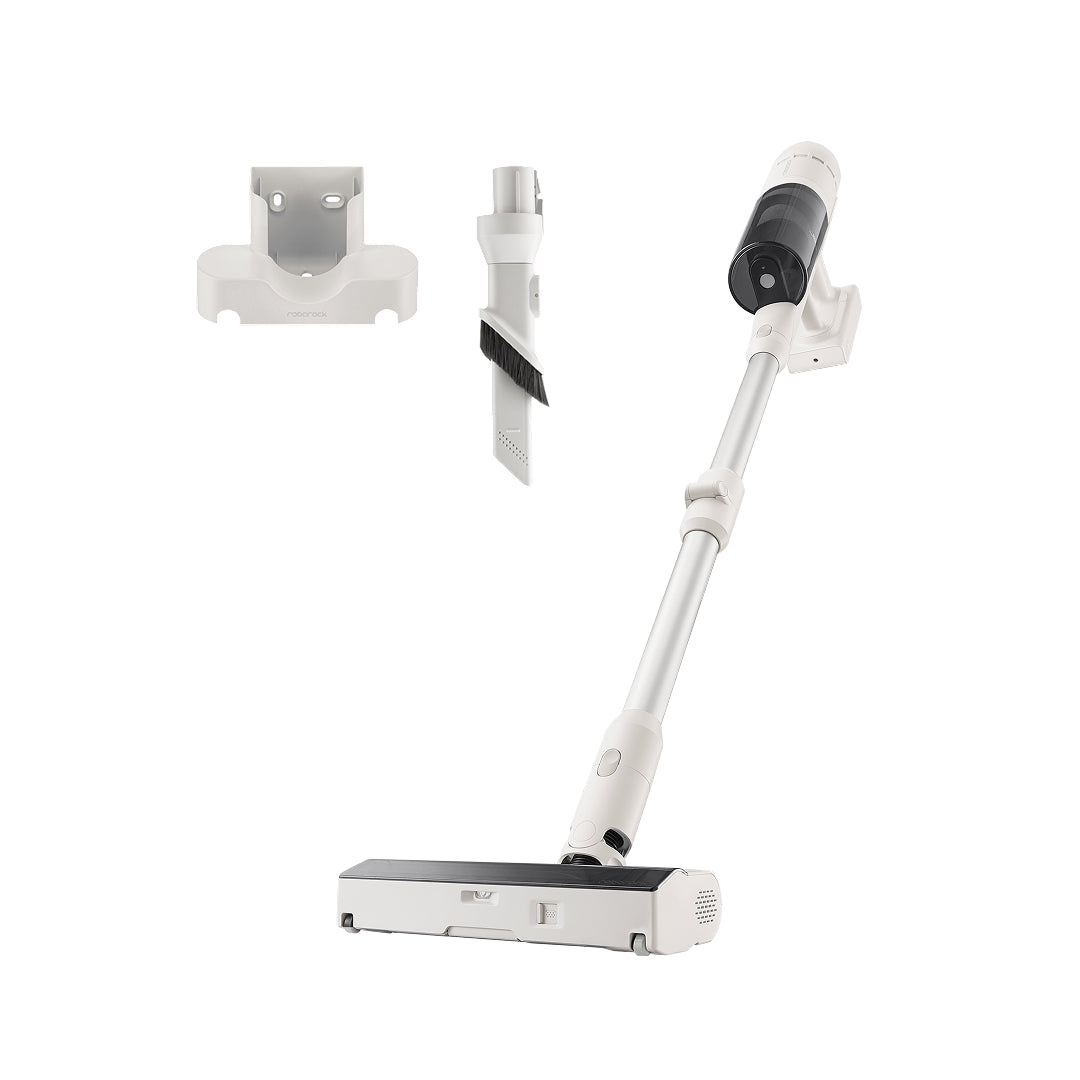
The Roborock H60 Hub (USD 149.99) and H60 Hub Ultra (USD 249.99) are the same vacuum in almost every tracked respect — same 1.68 kg weight, same 0.49 L bin, same bagged self-empty hub, same HEPA-grade filtration, no app, no subscription. The USD 100 step buys two numbers: suction rises from 115 AW to 210 AW, and the maker's longest runtime quote rises from 60 to 90 minutes. Because the Hub's 115 AW ranks #11 of 13 tracked in its category, suction is the spec that decides this pairing: homes with carpet or heavy debris should pay for the Ultra; hard-floor homes doing short top-up cleans are the Hub's honest audience.
What are the Roborock H60 Hub and H60 Hub Ultra?
The Roborock H60 Hub and H60 Hub Ultra are Roborock's paired entries in AI Buy Lab's cordless stick vacuums category: self-emptying stick vacuums that dock into a bagged hub, sold as a standard and an upgraded version of one platform. Platform-sharing is common in this category, but this pair is an unusually pure example — the catalog's spec tables for the two are identical in six of the eight tracked fields. That purity is useful: it isolates exactly what the upgrade money buys, with no design, size or ecosystem differences to blur the decision. Both models sit in best cordless stick vacuums; this page prices the step between them.
Head-to-head: identical, except where it counts
Field
Roborock H60 Hub
Roborock H60 Hub Ultra
Price (checked Nov 22, 2026)
USD 149.99
USD 249.99
Score v1.0
5.9
5.7
Spec strength sub-score
3.6
5.7
Ownership cost sub-score
9.3
5.7
Suction (air watts, maker-published)
115 AW
210 AW
Runtime (maker's longest quote)
60 min
90 min
Dustbin capacity
0.49 L
0.49 L
Self-empty station
Bagged
Bagged
HEPA-grade filtration
Yes
Yes
Weight
1.68 kg
1.68 kg
App control
No
No
Subscription required
No
No
Owner rating tracked
None yet
None yet
Read the table in two halves. The bottom half — bin, dock, filtration, weight, app, subscription — is a photocopy: whichever model you choose, you carry the same 1.68 kg, empty into the same kind of bagged hub, and live without app control. The top half is the whole decision: price, suction and runtime, and the sub-scores that react to them.
The deciding spec: 115 AW vs 210 AW
Air watts are the maker-published suction unit the catalog records for stick vacuums (it never converts AW to pascals — the two are not convertible). The Hub's 115 AW is not merely lower than the Ultra's 210 AW; its product page ranks it #11 of 13 tracked in the category, near the floor of the field, while the Ultra's figure lifts its spec-strength sub-score from 3.6 to 5.7. An 83% suction increase is not a rounding difference — it is the difference between a vacuum specified for light duty and one specified to compete. The situations where that ceiling matters are the demanding ones: carpet pile, embedded grit, larger debris. On hard floors with surface dust, a lower ceiling is rarely the binding constraint, which is precisely why the verdict splits by home rather than declaring a universal winner. Both numbers are manufacturer quotes, not cross-tested measurements — but they are one maker's quotes for two versions of one platform, so the gap between them is meaningful even if the absolute values are treated cautiously.
The supporting spec: 60 vs 90 minutes
Runtime moves with suction: 60 minutes for the Hub, 90 for the Ultra, the latter ranked #3 of 13 tracked in the category. Both figures carry the catalog's standard definition — the maker's longest quote, meaning the largest battery in the lowest power mode, usually with a non-motorised head — so neither should be read as a max-power endurance figure. Even discounted equally, the relative story holds: the Ultra is quoted for half again as long. For a small flat cleaned in short bursts, 60 quoted minutes is unlikely to bind. For a whole-house clean on one charge, the Ultra's headroom is the safer published number — and it arrives in the same package as the suction upgrade, so there is no way to buy one improvement without the other.
Why the cheaper Hub scores slightly higher — and why that is not a contradiction
Score v1.0 gives the Hub 5.9 and the Ultra 5.7, which looks like an upset until the sub-scores are read. The Ultra wins spec strength decisively (5.7 vs 3.6); the Hub wins ownership cost by more (9.3 vs 5.7), because at USD 149.99 its total-cost panel is simply cheaper, and neither model has a tracked owner rating to move the totals. The near-tie is the scoring system saying, in numbers, what this article says in words: the Ultra is the stronger machine, the Hub is the stronger value at light duty, and the distance between them is one spec. Neither score should be quoted without that context — and buyers with heavy-duty needs should weight the spec-strength column, not the headline tie.
Which one should you buy?
Buy the H60 Hub Ultra if your home has carpet, pets shedding into pile, or whole-house sessions: it is the version whose published suction (210 AW) and runtime (90 min) are competitive in the wider category, and the USD 100 is buying the only two fields where the Hub is weak. Buy the H60 Hub if your cleaning is hard floors, small spaces and short, frequent passes — the duty cycle its 115 AW and 60 quoted minutes were specified for — and bank the USD 100; you lose nothing in weight, bin size, filtration or dock convenience, because those were never different. What the data does not justify is buying the Hub for heavy work because it is "the same vacuum for less." It is the same vacuum in every respect except the one that decides heavy work.
What is the difference between the Roborock H60 Hub and Hub Ultra? On the tracked specs: suction (115 AW vs 210 AW) and runtime (60 vs 90 minutes), plus price (USD 149.99 vs USD 249.99). Weight, dustbin, bagged self-empty hub, HEPA-grade filtration, app control and subscription status are identical.
Why is the cheaper H60 Hub scored higher than the Ultra? Score v1.0 blends spec strength with ownership cost. The Ultra leads on spec strength (5.7 vs 3.6) but the Hub's lower price gives it a 9.3 ownership-cost sub-score against 5.7, producing near-tied totals of 5.9 and 5.7. Neither model has a tracked owner rating yet.
Is 115 AW enough suction? For hard floors and light surface debris, the published figure is in line with light-duty use. It ranks #11 of 13 tracked in the category, however, so for carpet and embedded dirt the Ultra's 210 AW is the safer specification on paper.
Do the H60 Hub models need bags or a subscription? Both use a bagged self-empty station, so replacement bags are part of ownership; neither requires a subscription, and neither offers app control.
How long do the batteries last? The maker-published longest runtime quotes are 60 minutes (Hub) and 90 minutes (Hub Ultra), defined as the lowest power mode — expect less at high power settings.
Last updated: November 26, 2026.
Changelog
November 27, 2026 — Added retailer buying links (Our pick and Where to buy) for the products covered in this article.
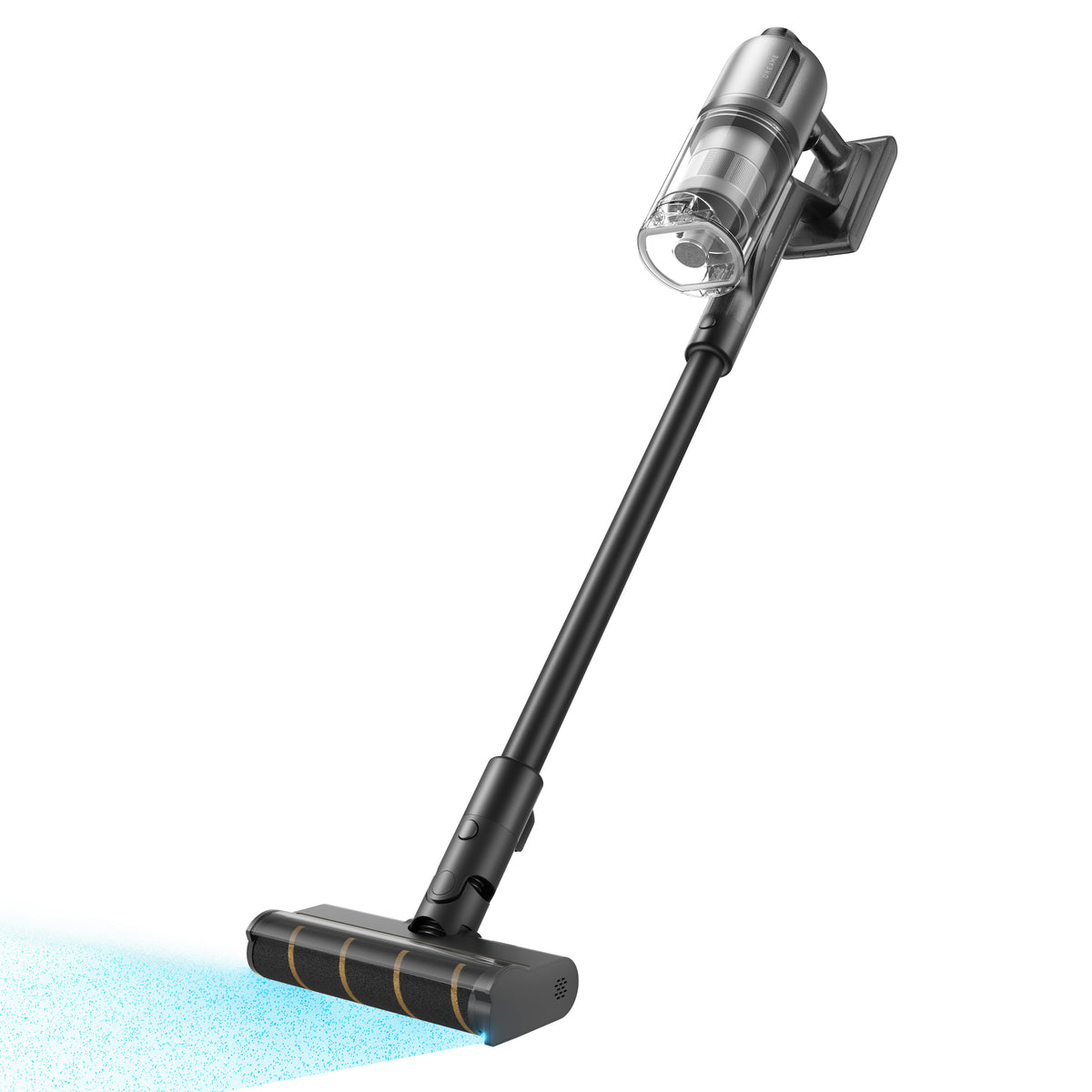
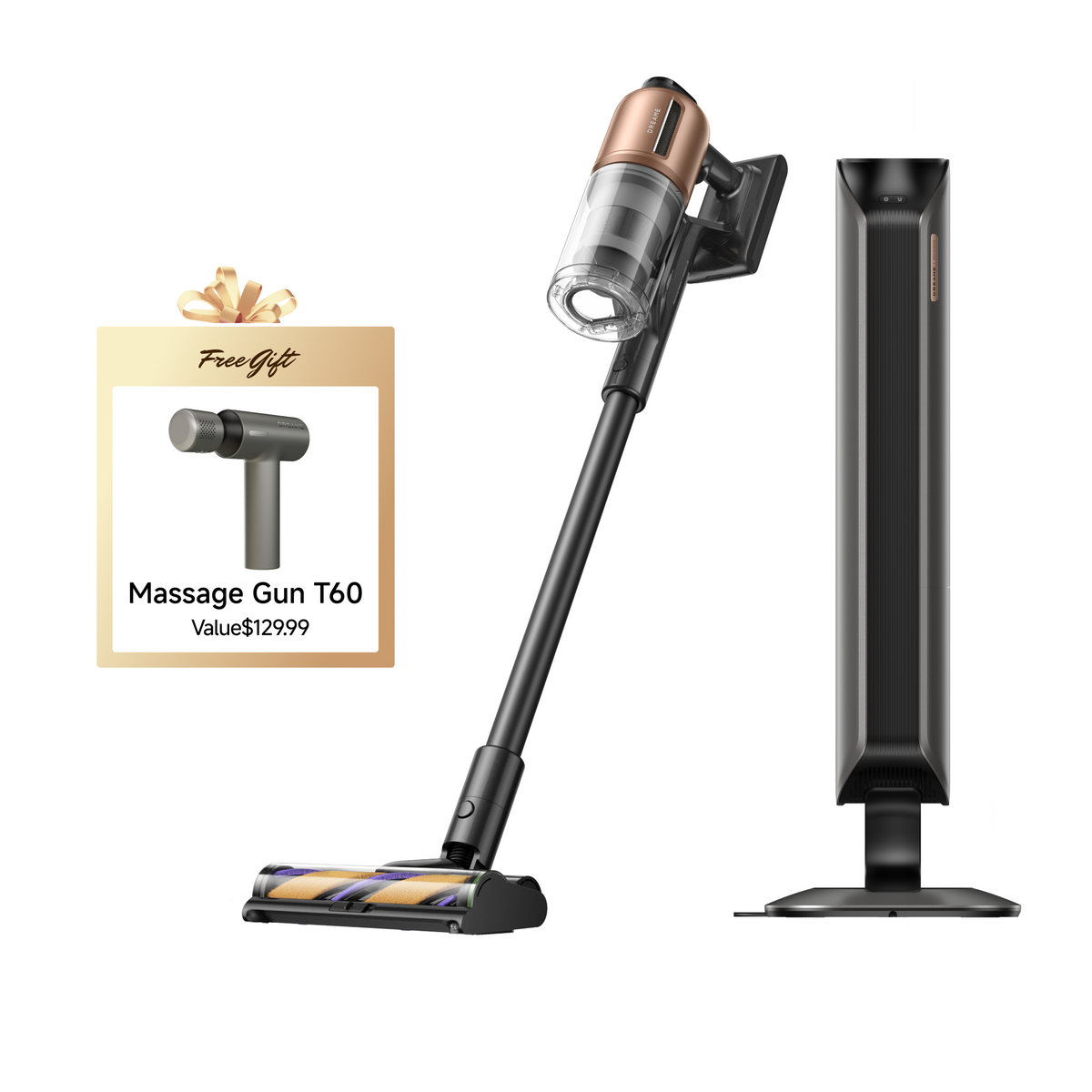
As of 2026-11-22, we track 13 cordless stick vacuums from 5 brands, scored with Score v1.0 from owner ratings, spec strength and ownership cost. Dreame Z30 leads the list at 7.9/10. Tracked prices run from $130 to $1,100; the full table below is sortable by score and price.
Discussion
No comments yet