Email me when Roborock Saros Z70 drops to my target price. The confirmation includes a manage link — use it any time to list or remove your alerts at Your price alerts. Lowest price tracked so far: USD 949.99 — a target below that is below the historical low and less likely to be reached.
Affiliate disclosure: This article is desk research based on catalog data and manufacturer-published specifications. We have not hands-on tested either robot. If you buy through links in this article, AIBuyLab may earn a commission at no extra cost to you.
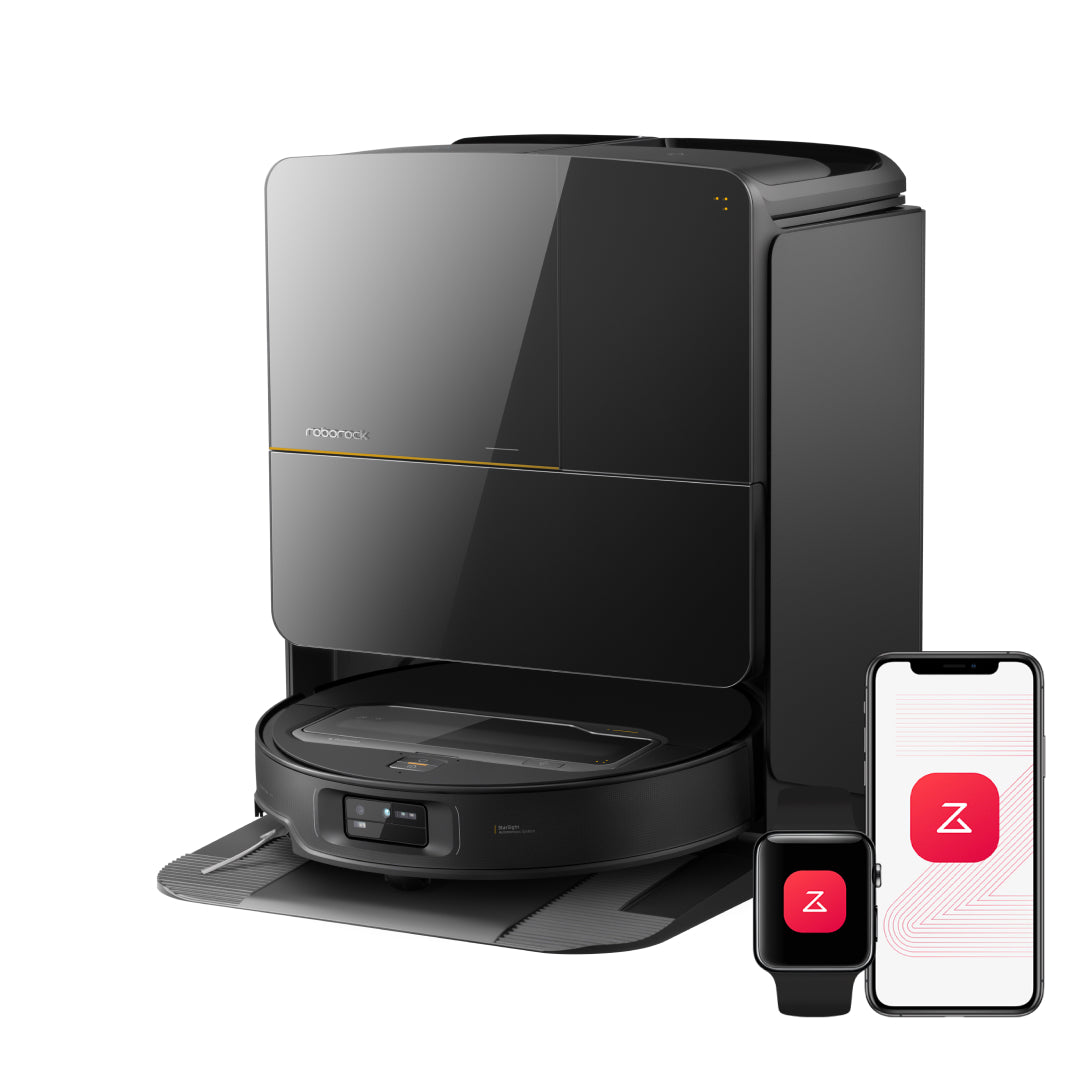
The Saros Z70 wins on sensing (LiDAR-3DToF plus camera-AI avoidance) and runtime (180 minutes vs 150), but its 180 ml onboard dustbin is small.
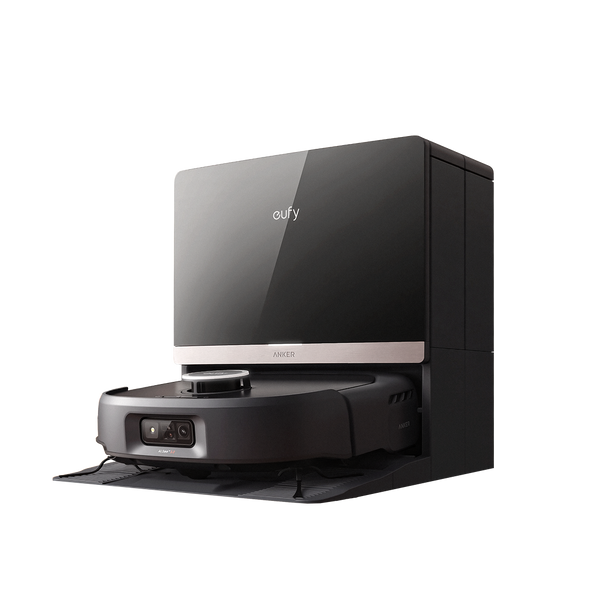
The Omni E35 wins on mopping hardware — a roller mop instead of rotating pads — and its bagged self-empty dock stretches the emptying interval, even though its onboard bin fills just as fast.
Neither is the robot we would steer a demanding home toward first. If your floors are mostly hard and lightly soiled, either works; if you have heavy pet hair, thick carpet, or a big floor plan, read the verdict section before buying either.
Both are app-controlled robot vacuum-and-mop combos with multi-floor mapping, sold as set-and-forget floor cleaners: they navigate your home, vacuum, mop, and return to a dock. The differences that matter are in how they see the room, how they mop, how long they run, and how their dirt handling works between dock visits. Those four axes — sensing, mop type, runtime, and bin logistics — are where this comparison is decided, because on paper the two machines are otherwise close cousins: camera-AI obstacle avoidance on both, app control on both, multi-floor maps on both.
The Spec Table
Spec
Roborock Saros Z70
Eufy Omni E35
AIBuyLab Score
3.6
3.5
Navigation
LiDAR-3DToF
LiDAR
Obstacle avoidance
Camera-AI
Camera-AI
Mopping
Rotating pads
Roller
Runtime
180 min
150 min
Noise
61 dB (manufacturer figure)
Not tracked in our catalog
Onboard dustbin
180 ml
Not tracked in our catalog
Self-empty
See notes below
Bagged self-empty dock
Suction
Not tracked in our catalog
35,000 Pa (manufacturer figure)
Consumable cost
$2.13/month (tracked in our catalog)
Not tracked in our catalog
A quick note on the gaps: where our catalog does not track a figure, we say so rather than filling the cell with a guess. The E35's headline number — 35,000 Pa of suction — is a manufacturer figure, and manufacturer suction figures are measured under each brand's own conditions, so treat it as marketing context, not a lab result.
Why Our Score Is Unkind to Both
A 3.6 and a 3.5 look harsh next to the flagship robots in this category, so here is the honest reasoning.
The Saros Z70's problem is capacity. An 180 ml onboard dustbin is small for a robot expected to cover a whole home. In a household with pets or heavy daily debris, that bin can fill mid-run, and a full bin means the rest of the run picks up less. Strong navigation cannot compensate for nowhere to put the dirt. The Z70's sensing stack is genuinely the better of the two here, but our Score weighs day-to-day livability, and bin size is a daily friction point.
The E35's problem is that its spec sheet leans on one big number. The 35,000 Pa suction figure (manufacturer figure) does the heavy lifting in Eufy's pitch, but suction headlines are the least comparable numbers in this category — every brand measures differently, and real-world pickup depends on brush design, airflow path, and sealing against the floor. Strip the headline away and the E35 is a mid-pack machine: shorter runtime than the Z70, standard LiDAR rather than 3DToF, and a consumable cost our catalog does not track, which means we cannot verify what the bags and filters will run you over time.
Neither robot is badly built. Both are scored low because each asks you to accept a real compromise at the price tier where rivals increasingly refuse to make you choose.
Sensing: The Z70 Sees More
The Saros Z70 pairs LiDAR with a 3D time-of-flight sensor, on top of camera-AI obstacle avoidance. In practical terms, the 3DToF layer gives it finer depth perception at close range — the difference between slowing down near a chair leg and nudging it. The E35 uses standard LiDAR for mapping plus camera-AI for obstacle recognition, a competent combination that maps rooms accurately but has less depth resolution in the final approach to objects.
Where this shows up: homes with cluttered floors — shoes by the door, charging cables, pet toys, low furniture the robot must thread around. The Z70 should need fewer rescues. In a tidy, open-plan home where the floor is mostly clear, the E35's sensing is not a limitation you will ever notice, and this section stops mattering.
Mopping: Roller vs Rotating Pads
This is the E35's best argument. Its roller mop works like a paint roller: a continuously refreshed wet surface that scrubs as it rolls, generally better at lifting dried-on spots than pads that drag the same dirty water across the floor. The Z70's rotating pads spin and press, which is effective on everyday films and spills but can smear a heavy mess before it lifts it.
The honest caveat: neither system replaces a real mop on a genuinely dirty floor. For maintenance cleaning — keeping hard floors presentable between deep cleans — both are fine, and the roller has the edge on kitchen traffic lanes and entryways. If your mopping need is "the dog tracked mud in again," the E35's roller is the more convincing tool.
Runtime and Bin Logistics
The Z70 runs 180 minutes per charge against the E35's 150. Thirty minutes is roughly one extra bedroom-and-bathroom suite per run, which matters in larger homes and is irrelevant in apartments.
Dirt handling cuts the other way. The E35's bagged self-empty dock means the robot can offload into a bag that holds weeks of debris, so the small onboard capacity is less of a daily issue — you change a bag occasionally instead of babysitting the robot. The trade-off is consumables: bags are an ongoing cost, and our catalog does not track the E35's consumable cost, so budget for it as an unknown. The Z70's tracked consumable cost in our catalog is $2.13/month, which at least lets you plan. And whatever the dock arrangement, the Z70's 180 ml onboard bin still caps how much it can pick up before it needs to return and empty — on a high-debris day, expect mid-run dock trips.
Verdict by Home Type
Small apartment, mostly hard floors, light debris: Either works. Pick the E35 if mopping matters to you — the roller is the better tool and the dock bag keeps maintenance low. Pick the Z70 if your floor has clutter the robot must dodge.
Larger home or long cleaning runs: The Z70's 180-minute runtime and better sensing scale better, but watch the bin: in a big home with pets, the 180 ml capacity will interrupt runs. Neither robot is ideal here.
Pet-heavy household: Be skeptical of both. Pet hair fills small bins fast, and this is the use case where our low Scores bite hardest. The E35's self-empty dock softens the problem; the Z70's avoidance helps with toys and accidents zones. Honestly, this buyer should consider stepping up a tier within the category — robots with larger bins, stronger dock integration, and tracked running costs — rather than asking either of these to do a job they are not specced for.
Carpet-dominant home: The Z70, on sensing and runtime, with modest expectations of its mopping. The E35's roller advantage only matters if hard floors are a real share of your space.
Bottom line: Forced to choose between the two, the Z70 is the better all-rounder on sensing and stamina; the E35 is the better mop with the more convenient dock. Both are compromise machines, and our Scores say so.
Is the Eufy E35's 35,000 Pa suction figure real? It is a manufacturer figure, measured under Eufy's own test conditions. Suction numbers are not standardized across brands, so a higher Pa figure does not guarantee better pickup than a rival with a lower number. Brush design and airflow matter as much as the headline.
How bad is the Saros Z70's 180 ml dustbin in practice? In a small, tidy home, you will rarely notice. With pets or heavy daily debris, expect the bin to fill mid-run on larger floor plans, which either pauses cleaning or reduces pickup until it is emptied. It is the main reason our Score rates the Z70 at 3.6 despite its strong navigation.
What will the E35 cost to run? Our catalog does not track the E35's consumable cost, so we will not invent a number. It uses a bagged self-empty dock, so plan on periodic bag and filter replacements as an ongoing, unquantified cost. For comparison, the Z70's tracked consumable cost in our catalog is $2.13/month.
Which is quieter? The Z70 is listed at 61 dB (manufacturer figure). Our catalog does not track a noise figure for the E35, so we cannot make an honest comparison — and manufacturer noise figures are, again, measured under each brand's own conditions.
Which should I buy if my home is mostly carpet? The Z70, for its runtime and sensing. The E35's main win is its roller mop, which earns you little on carpet. That said, heavy carpet plus pets is exactly the scenario where we would suggest looking a tier up from both.
Do both robots really avoid obstacles with AI cameras? Both list camera-AI obstacle avoidance in our catalog data. The Z70 adds a 3DToF depth layer on top of LiDAR, which should make its close-range decisions finer; the E35 relies on LiDAR mapping plus the camera system. Neither will be perfect — small, dark, or flat objects defeat every system in this class eventually.
Last updated: November 27, 2026
Changelog
November 27, 2026 — Added retailer buying links (Our pick and Where to buy) for the products covered in this article.
Related in this category
Smart Cleaning · Robot Vacuums · Updated Nov 22, 2026
As of 2026-11-22, we track 34 robot vacuums from 7 brands, scored with Score v1.0 from owner ratings, spec strength and ownership cost. Dreame D30 Ultra leads the list at 8.4/10. Tracked prices run from $120 to $1,700; the full table below is sortable by score and price.

Discussion
No comments yet