Email me when Eufy Robot Vacuum Omni C28 drops to my target price. The confirmation includes a manage link — use it any time to list or remove your alerts at Your price alerts. Lowest price tracked so far: USD 799.99 — a target below that is below the historical low and less likely to be reached.
We may earn a commission when you buy through links on this page — at no extra cost to you. Prices below were checked on November 22, 2026, and this comparison is a desk analysis of tracked specifications, prices and owner-rating aggregates — not a hands-on review.
The Eufy Robot Vacuum Omni C28 and the Roborock Q7 L5 both score 4.6/10 under AI Buy Lab's Score v1.0, but they get there from opposite directions. The C28 (USD 799.99) pairs a mid-pack spec-strength sub-score of 4.8 with a bagged self-empty dock, a roller mop and 15,000 Pa of maker-stated suction. The Q7 L5 (USD 119.99) earns a perfect 10.0 ownership-cost sub-score and the weakest spec-strength sub-score in this pairing, 1.0, with no self-empty dock at all. If you want the robot to empty itself and mop with a roller, the C28 is the only one of the two that does it. If you want LiDAR mapping at the lowest tracked price in this comparison and can empty a 400 mL bin yourself, the Q7 L5 is the rational buy.
What these two robots are
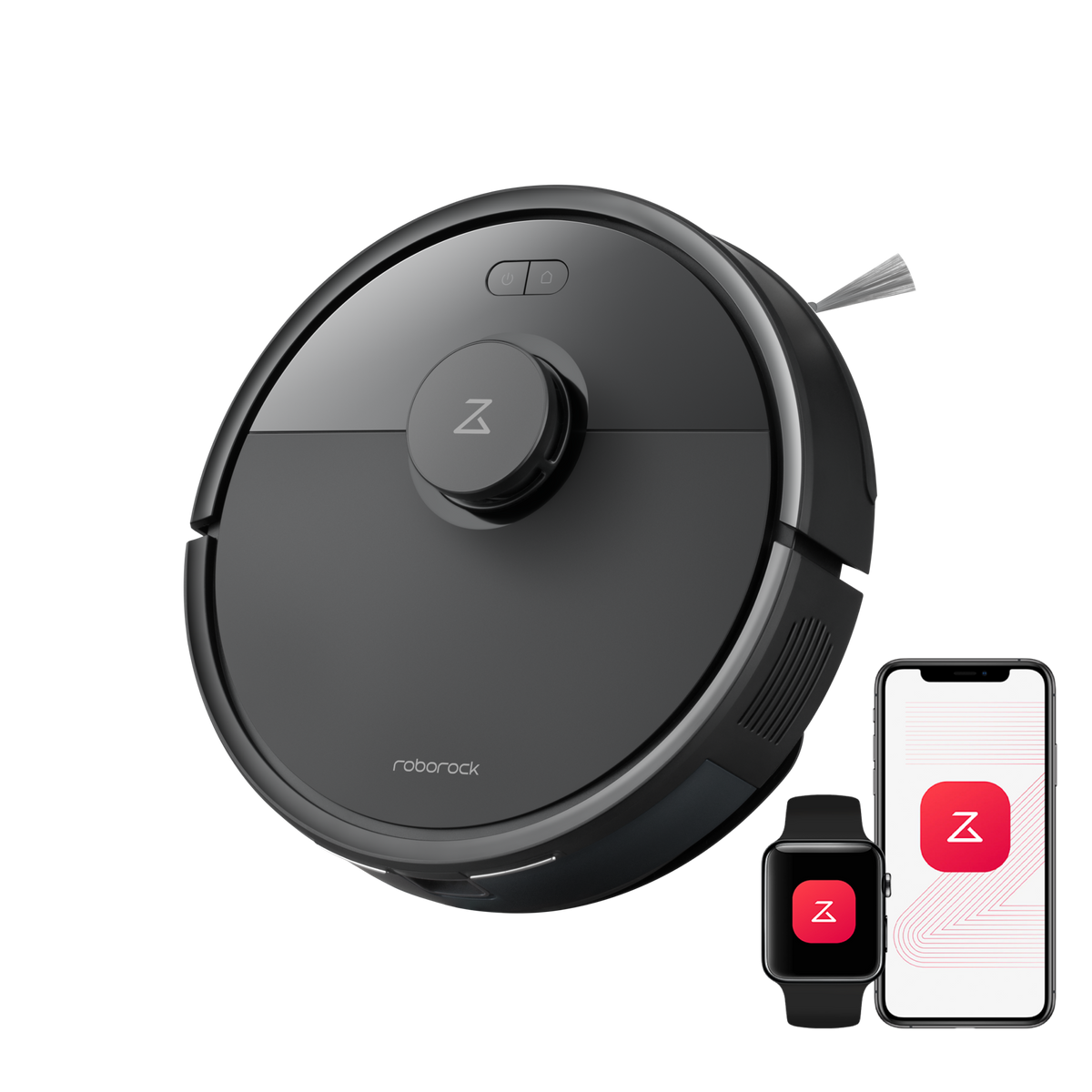
The Eufy Robot Vacuum Omni C28 is a dock-based vacuum-and-mop robot from eufy, built around a bagged self-empty station and a roller mopping system. The Roborock Q7 L5 is a dock-free Roborock vacuum-and-mop robot with LiDAR navigation and a drag-pad mop, sold without a self-empty station. Both are tracked in our robot vacuums category and ranked in Best Robot Vacuums.
Head-to-head: the tracked numbers
Field
Eufy Omni C28
Roborock Q7 L5
Price (checked Nov 22, 2026)
USD 799.99
USD 119.99
Score v1.0
4.6/10
4.6/10
Spec strength sub-score
4.8
1.0
Ownership cost sub-score
4.2
10.0
Suction (maker-stated)
15,000 Pa
8,000 Pa
Mopping system
Roller
Drag pad
Navigation
LiDAR
LiDAR
Obstacle avoidance
AI camera
Bumper only
Self-empty dock
Bagged
None
Runtime (maker-quoted)
251 min
150 min
Noise (maker-published)
55 dB
60 dB
Weight
5.05 kg
3.3 kg
Onboard dustbin
Not tracked
400 mL
Subscription required
No
No
Where the USD 680 gap actually goes
The price difference between these two robots is USD 680.02, and almost all of it buys infrastructure rather than cleaning ratings. The C28's bagged self-empty dock means debris leaves the robot into a sealed bag in the station; the Q7 L5 has no dock, so its 400 mL onboard bin — which, to be fair, ranks #2 of 20 tracked robots in this category for bin capacity — is the whole storage story, and emptying it is a manual chore. The C28 also steps up obstacle avoidance from bumper-only contact sensing to an AI camera system, and swaps the drag-pad mop for a roller system. Whether that package is worth roughly 6.7 times the Q7 L5's price depends entirely on how much you value not touching the bin.
On raw suction figures, the C28's 15,000 Pa ranks #24 of 30 tracked robot vacuums on our site, and the Q7 L5's 8,000 Pa ranks #30 of 30. Neither number is a cross-tested measurement — both are maker-stated maximums, usually quoted for a Max or Turbo mode — so treat the gap as directional, not as a precise prediction of carpet performance. The honest reading is that neither robot is bought for category-leading suction; the C28 is bought for its dock and mop hardware, the Q7 L5 for its price.
Runtime, noise and the ownership picture
The C28 quotes 251 minutes of runtime against the Q7 L5's 150 minutes, and publishes the lower noise figure, 55 dB against 60 dB — though brands measure noise under different conditions, so that gap should not be over-read either. Both robots offer app control and multi-floor mapping, and neither requires a subscription for core features.
Ownership cost is where the Q7 L5 runs away with it. Its 10.0 ownership-cost sub-score reflects the simple arithmetic of a USD 119.99 purchase price with no dock bags to replace. The C28's tracked three-year cost on its product page is its USD 799.99 hardware price, before any dock-bag spending a buyer should budget for on top. Neither product page tracks an aggregated owner rating yet, so there is no review evidence to break the tie — this decision has to be made on specifications and price alone, which is exactly what the table above is for.
A note on the missing owner ratings
One gap in this comparison deserves to be stated plainly: neither product page tracks an aggregated owner rating yet. For most mature robot vacuums, review volume is the evidence that either confirms or undermines a spec sheet, and here that evidence simply does not exist yet for either model. That cuts both ways. It means the Q7 L5's rock-bottom spec-strength sub-score of 1.0 is a judgement about documented hardware, not about owner satisfaction, which could prove kinder. It also means the C28's convenience package is, so far, an argument from specifications alone. Buyers who weight review evidence heavily should treat both robots as early-file products and revisit their product pages as tracked ratings accumulate, rather than assuming the current silence means anything either way.
Who should buy which
Buy the Q7 L5 if your floors are mostly hard surfaces, your home is small enough that a 150-minute runtime is plenty, and you would rather keep USD 680 than automate bin emptying. Buy the C28 if you have pets or heavy daily debris, want a roller mop instead of a dragged pad, and know from experience that a robot you have to empty after every run is a robot that stops getting used. Skip both if suction is your top priority — the tracked category offers far higher maker-stated figures at similar money to the C28, and the full field is laid out in Best Robot Vacuums.
Is the Eufy Omni C28 worth USD 680 more than the Roborock Q7 L5? Only if the self-empty dock, roller mop and AI-camera obstacle avoidance matter to you. On headline Score v1.0 the two robots tie at 4.6/10; the premium buys convenience hardware, not a higher score.
Which robot has stronger suction, the C28 or the Q7 L5? On maker-stated figures, the C28 at 15,000 Pa against the Q7 L5 at 8,000 Pa. Both are manufacturer maximums rather than cross-tested measurements, and they rank #24 and #30 respectively among the 30 robot vacuums we track.
Does the Roborock Q7 L5 empty itself? No. It has no self-empty dock; its onboard bin holds 400 mL, which ranks #2 of 20 tracked models for bin capacity, but emptying it is manual.
Do either of these robots require a subscription? No. Both product pages record that no subscription is required for core features, and both offer app control and multi-floor mapping.
Which is quieter on paper? The C28 publishes 55 dB against the Q7 L5's 60 dB, but brands publish noise figures under differing test conditions, so treat this as indicative rather than decisive.
Last updated: November 26, 2026.
Changelog
November 27, 2026 — Added retailer buying links (Our pick and Where to buy) for the products covered in this article.
Related in this category
Smart Cleaning · Robot Vacuums · Updated Nov 22, 2026
As of 2026-11-22, we track 34 robot vacuums from 7 brands, scored with Score v1.0 from owner ratings, spec strength and ownership cost. Dreame D30 Ultra leads the list at 8.4/10. Tracked prices run from $120 to $1,700; the full table below is sortable by score and price.


Discussion
No comments yet