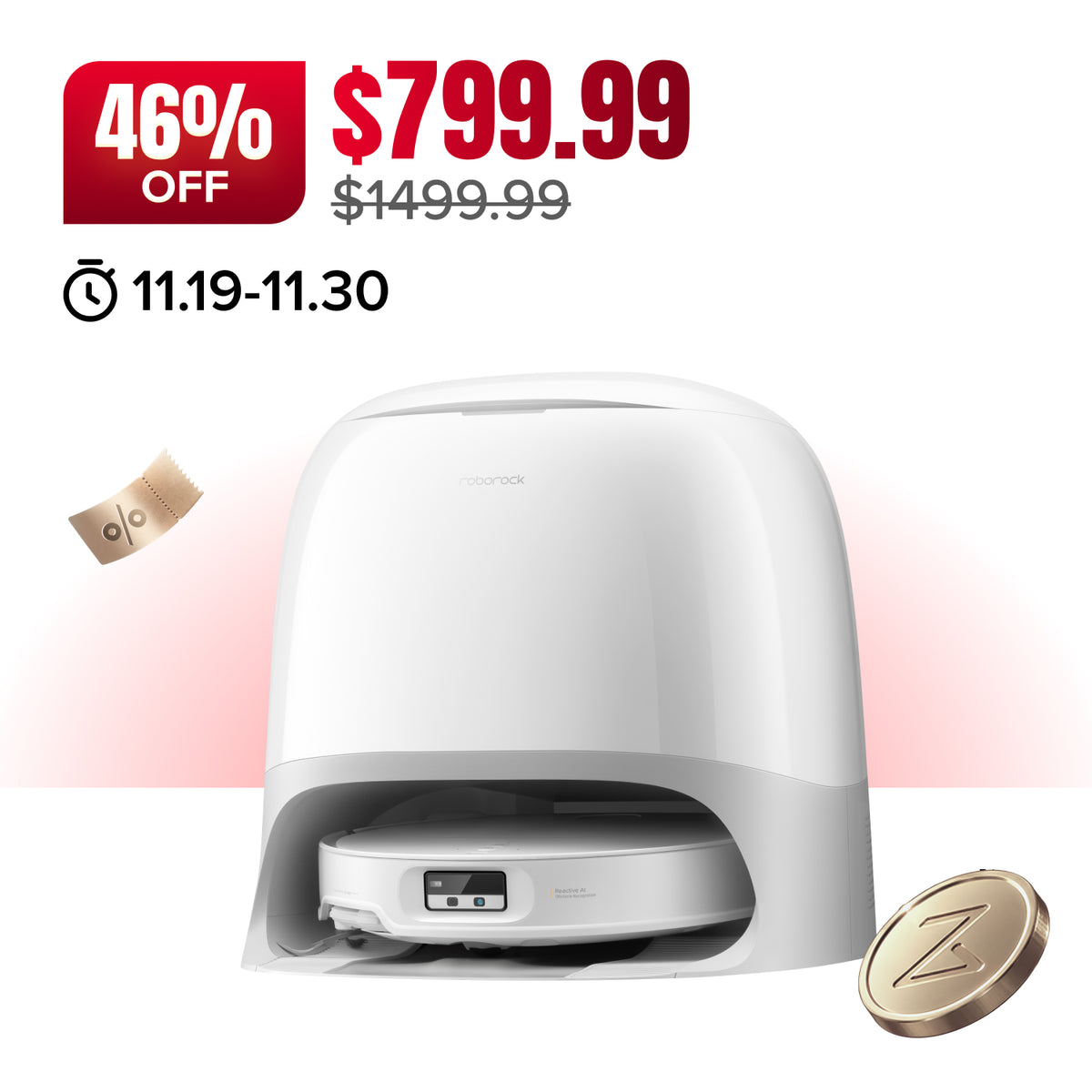
Email me when Roborock Qrevo CurvX drops to my target price. The confirmation includes a manage link — use it any time to list or remove your alerts at Your price alerts. Lowest price tracked so far: USD 799.99 — a target below that is below the historical low and less likely to be reached.
Affiliate disclosure: AIBuyLab may earn a commission when you buy through links on this page, at no extra cost to you. This comparison is desk research based on the manufacturer specs and data tracked on our product pages — we have not hands-on tested either robot.
The L50 Ultra counters with a much bigger onboard dustbin (395 ml vs 258 ml) and a tracked 42 mm threshold-climb rating — the CurvX has no maker figure for threshold climbing in our data.
The CurvX runs longer per charge (220 vs 200 minutes), publishes a noise figure (62 dB), and tracks cheap consumables at $2.13/mo.
AIBuyLab Score v1.0 rates the L50 Ultra 7.1/10 against the CurvX's 5.4/10 — a gap driven by the overall spec-and-cost profile, not by suction alone.
Verdict in one line: threshold-heavy older homes and big debris loads favor the L50 Ultra; runtime, published quietness and running costs favor the CurvX.
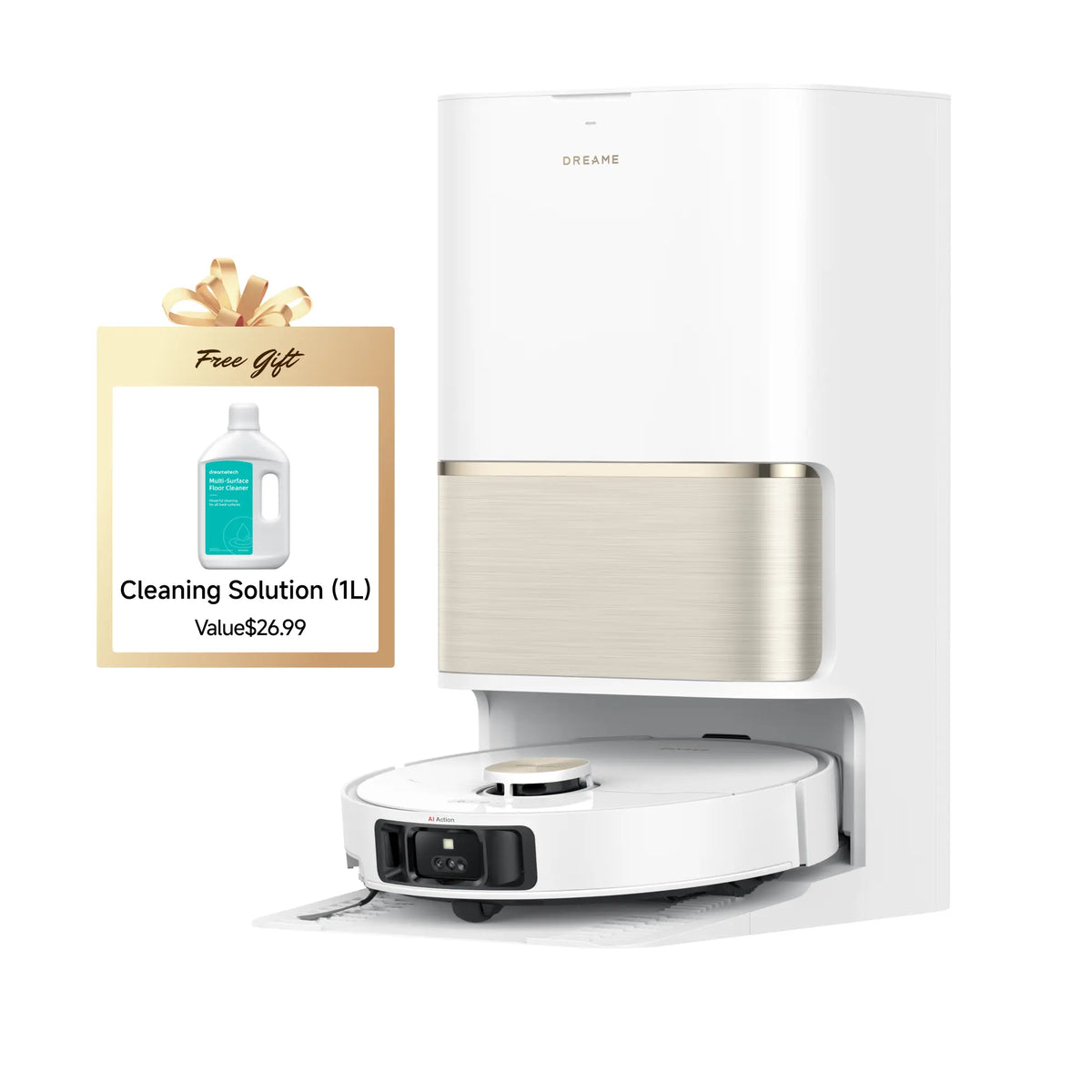
The Roborock Qrevo CurvX and the Dreame L50 Ultra are self-emptying robot vacuum-and-mop combos from the two brands that currently define the category. Both navigate by lidar, avoid obstacles with structured-light sensing, mop with rotating pads, store multi-floor maps, and empty into a bagged dock. That shared blueprint is exactly why a head-to-head matters: when the architecture is this similar, the buying decision comes down to a handful of measurable differences — suction class, bin capacity, threshold climbing, runtime, noise, and running costs. Those are the differences this comparison works through, using only the specs tracked on each product's AIBuyLab page.
Spec table: CurvX vs L50 Ultra
Spec
Roborock Qrevo CurvX
Dreame L50 Ultra
AIBuyLab Score v1.0
5.4/10
7.1/10
Suction (maker-stated peak)
22,000 Pa
19,500 Pa
Navigation
Lidar
Lidar
Obstacle avoidance
Structured light
Structured light
Mopping system
Rotating pads
Rotating pads
Runtime (maker-quoted)
220 min
200 min
Onboard dustbin
258 ml
395 ml
Threshold climbing
No maker figure tracked
42 mm
Noise (maker-published)
62 dB
No figure in our tracked data
Self-empty dock
Bagged
Bagged
Multi-floor maps
Yes
Yes
Consumables cost
$2.13/mo (tracked)
See product page
Two honesty notes before the sections below. First, suction figures are maker-stated maximums, usually measured in Max or Turbo mode; they are not cross-tested measurements, and a higher Pa number does not automatically mean better pickup on your floor. Second, where the table says a figure is not tracked, it means the maker's published data in our catalog doesn't include one — not that the robot lacks the capability.
Suction: the CurvX wins the spec-sheet number
The framing of "edge cleaning vs raw suction" suggests a clean split, but the tracked data is more interesting than that. The CurvX's 22,000 Pa maker-stated peak actually exceeds the L50 Ultra's 19,500 Pa. If peak suction on paper is your deciding metric, the Roborock takes this round.
What that number doesn't tell you: how each robot sustains airflow as the bin fills, how the brush roll agitates carpet pile, or how the two compare on embedded pet hair — none of which a Pa rating captures, and none of which we can claim without hands-on testing, which this comparison is not. Treat the suction gap as a real but narrow data point: roughly 13% on a maker-stated peak figure, in the CurvX's favor.
Dustbin size: the L50 Ultra holds about half again as much
The L50 Ultra's 395 ml onboard bin is roughly 53% larger than the CurvX's 258 ml bin. Both robots self-empty into bagged docks, so bin size matters less than it would on a dockless model — but it still decides how often the robot has to interrupt a clean to return and empty, and how gracefully it handles a heavy debris day (post-party crumbs, a shedding-season carpet run) in one pass. Homes that generate a lot of debris per clean — large dogs, kids, high-traffic entryways — will feel this difference more than the suction gap.
Threshold climbing: a tracked 42 mm vs no published figure
Older homes often have chunky door thresholds, raised transition strips and uneven floors between rooms. The L50 Ultra carries a 42 mm threshold-climb rating in its tracked specs — a concrete, comparable number. Our catalog data for the CurvX includes no maker figure for threshold climbing, so we can't put a number against it. If your home has serious thresholds, the L50 Ultra is the only one of the two that documents the capability; that alone can settle the choice for pre-war housing stock with tall saddles between rooms.
Runtime and noise: the CurvX's quiet, long-running case
The CurvX quotes 220 minutes of runtime against the L50 Ultra's 200 — both are maker quotes, normally for the quietest mode on hard floors, but the 20-minute edge is consistent with the CurvX's positioning as the long-coverage option for larger floor plans cleaned in one session.
On noise, the CurvX publishes 62 dB; our tracked data for the L50 Ultra includes no maker noise figure. Test modes differ between brands, so even published dB numbers are soft comparisons — but for noise-sensitive households (apartments, night-shift sleepers, skittish pets), the CurvX is the one that puts a number on the table, and 62 dB is a moderate figure for the category.
Running costs also land on the CurvX's side of the ledger: its tracked consumables — dock bags, filters, brushes, mop pads — come to $2.13/mo. Check the L50 Ultra's product page for its current tracked running-cost and offer details before deciding.
The score gap: why the L50 Ultra rates 7.1 to the CurvX's 5.4
AIBuyLab Score v1.0 blends spec strength, ownership cost and aggregated owner-rating data into a single figure. The L50 Ultra's 7.1 reflects a stronger overall profile across the full tracked spec set — the big bin, the documented threshold climbing, and competitive numbers throughout — rather than any single headline stat. The CurvX's 5.4 comes with a caveat visible on its product page: no aggregated owner rating is tracked for it yet, so its score rests more heavily on specs and costs alone. As rating data accumulates, that gap could narrow or widen; the score is a snapshot of the data we hold, not a verdict from a test bench.
Verdict by home type
Carpet-heavy homes: Call it for the L50 Ultra, narrowly. The CurvX wins the paper suction figure, but carpeted homes punish small bins and reward the L50's capacity and documented climbing over rug edges and transitions — and its overall tracked profile is stronger. If your carpets are low-pile and your rooms are threshold-free, the CurvX's suction number and longer runtime make it a genuine alternative.
Threshold-heavy older homes: L50 Ultra, clearly. A tracked 42 mm climb rating versus no published figure is the single most decisive spec in this comparison for pre-war and older housing.
Noise-sensitive homes and apartments: CurvX. It is the only one of the two with a maker-published noise figure in our data (62 dB), it runs 20 minutes longer per charge, and its tracked consumables are cheap. For a flat where the robot runs while people are home, those three facts outweigh a spec-sheet suction deficit that runs the other way anyway.
Large, open, single-level homes: Either works; the CurvX's runtime edge suits one-session whole-home cleans, while the L50's bin suits homes where the debris load is the bottleneck. Let the current offers on each product page break the tie.
Which has stronger suction, the Qrevo CurvX or the Dreame L50 Ultra? On maker-stated peak figures tracked in our catalog, the CurvX: 22,000 Pa versus 19,500 Pa. These are maximum-mode manufacturer numbers, not cross-tested measurements, so treat the gap as indicative rather than decisive.
Which robot is better for homes with high door thresholds? The Dreame L50 Ultra. It carries a tracked 42 mm threshold-climb rating; our catalog data for the CurvX lists no maker figure for threshold climbing.
Do both robots empty themselves? Yes. Both use bagged self-empty docks, and both store multi-floor maps. The difference is onboard capacity between dock trips: 395 ml for the L50 Ultra, 258 ml for the CurvX.
Why does the L50 Ultra score higher if its suction figure is lower? AIBuyLab Score v1.0 weighs the full tracked profile — spec strength across all fields, ownership cost and owner-rating data — not suction alone. The CurvX also currently has no aggregated owner rating tracked, which its product page discloses.
As of 2026-11-22, we track 34 robot vacuums from 7 brands, scored with Score v1.0 from owner ratings, spec strength and ownership cost. Dreame D30 Ultra leads the list at 8.4/10. Tracked prices run from $120 to $1,700; the full table below is sortable by score and price.
Discussion
No comments yet