Price alerts — Roborock Saros 20
Price-drop alert
Email me when Roborock Saros 20 drops to my target price. The confirmation includes a manage link — use it any time to list or remove your alerts at Your price alerts. Lowest price tracked so far: USD 989.99 — a target below that is below the historical low and less likely to be reached.
Roborock Saros 20 vs Roborock Q10 S5+: Same Score, Different Senses
Affiliate disclosure: AIBuyLab may earn a commission from qualifying purchases made through links on this page. This comparison is desk research based on published manufacturer specifications and our catalog data — we did not hands-on test either robot, and nothing below is based on in-person use.
TL;DR
The Roborock Saros 20 and the Roborock Q10 S5+ land on exactly the same AIBuyLab Score v1.0 rating — 4.7 out of 10 — and our catalog tracks the same consumable cost for both: $2.13/month. So this is not a "which one is better" question. It is a "which trade-off fits your floors" question. The Saros 20 senses its surroundings better (LiDAR-3DToF navigation plus camera-AI obstacle avoidance) and runs 50 minutes longer (200 vs. 150 minutes). The Q10 S5+ carries a bigger dustbin (350 ml vs. 259 ml) and mops with a vibrating scrub pad instead of rotating pads. Cluttered homes with long cleaning sessions lean Saros 20; smaller homes that value scrubbing action and fewer bin emptyings lean Q10 S5+.
Our pick: Roborock Saros 20 vs Roborock Q10 S5+ — check current prices at the retailers.
What Is a Robot Vacuum-Mop Combo?
A robot vacuum-mop combo is a self-navigating floor-cleaning robot that vacuums hard floors and carpets and then (or simultaneously) wets and wipes hard floors with an attached mop pad. Both robots in this comparison are app-controlled, both build and store maps of multiple floors, and both sit in the same brand's lineup — which makes this a useful tie-break exercise, because the differences are about design priorities rather than brand ecosystems. The Saros 20 prioritizes perception and endurance. The Q10 S5+ prioritizes bin capacity and pad scrubbing.
Spec Comparison
Spec | Roborock Saros 20 | Roborock Q10 S5+ |
|---|
AIBuyLab Score (v1.0) | 4.7 | 4.7 |
Navigation | LiDAR-3DToF | LiDAR |
Obstacle avoidance | Camera-AI | Structured light |
Mopping style | Rotating pads | Vibrating pad |
Runtime | 200 min | 150 min |
Noise (manufacturer figure) | 63 dB | 65 dB |
Dustbin capacity | 259 ml | 350 ml |
App control | Yes | Yes |
Multi-floor maps | Yes | Yes |
Tracked consumable cost (our catalog) | $2.13/month | $2.13/month |
Sensing: The Saros 20 Sees More
The clearest split between these two robots is how they perceive a room. The Saros 20 pairs LiDAR-3DToF navigation with camera-AI obstacle avoidance. In practical terms, that combination is the more capable sensing stack of the two: 3D time-of-flight depth sensing layered on top of LiDAR mapping, plus a camera-based system intended to recognize and steer around objects rather than simply detect that something is in the way.
The Q10 S5+ uses standard LiDAR navigation with structured-light obstacle avoidance. Structured light is a legitimate, widely used approach — it projects a pattern and reads the distortion to judge distance — but it is a step down in object recognition from a camera-AI system. In a tidy home with clear floor runs, you may never notice the difference. In a home where the floor regularly hosts pet toys, charging cables, shoes, and chair legs at odd angles, the Saros 20's sensing stack is the one designed for that environment. Obstacle density is the single biggest factor in this comparison: the more objects per square meter, the more the Saros 20's advantage matters.
Stamina: 50 Extra Minutes
Runtime is the second clear split. The Saros 20 is rated at 200 minutes of cleaning per charge; the Q10 S5+ at 150 minutes. Fifty minutes is not a rounding error — it is a third more cleaning time. For a small apartment, both figures are more than sufficient, and runtime should not drive your decision. For a large single floor, a multi-room layout cleaned in one session, or a home where the robot needs to finish before the household wakes up, the Saros 20's extra stamina reduces the odds of a mid-job recharge pause breaking up the clean.
Mopping: Rotating Pads vs. Vibrating Scrub
The mopping hardware points in opposite directions. The Saros 20 uses rotating pads — a design that applies continuous wiping pressure as the pads spin, generally well suited to covering large hard-floor areas evenly. The Q10 S5+ uses a vibrating pad, which scrubs back and forth in place as the robot moves; that agitation is aimed at loosening dried-on spots and sticky patches rather than gliding over them.
Neither approach is universally better. Kitchens with dried drips near the stove and entryways with tracked-in grime are the vibrating pad's home turf. Open-plan hard floors that mainly need consistent, even mopping lean toward rotating pads. Think about what your mop actually has to remove, not just how much floor it covers.
Dustbin and Noise: The Q10's Quiet Wins
The Q10 S5+ holds 350 ml of debris against the Saros 20's 259 ml — roughly 35% more capacity. In a home with heavy pet hair or daily debris, that translates directly into less frequent bin attention. It is an unglamorous spec, but it is the one you interact with most often.
Noise is nearly a wash. Roborock's manufacturer figures put the Saros 20 at 63 dB and the Q10 S5+ at 65 dB — a 2 dB gap on paper (manufacturer figures, measured under each maker's own conditions, so treat them as indicative rather than absolute). Neither robot is a silent cleaner, and the difference is small enough that it should not decide this comparison on its own. If anything, it slightly reinforces the Saros 20's case for long sessions: the longer-running robot is also the marginally quieter one per the published figures.
Running Costs: A Genuine Tie
Our catalog tracks a consumable cost of $2.13/month for the Saros 20, and the same $2.13/month for the Q10 S5+. Replacement pads, filters, and brushes are a real part of robot vacuum ownership, and in this pairing they are a dead heat — running cost gives you no reason to pick one over the other. Combined with the identical 4.7 Score, the ownership-cost picture is as tied as the headline rating.
Verdict: Decide by Floors and Clutter
Choose the Saros 20 if your floors are obstacle-dense — pet toys, cables, low furniture, chair legs everywhere — or if your cleaning sessions are long. Its camera-AI avoidance, 3DToF-augmented navigation, and 200-minute runtime are built for exactly that home, and it is the marginally quieter robot on manufacturer figures (63 dB vs. 65 dB).
Choose the Q10 S5+ if your home is smaller and tidier, your hard floors need scrubbing more than coverage, and you would rather empty a bin less often. The vibrating pad targets dried-on grime, and the 350 ml bin is the biggest practical convenience difference in this comparison.
Either way, you are getting app control, multi-floor mapping, and the same tracked $2.13/month consumable cost. The Score tie is honest: these are two different answers to the same question, and your floor plan — not the spec sheet headline — should make the call.
Where to buy: Roborock Saros 20 · Roborock Q10 S5+ — retailer links run through our /go/ tracker; the product pages track prices daily.
FAQ
Which is better for pet hair and pet toys on the floor? For toys scattered on the floor, the Saros 20's camera-AI obstacle avoidance is the stronger system for steering around them. For hair volume specifically, the Q10 S5+ counters with a larger 350 ml dustbin, so it needs emptying less often. Homes with both problems have to pick which annoyance they feel more: bumps into toys, or bin duty.
Is the 50-minute runtime difference noticeable? In a small home, no — both robots finish well within a single charge. In a large home cleaned in one session, yes: the Saros 20's 200 minutes versus the Q10 S5+'s 150 minutes can be the difference between one continuous clean and a recharge interruption.
Which mops better? They mop differently rather than better or worse. The Q10 S5+'s vibrating pad scrubs at dried-on spots; the Saros 20's rotating pads favor even coverage over large areas. Match the mechanism to your mess.
Do they cost the same to run? According to our catalog's tracked figures, yes — both come in at $2.13/month in consumables. That is the only cost figure we cite for either model here, and it is a tie.
Are these manufacturer noise ratings comparable? Only loosely. The 63 dB (Saros 20) and 65 dB (Q10 S5+) figures are manufacturer-published numbers, and makers do not all measure under identical conditions. Treat the 2 dB gap as a slight edge on paper, not a guaranteed real-world difference.
Last updated: November 27, 2026
Changelog
November 27, 2026 — Added retailer buying links (Our pick and Where to buy) for the products covered in this article.
Related in this category

Smart Cleaning · Robot Vacuums · Updated Nov 22, 2026
As of 2026-11-22, we track 34 robot vacuums from 7 brands, scored with Score v1.0 from owner ratings, spec strength and ownership cost. Dreame D30 Ultra leads the list at 8.4/10. Tracked prices run from $120 to $1,700; the full table below is sortable by score and price.
Smart Cleaning · Robot Vacuums
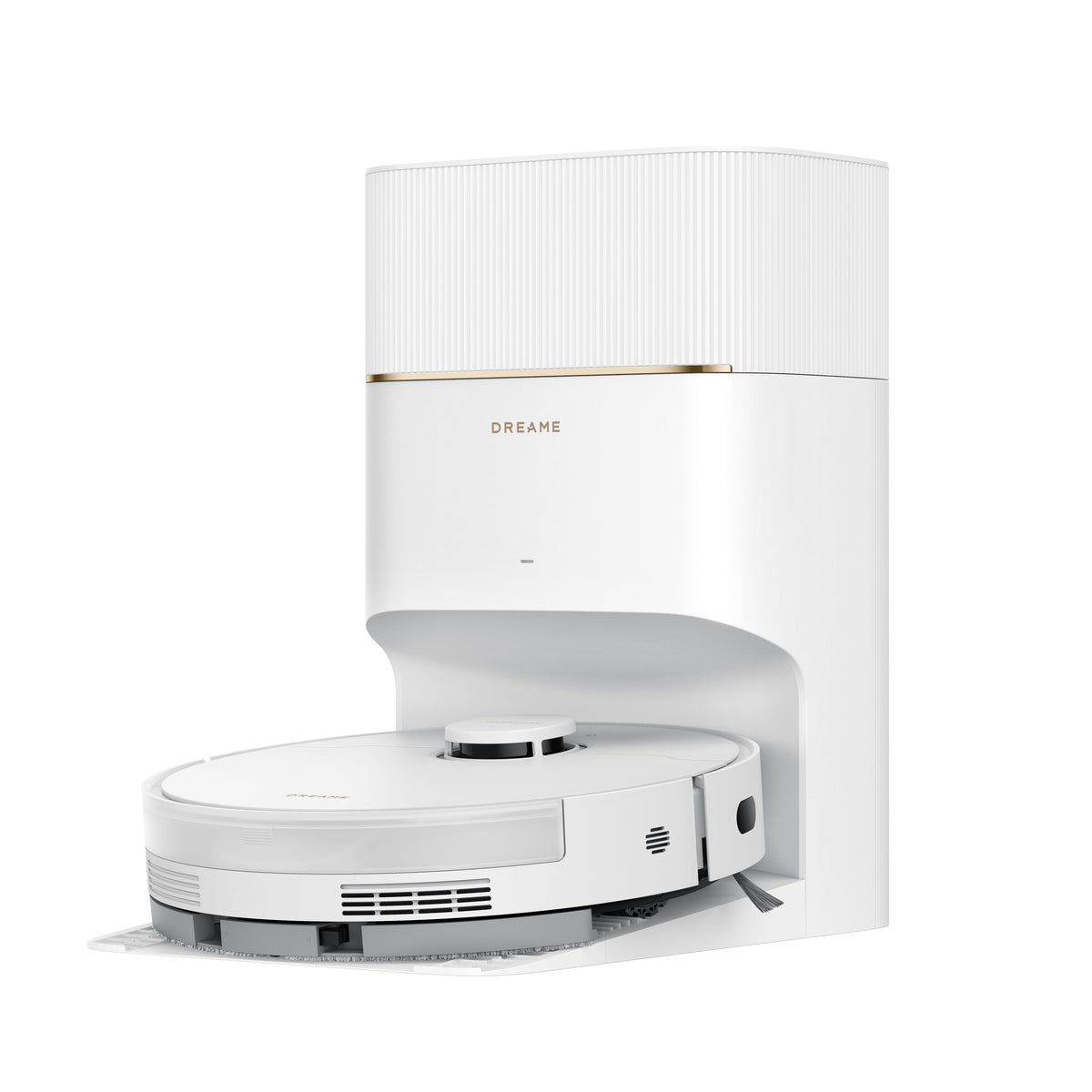
Our catalog scores this same-brand pair almost identically: the Dreame D20 Pro Plus at 6.9 and the [Dreame L40 Ultra Gen 2](https://aibuylab.co
Smart Cleaning · Robot Vacuums
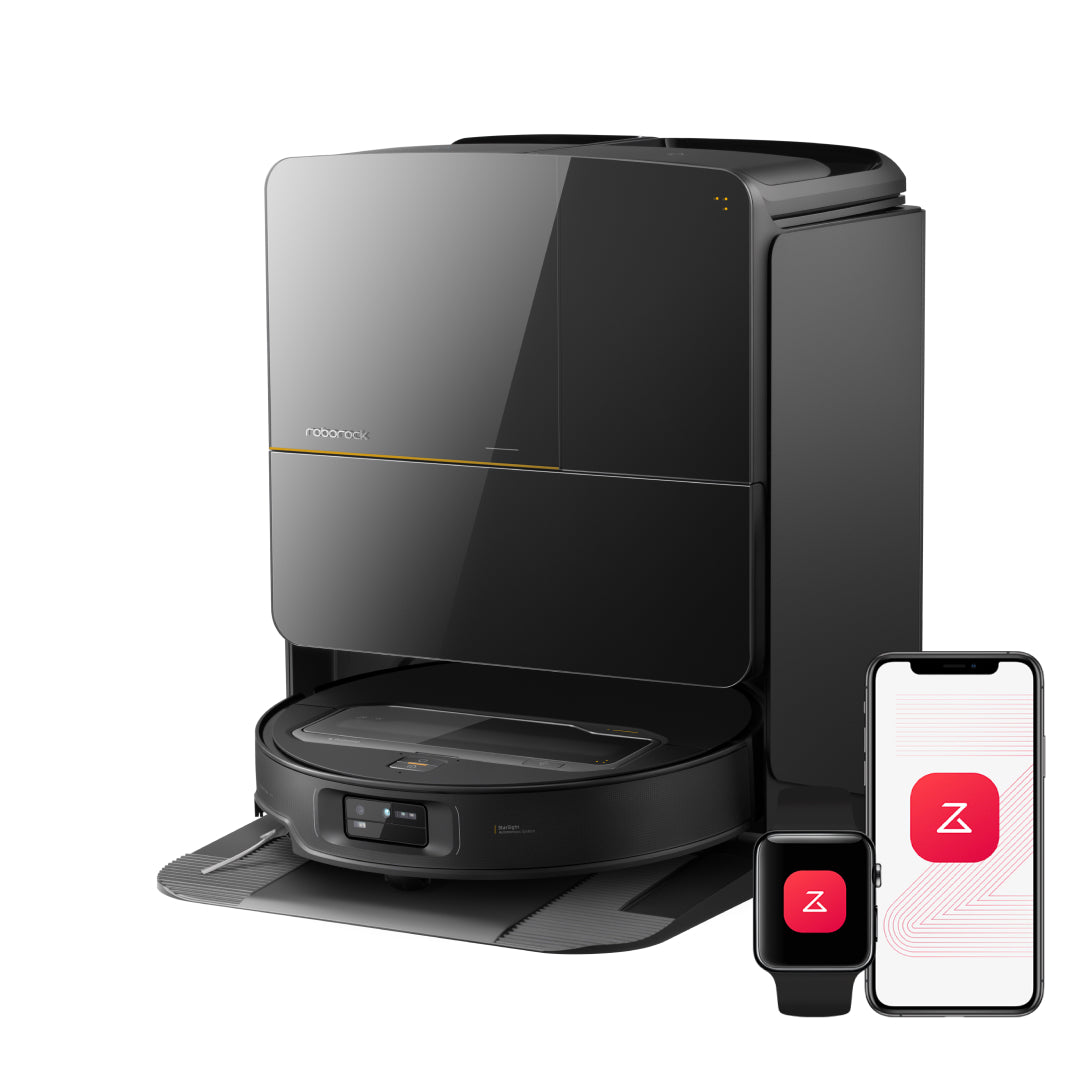
Our Score rates the Roborock Saros Z70 at 3.6 and the Eufy Robot Vacuum Omni E35 at 3.5 — both low, a
Smart Cleaning · Robot Vacuums
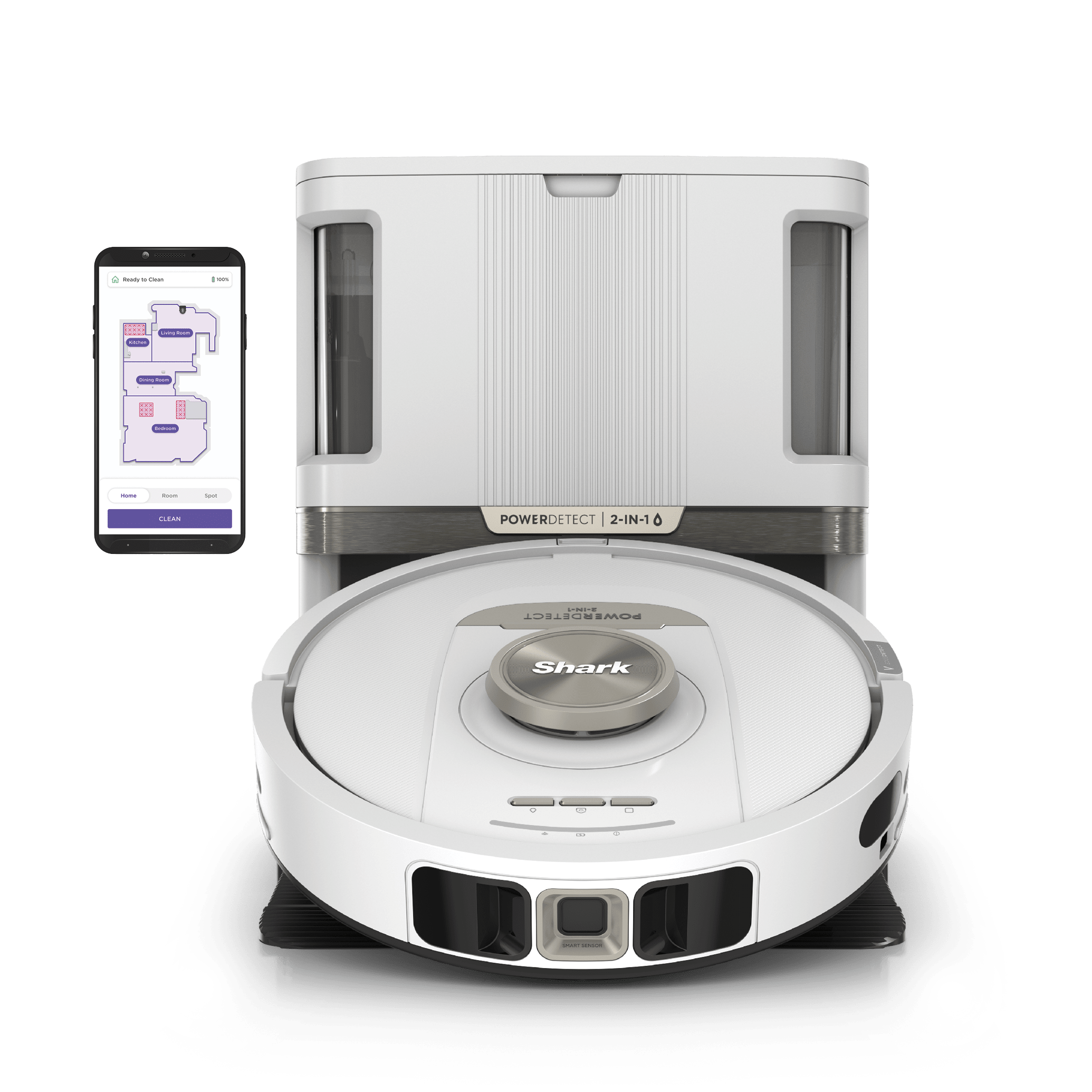
The Shark PowerDetect 2-in-1 (Score 4.1) is the more complete budget robot: it mops lightly with a drag pad, senses obstacles with structured
Report an error on this page
Discussion
No comments yet